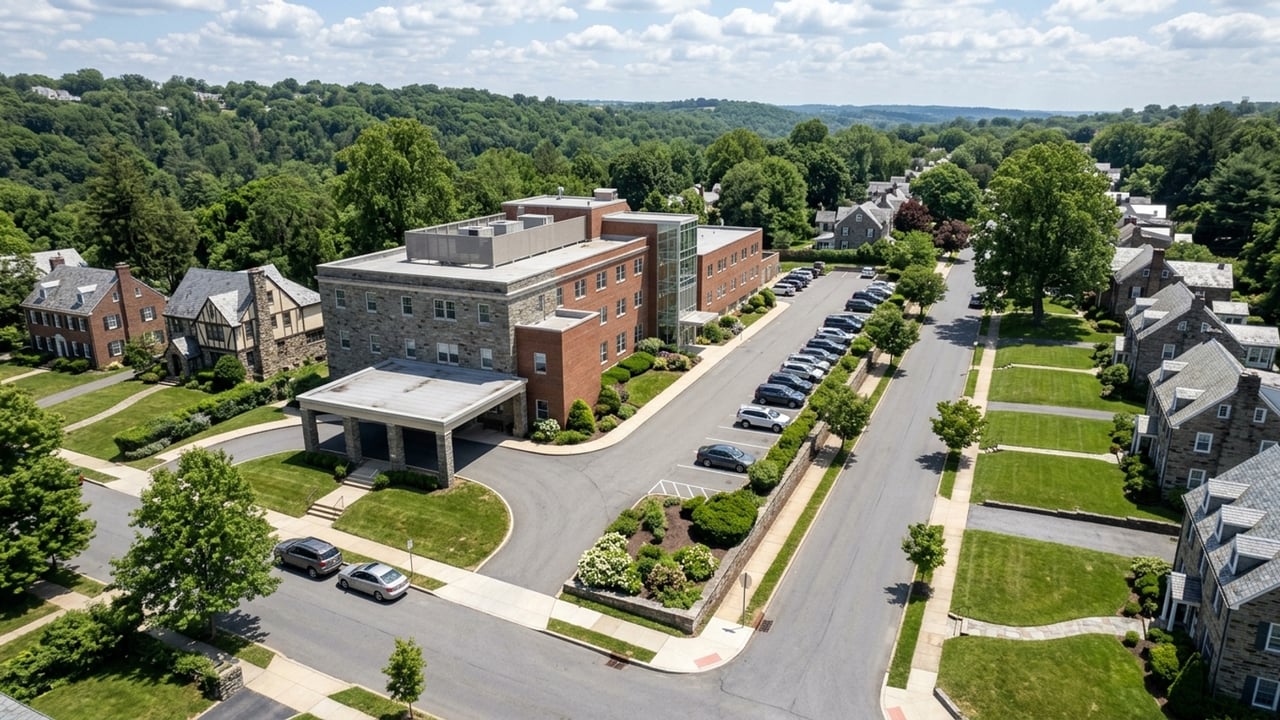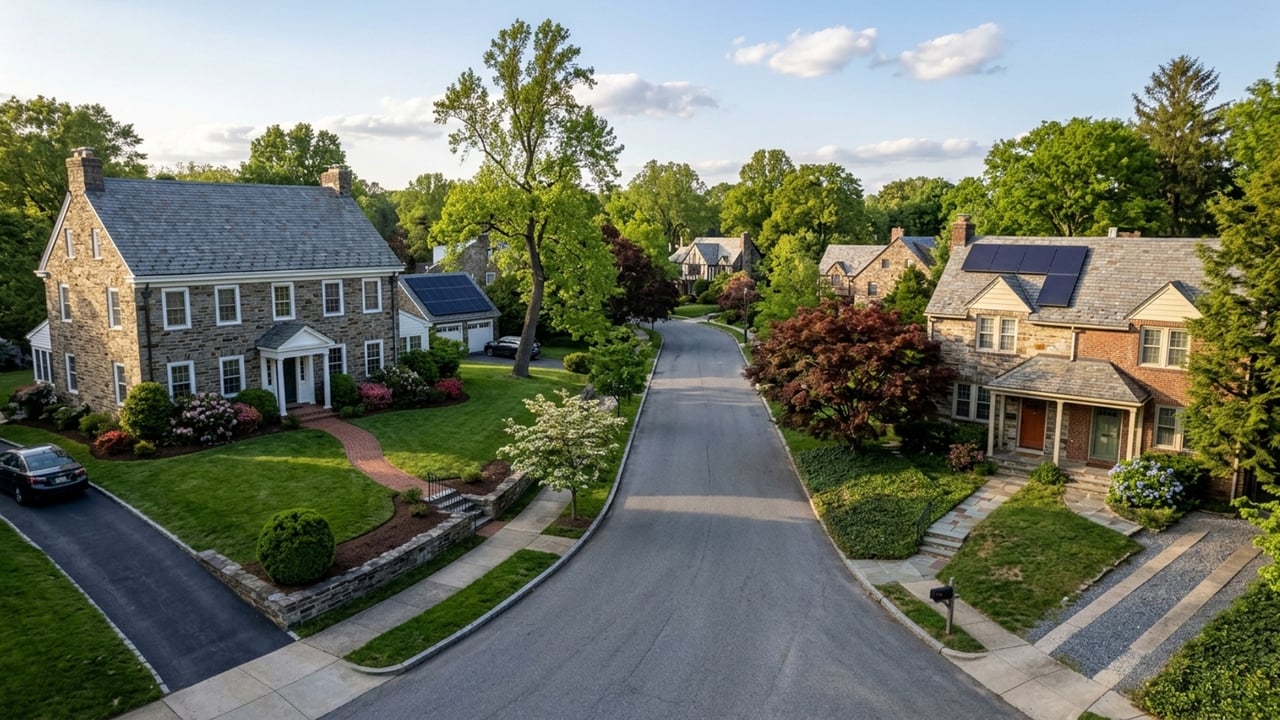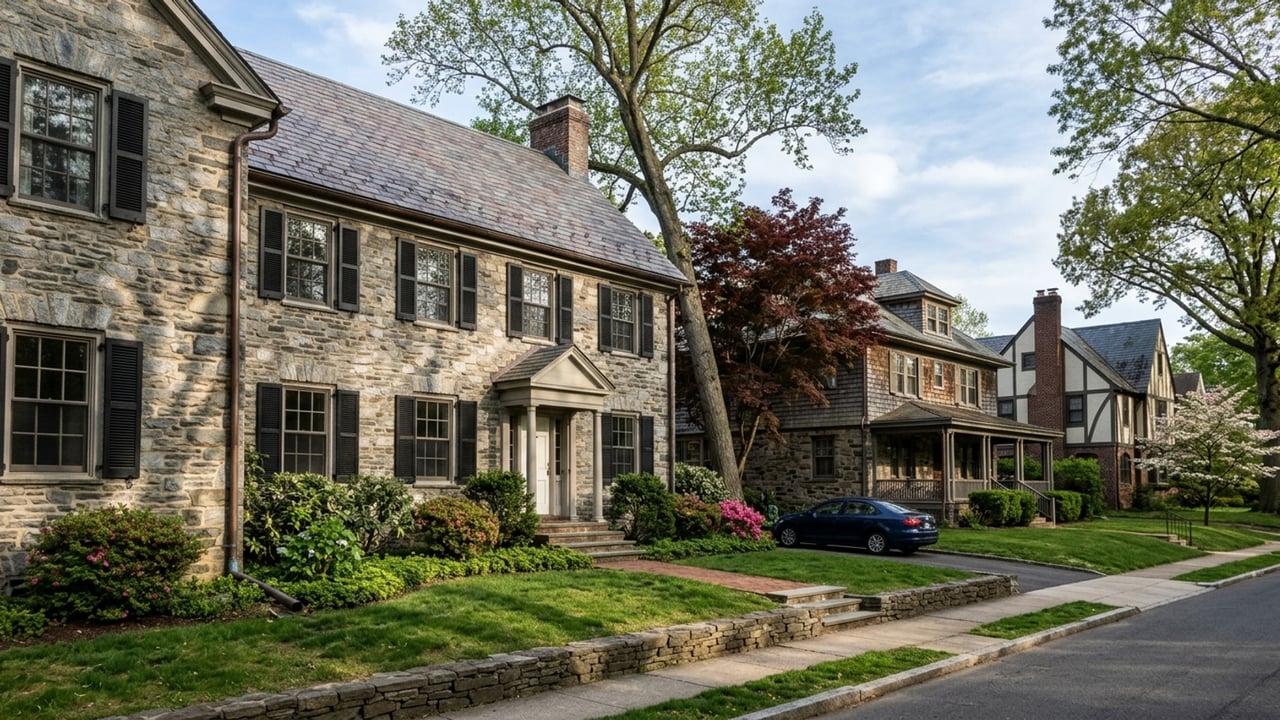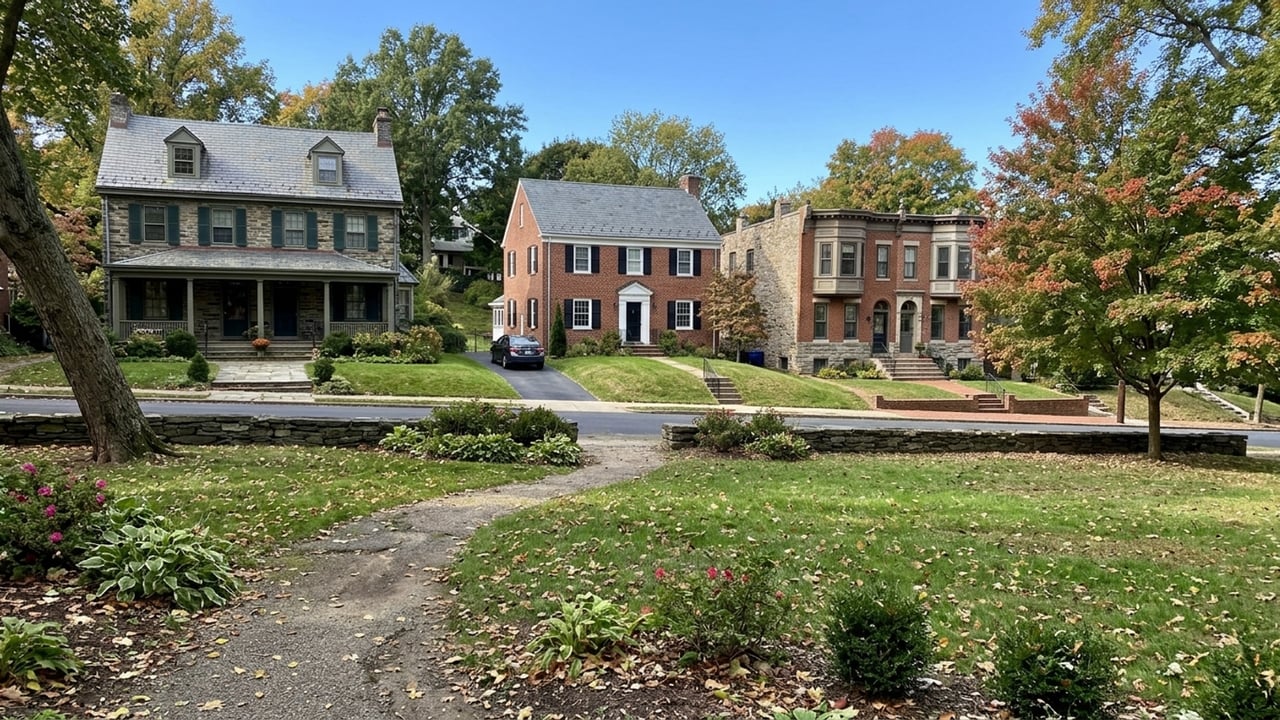
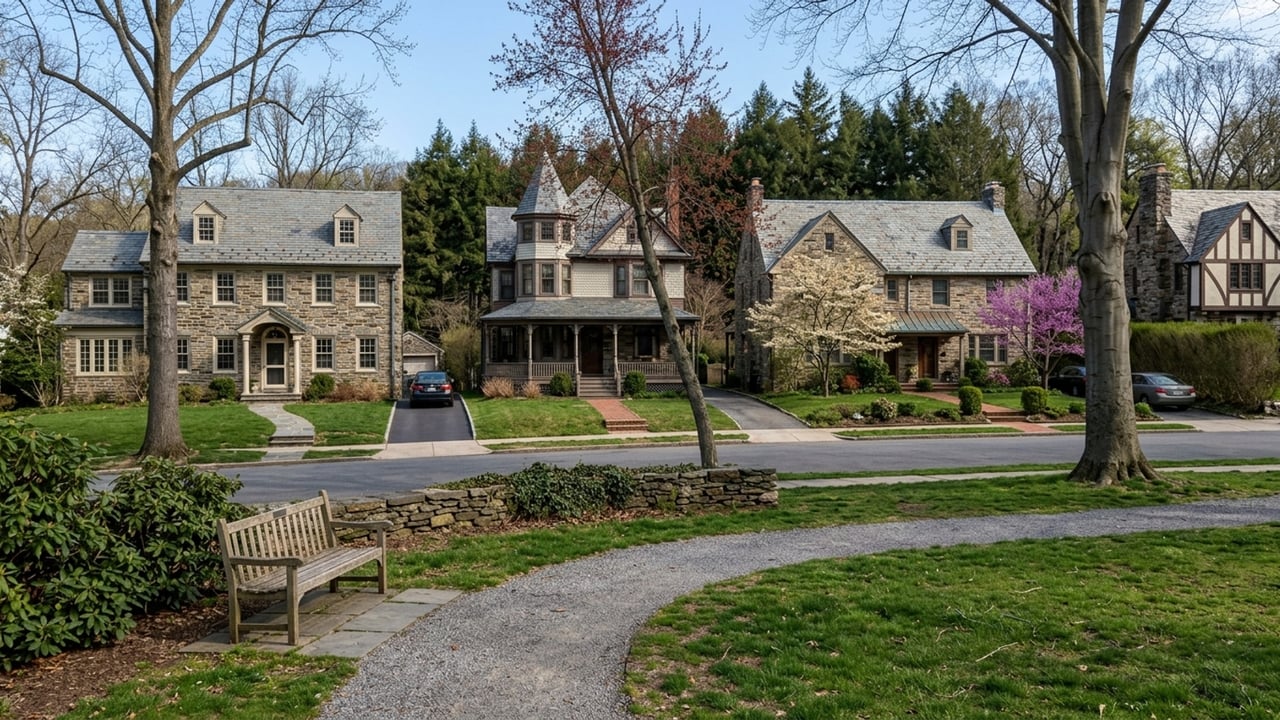
Chestnut Hill sits in the northwest corner of Philadelphia, PA, bordered by the Wissahickon Valley Park and Montgomery County. Buyers looking here are usually weighing the older stone architecture and regional rail access against the reality of city taxes and a competitive housing market.
Prices and competition shift considerably depending on the type of home you want, so understanding those differences before you start touring is worth your time.
Key Takeaway
Chestnut Hill trades leafy streets, Wissahickon trail access, and regional rail for city costs: you pay Philadelphia's wage tax and should expect to compete with other buyers. If you want the lowest entry price, start with townhouses, which had a median sale price of $750,000 in the 90 days ending September 30, 2026 (based on 17 sales). If you want more time to decide and have a larger budget, detached homes stay listed longer but still tend to close above asking.
Who This Guide Is For
You're weighing a move to Chestnut Hill and want to know what you give up, what you get for your money, and which type of home to target before you start touring.
Chestnut Hill Pros and Cons in Brief
The price-per-square-foot gap between townhouses and detached homes is smaller than you might expect: $389 versus $400, based on 17 and 11 sales respectively in the 90 days ending September 30, 2026. That townhouse median is roughly $1.25 million less than the single-family median of $1,999,668, and the difference buys you space, not a better location.
The townhouse segment is also the tighter one. Supply sits at 2.1 months with a median 22 days on market, compared to 3.5 months and 35 days for single-family homes. You'll move faster in the lower price range.
The main draw is straightforward: natural and commercial amenities, inside city limits. Residents have access to the walkable Germantown Avenue business district, Wissahickon Valley Park, and two separate regional rail lines that terminate right in the neighborhood.
The trade-offs center on taxes, regulations, and competition. Philadelphia's wage and transfer taxes apply here, above-asking bidding is common, and exterior changes require approval from the Philadelphia Historical Commission. Commuters on either train line are also starting at the end of the line, which adds time to Center City trips.
Chestnut Hill Housing Market
Expect a fast-paced environment across all property types. Roughly 46.3% of all homes sold above their list price over the 90 days ending September 30, 2026, based on 29 sales. Get pre-approved before you start touring and know your ceiling before you walk into a showing. Condominiums see too few sales to establish a reliable trend, so the practical choice is between attached and detached houses. Those buying a home in Chestnut Hill, Philadelphia, PA can review the typical steps from touring to closing.
Townhouses
Townhouses are the lowest-priced way into the neighborhood, at roughly the same price per square foot as a detached house. You give up yard size and square footage to secure the lower price. Because this segment has the least supply, well-priced listings don't sit.
Have your financing and inspection plan ready before the first showing. If you can move quickly and your budget is closer to the townhouse median, start here.
The downsides are limited decision time and the realities of shared structures. Ask the seller or HOA directly who maintains the roof, party walls, and exterior before you make an offer.
Single-Family Homes
Detached homes give you more space and a bit more runway, with a median of 35 days on market before going under contract, based on 11 sales. If you have a budget near the detached median and want time to think, this segment gives you slightly more of it.
That extra time doesn't translate to a discount. Detached homes in Chestnut Hill recently averaged 104.6% sale-to-list, so you're still competing. What's harder to read is the pricing trend: the single-family median jumped 63.9% year over year, but with only 11 sales, that number almost certainly reflects which large homes happened to sell rather than a sudden move in underlying values.
Historic Homes and Preservation Rules
A significant portion of the neighborhood's appeal comes from its older architecture, which also comes with rules attached. Chestnut Hill was designated on the National Register of Historic Places in 1985, covering roughly 1,920 acres and nearly 2,000 contributing properties.
Before you fall for a house, ask the seller or listing agent whether it's individually designated or subject to historic district rules. Changes to windows, roofs, porches, or facades may need approval from the Philadelphia Historical Commission before any work starts. Those reviews add time to renovation projects and can limit your material choices. Older systems also deserve a thorough look: ask your inspector about the age and condition of the roof, wiring, plumbing, and heating.
Daily Life: Walkability, Parks, and Shopping
The Germantown Avenue business district is the commercial center, lined with independent shops, restaurants, and public parking lots administered by the Chestnut Hill Parking Foundation. How far you end up living from the Avenue changes how often you'll need to get in the car for ordinary errands.
Outdoor access is a real factor here. The neighborhood borders Wissahickon Valley Park, which features the car-free Forbidden Drive trail, and houses the 92-acre Morris Arboretum & Gardens of the University of Pennsylvania.
Parking and topography can complicate things, though. Parking on and near the Avenue relies on six specific public lots and street spaces, and many homes away from the Avenue sit on hills and winding roads. Before you commit, run an ordinary errand from the address you're considering, on foot and by car, at the time of day you'd do it.
Commute and Getting Around
Two SEPTA Regional Rail lines, Chestnut Hill East and Chestnut Hill West, terminate in the neighborhood. Both offer direct service to Center City, and which station you can walk to will shape your daily commute. Drivers typically use Lincoln Drive or Kelly Drive to reach downtown Philadelphia.
The trade-off is that you're at the end of the line, so off-peak frequency is limited. Check the current SEPTA timetable for your nearest station at the hours you'd travel, and drive your planned route at rush hour before you make an offer.
Taxes, Schools, and Safety
Chestnut Hill is inside Philadelphia, which means you pay the city's resident wage tax, currently 3.735%. The combined city and state realty transfer tax is 4.578%, a meaningful closing cost to build into your budget upfront.
Real estate taxes are based on the Office of Property Assessment value, with a 2025 rate of 1.3998%. The city's Homestead Exemption exempts $100,000 of a primary home's assessed value, saving the typical homeowner about $1,399 a year. Look up a specific property's current assessment and tax bill on the Office of Property Assessment site before you make assumptions.
The School District of Philadelphia serves the area. Confirm the school assignment for a specific address using the district's online school finder rather than relying on what a listing says. For crime data, the Philadelphia Police Department's OpenDataPhilly incidents dataset lets you look at a specific address radius and compare the same months year over year. The 14th District handles policing for the neighborhood.
How to Decide If Chestnut Hill Fits Your Move
The decision comes down to your budget, commute, and comfort with city taxes. A few practical questions can help you narrow your focus before you start scheduling tours.
Consider these four factors when planning your search:
- Is your budget closer to townhouse or detached prices, and can you make a strong offer within the first few weeks a home is listed? If you want the most square footage for your budget, compare listings by price per square foot instead of by type, and review the housing market section above.
- Will you get to work by train or by car, and at what hour? Check the commute and getting around section to map your transit options.
- Are you comfortable getting approval before changing a home's exterior, and budgeting for an older house? Refer to the historic homes and preservation rules section.
- How do Philadelphia's resident wage tax and transfer tax change your budget compared with the suburbs you're also considering? Review the taxes and schools section to calculate your total monthly costs.
If you need help comparing specific townhouse and detached listings, or preparing an offer in this fast-paced market, reach out to discuss your options.
Side-by-side comparisons: vs Main Line, vs NJ. Related guides: Cost of living in Chestnut Hill, Philadelphia, Things to do in Chestnut Hill, Philadelphia, Schools in Chestnut Hill, Philadelphia, Hospitals in Chestnut Hill, Philadelphia, Is Chestnut Hill, Philadelphia, PA safe, Job market Chestnut Hill, Philadelphia, Getting around Chestnut Hill, Philadelphia, Retirement communities in Chestnut Hill, Philadelphia, History of Chestnut Hill, Philadelphia, Utilities in Chestnut Hill, Philadelphia, Moving to Chestnut Hill, Philadelphia, Weather patterns in Chestnut Hill, Philadelphia.
At a Glance
- All homes: median sale price $939,737, up 2.5% year over year (90 days ending 2026-09-30; based on 29 sales, interpret with caution)
- All homes: median 24 days on market, 102.9% sale-to-list, 46.3% sold above list (90 days ending 2026-09-30; 29 sales)
- All homes: 2.9 months of supply, 27 homes for sale, $391 median price per square foot (90 days ending 2026-09-30)
- Single family: median sale price $1,999,668, up 63.9% year over year (90 days ending 2026-09-30; based on 11 sales, so the jump likely reflects which homes sold)
- Single family: median 35 days on market, 104.6% sale-to-list, 45.3% sold above list (90 days ending 2026-09-30; 11 sales)
- Single family: 3.5 months of supply, 13 homes for sale, $400 median price per square foot (90 days ending 2026-09-30)
- Townhouse: median sale price $750,000, up 24.5% year over year (90 days ending 2026-09-30; based on 17 sales)
- Townhouse: median 22 days on market, 101.7% sale-to-list, 46.8% sold above list (90 days ending 2026-09-30; 17 sales)
- Townhouse: 2.1 months of supply, 12 homes for sale, $389 median price per square foot (90 days ending 2026-09-30)
Frequently Asked Questions
Is Chestnut Hill, Philadelphia a Good Place to Live?
That depends entirely on your budget, commute, and appetite for an older home. The neighborhood offers immediate access to Wissahickon trails, the walkable Germantown Avenue business district, and two regional rail lines. In exchange, buyers pay Philadelphia wage and transfer taxes, routinely face above-asking bidding, and must secure historic-district approvals for exterior work.
Sources
- Redfin: Data Center
- City of Philadelphia: Wage tax (employers)
- City of Philadelphia: Real Estate Tax
- City of Philadelphia: Realty Transfer Tax
- City of Philadelphia: Office of Property Assessment
- Wikipedia: Chestnut Hill Historic District (Philadelphia)
- Penn Facilities: Morris Arboretum & Gardens
- Chestnut Hill Business District: Parking
- School District of Philadelphia: School Finder
- OpenDataPhilly: Crime Incidents