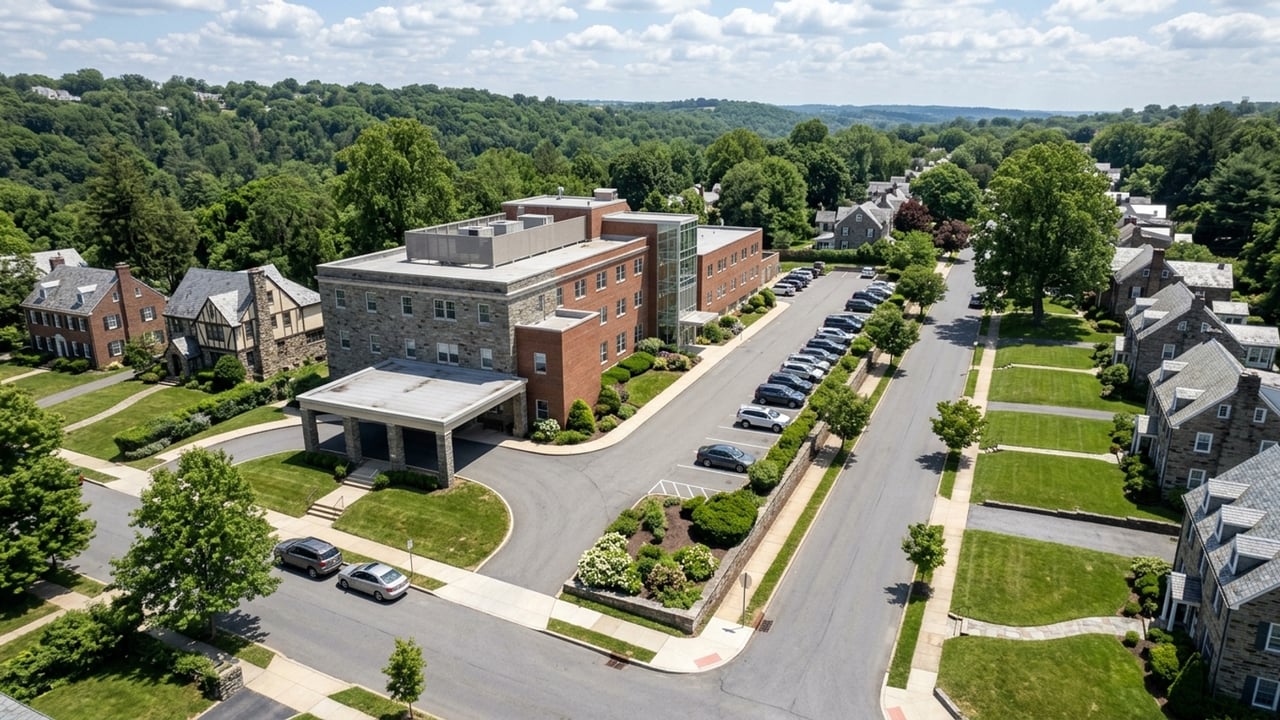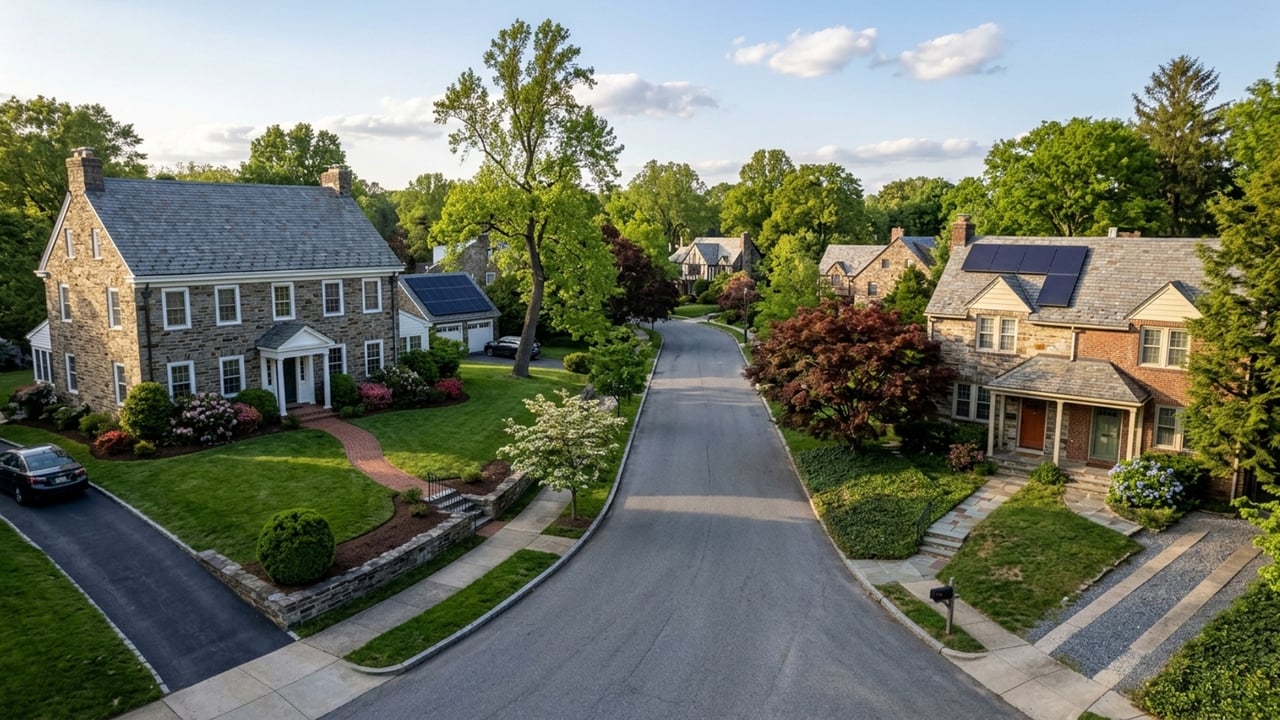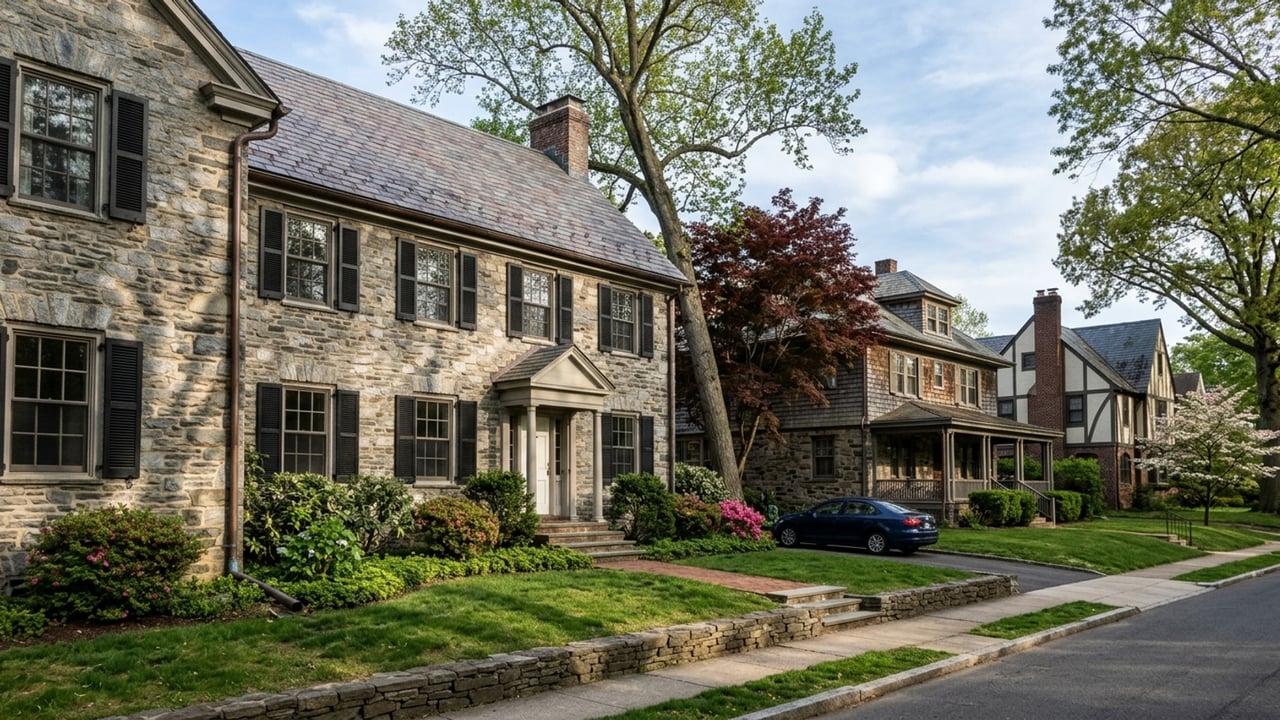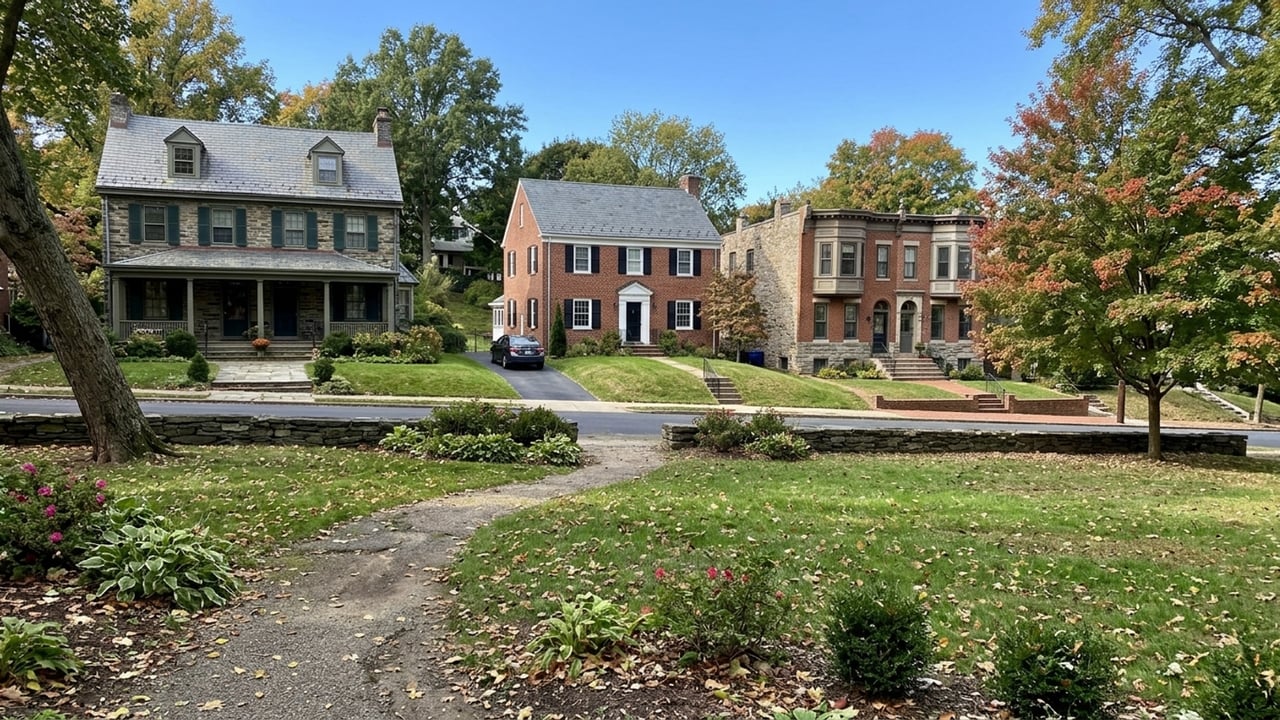
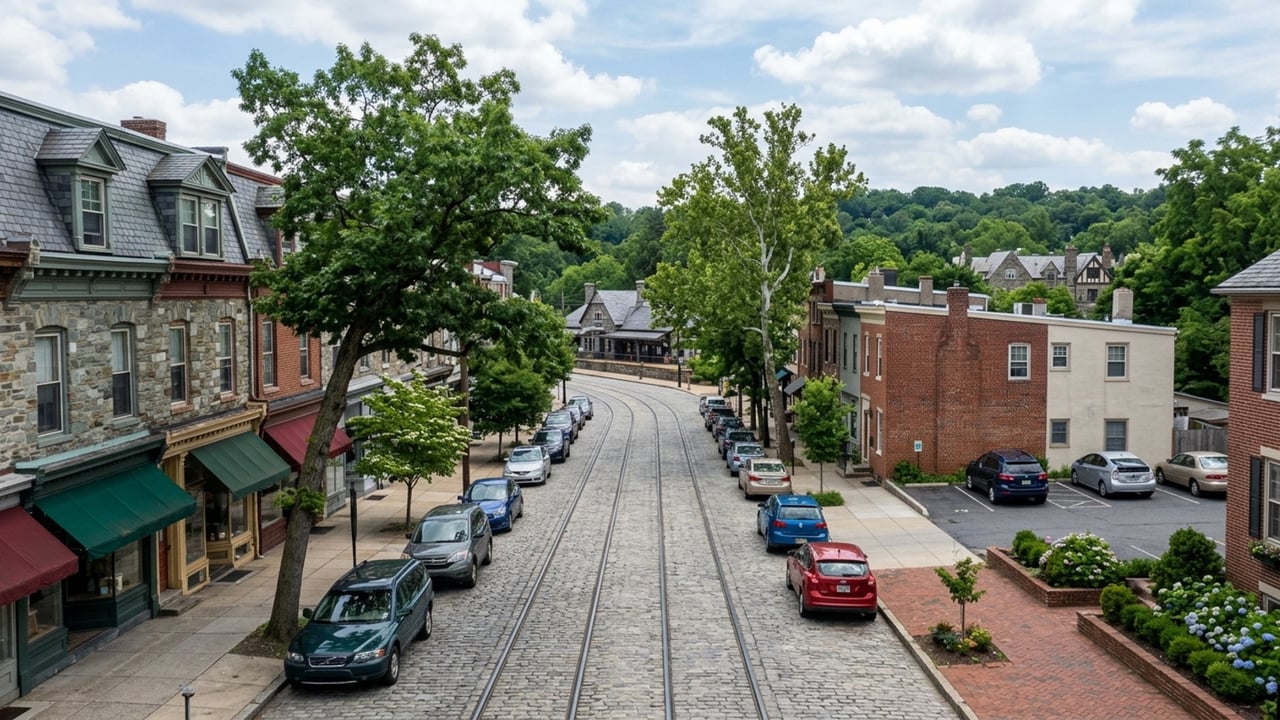
Chestnut Hill sits at the northwest edge of Philadelphia, PA, with a transit setup that's genuinely unusual for a city neighborhood: two separate SEPTA Regional Rail lines, both terminating right here, plus bus routes and a direct path to suburban highways.
Key Takeaway
The easiest way to live in Chestnut Hill is within walking distance of one of its two SEPTA Regional Rail lines, both of which end in the neighborhood and run to Center City, with errands done on foot along Germantown Avenue. Townhouses make that cheaper. If your regular trips run to the suburbs or the Turnpike, a detached house with off-street parking is the better fit.
Who This Guide Is For
You are considering a home in Chestnut Hill and need to know whether your daily trips to work, the airport, and errands work by train, bus, car, or on foot before you choose between a townhouse and a detached house.
How Getting Around Chestnut Hill Works
Chestnut Hill is the end of the line for two Regional Rail routes, and Germantown Avenue is its spine for shops and buses. The real choice isn't car versus no car. It's whether your budget buys walking distance to those, or a detached house with room to park. The pros and cons of living in Chestnut Hill provide more context for these decisions.
Across all home types, the median sale price is $757,138, down 16.6% over the last year on 35 sales. Part of that drop reflects more townhouse sales in the mix rather than a uniform discount. Still, the softer market gives buyers some room to put location first.
Public Transit From Chestnut Hill
Both lines run inbound through Wayne Junction to Jefferson Station, Suburban Station, and 30th Street/Penn Medicine Station on weekdays and weekends. The choice between them comes down to which station you can walk to, not where you're headed downtown.
Chestnut Hill East Line
The Chestnut Hill East Line terminates at Chestnut Hill East station at 100 E. Chestnut Hill Avenue, near the top of Germantown Avenue. If your home sits on the eastern side of the Avenue, this is your line.
Off-peak and weekend trains run less often than rush-hour service, so a commute that works at 8 a.m. may mean a long wait coming home late. Check the current timetable for the hours you travel.
Chestnut Hill West Line
The Chestnut Hill West Line terminates at Chestnut Hill West station at 9 West Evergreen Avenue, just off Germantown Avenue on the western side. It continues past Center City to Temple University.
If you plan to drive to the station rather than walk, check SEPTA's station parking capacity and permit rules before you count on it.
Route 23 and Other SEPTA Buses
Route 23 begins and ends at the Chestnut Hill Loop at Germantown Avenue and Bethlehem Pike, next to Chestnut Hill West station. It runs south via Germantown Avenue into Center City, handling short hops along the Avenue and toward Mount Airy and Germantown. Under SEPTA's bus network redesign, Route 23 keeps this path, and routes 51, 77, 94, and 97 also connect the two rail stations.
For a trip all the way downtown, the bus is much slower than the train. Use it for errands and nearby neighborhoods, not a daily Center City commute.
Getting to Philadelphia International Airport
Chestnut Hill isn't on the Airport Line. Take either Chestnut Hill line into Center City, then transfer at Suburban Station or Jefferson Station. A rideshare or car avoids the transfer but puts you on the Schuylkill Expressway.
The first trains of the day may not reach the airport in time for early flights. Compare the first Airport Line departure with your usual flight times before you rely on the train.
Driving and Parking in Chestnut Hill
Chestnut Hill sits at the city limits, between dense urban streets and suburban highways, so drivers here deal with both tight parking and rush-hour surface roads.
Driving to Center City
Drivers heading south typically use Lincoln Drive toward Kelly Drive, or Ridge Avenue and Henry Avenue toward I-76. There's no expressway in Chestnut Hill itself, so these winding parkway roads are the way to the highway network, and rush-hour drive times on them vary considerably. Drive your actual work route at rush hour before you make an offer.
Driving to the Suburbs and the Turnpike
Northbound commuters take Germantown Avenue or Bethlehem Pike to Route 309. From central Chestnut Hill, it's approximately five to seven miles to the Pennsylvania Turnpike's Fort Washington interchange.
The Regional Rail lines run toward Center City, not suburban office parks. If you commute this way, plan on owning a car and buying a home with somewhere to put it.
Parking on Germantown Avenue
Shoppers use metered spots on the Avenue and six color-coded public lots behind the business district, run by the Chestnut Hill Parking Foundation rather than the city. Residents depend on driveways, garages, or street parking, depending on the block.
Many older homes have no driveway, and the historic district rules may require approval to add a curb cut or garage. Confirm whether a listing includes off-street parking, then ask the Philadelphia Parking Authority whether the block has residential permit parking.
Walking and Biking in Chestnut Hill
Walking Germantown Avenue
The Avenue is what makes a car-light life work here. Shops, restaurants, the rail terminals, and the bus all line one street, so a home within a short walk covers most daily needs. When you evaluate a listing, measure the distance to the Avenue, not just to a rail station.
The Avenue climbs a hill, and stretches are paved with Belgian block and old trolley rails, which makes wheeled travel uneven. Walk it with whatever you'll usually be pushing or carrying before you decide the location works.
Biking and Forbidden Drive
Cyclists can use Forbidden Drive, a 5.35-mile wide, flat, multi-use gravel path that parallels Wissahickon Creek. It has been closed to cars for over a century and is part of the Circuit Trails network. Trail courtesy rules require bikers to yield to hikers, walkers, joggers, and equestrians.
This is a recreation route, not a commuter link to Center City bike lanes, and city bike-share coverage may not extend this far. Map your full ride before counting on a daily bike commute.
Accessible Transportation in Chestnut Hill
SEPTA's CCT Connect paratransit provides door-to-door service throughout the city, including Chestnut Hill, for eligible riders who can't use standard bus or rail routes. Trips must be booked in advance, so it can't replace spontaneous travel.
Accessibility on the rail lines varies by station. Confirm on SEPTA's site whether your nearest station is accessible before relying on it daily. If you're 65 or older, the free senior fares in the FAQ below may weigh as much as location.
How Your Commute Shapes Your Home Search in Chestnut Hill
The market splits fairly cleanly between attached and detached homes, and each comes with different commuting realities.
Townhouses in Chestnut Hill
Townhouses sold for a median $539,984 over the 90 days ending October 31, 2026, down 19.4% year over year on 21 sales, the largest drop of any home type. For a buyer who mainly needs walking distance to a station or the Avenue, that's the lowest entry point available this year.
A 25-day median on market means the price drop doesn't buy time to deliberate. Most townhouses come with no garage. Test the walk to the train and confirm your parking plan in the first days a listing is live.
Single-Family Homes in Chestnut Hill
Single-family homes sold for a median $1,111,125, based on only 14 sales, so treat that figure with caution. These homes are more likely to offer a driveway or garage for a car-dependent commute. The 48-day median on market gives you time to drive your route at rush hour before offering.
Few are listed at any given time, and a larger lot can mean a long walk to the nearest station or the Avenue. Measure that walk before assuming you can skip the car for a Center City commute.
Testing a Commute Before You Make an Offer
Walk from the listing to the nearest Regional Rail station at your commute hour and time it. Ride the train in and back, drive the alternative route at rush hour, and walk to the Avenue for a typical errand.
Nearly three in ten homes still sold above asking despite the overall price drop, so book the test commute right after the first showing. Kristin McFeely's team can schedule showings around a test commute to help you gauge the location. Recheck the SEPTA timetable and any planned service changes before closing.
At a Glance
- All homes: median sale price $757,138, down 16.6% year over year (35 sales, 90 days ending 2026-10-31)
- All homes: median 43 days on market, 99.3% sale-to-list, 29.3% sold above list (35 sales, 90 days ending 2026-10-31)
- All homes: 2.3 months of supply, 27 homes in inventory, $382 median price per square foot (90 days ending 2026-10-31)
- Single-family homes: median sale price $1,111,125, down 9.3% year over year (based on only 14 sales; treat with caution; 90 days ending 2026-10-31)
- Single-family homes: median 48 days on market, 99.2% sale-to-list, 28.5% sold above list, 1.6 months of supply, 8 in inventory, $400 per square foot (based on 14 sales, 90 days ending 2026-10-31)
- Townhouses: median sale price $539,984, down 19.4% year over year (based on 21 sales; treat with caution; 90 days ending 2026-10-31)
- Townhouses: median 25 days on market, 99.4% sale-to-list, 29.7% sold above list, 2.7 months of supply, 18 in inventory, $370 per square foot (based on 21 sales, 90 days ending 2026-10-31)
How to Choose Where to Live in Chestnut Hill Based on How You Travel
- Will you ride to Center City most weekdays? If so, read the Chestnut Hill East Line and Chestnut Hill West Line sections and shortlist homes you can walk from to one of those stations. The townhouse section shows what that costs.
- Do your regular trips go to the suburbs or onto the Pennsylvania Turnpike? If so, read Driving to the Suburbs and the Turnpike and Parking on Germantown Avenue, then look at the single-family section, where off-street parking is more common.
- Do you want to run errands without a car? If so, read Walking Germantown Avenue and Route 23 and Other SEPTA Buses, and weigh distance to the Avenue above lot size.
- Will you rely on door-to-door rides or reduced fares? If so, read Accessible Transportation in Chestnut Hill and the senior-fare FAQ before narrowing by location.
If you want the lowest entry price with a train commute to Center City, start with townhouses within walking distance of a Chestnut Hill East or Chestnut Hill West station. If you want a driveway or garage and a quick run to the Pennsylvania Turnpike, start with single-family listings with confirmed off-street parking and test them against your drive to the Fort Washington interchange; their longer time on market leaves room to drive the route at rush hour before you offer. If you want to run most errands without a car, start with homes within a short walk of Germantown Avenue. Distance to it matters more than lot size. A local buyer's agent can help you map these distances before you tour properties.
Getting Around Chestnut Hill FAQs
How Do You Pay for SEPTA Transit in Chestnut Hill?
Pay with a SEPTA Key card, contactless payment, Quick Trip Ticket, or cash. Both stations are in Regional Rail Fare Zone 2, where fares are $5.00 to $13.00, and bus and Metro fares are $2.90. Neither station sells fare products, though registered SEPTA Key Card holders can use the waiting areas during designated times.
Do You Need a Car to Live in Chestnut Hill?
Not for Center City trips, which rail covers, but most suburban commutes need one.
Is There a Trolley in Chestnut Hill, and Is It Free?
There's no active trolley service. Trolley service to Chestnut Hill began in 1894, and SEPTA suspended regular streetcar service on Route 23 in 1992, converting it to a bus that charges the standard SEPTA fare. Check the local business district's site for any seasonal or free event shuttles.
Where Is Zip Code 19118?
ZIP code 19118 sits at the northwest edge of Philadelphia and is almost entirely coterminous with the commonly recognized boundaries of the Chestnut Hill neighborhood.
How Far Is Chestnut Hill From Downtown Philadelphia?
Rail ride time to Suburban Station on either line depends on the stops, so check SEPTA's current timetable for your station. For driving distance to City Hall via Lincoln Drive, use a mapping app.
Is Chestnut Hill Part of Philadelphia?
Chestnut Hill is a neighborhood within the City and County of Philadelphia, bordering Montgomery County. City SEPTA bus routes and Regional Rail stations operate inside city limits here.
Is Parking Free in Chestnut Hill?
It depends on where you park. Chestnut Hill Parking Foundation lots charge $3 per hour with a 24-hour maximum of $48 (rate set in November 2022), and monthly unlimited permits cost $175.00 (2025 rate). Philadelphia Parking Authority meters on Germantown Avenue were $1 per hour as of November 2022.
Do Seniors Ride SEPTA Free From Chestnut Hill?
Adults 65 and older with a valid SEPTA Senior Fare card ride free at all times on all SEPTA bus, trolley, and Metro routes. They also ride Regional Rail free when both the departure and arrival stations are in Pennsylvania, tapping on and off. Trips to New Jersey or Delaware cost seniors 50% of the weekday fare.