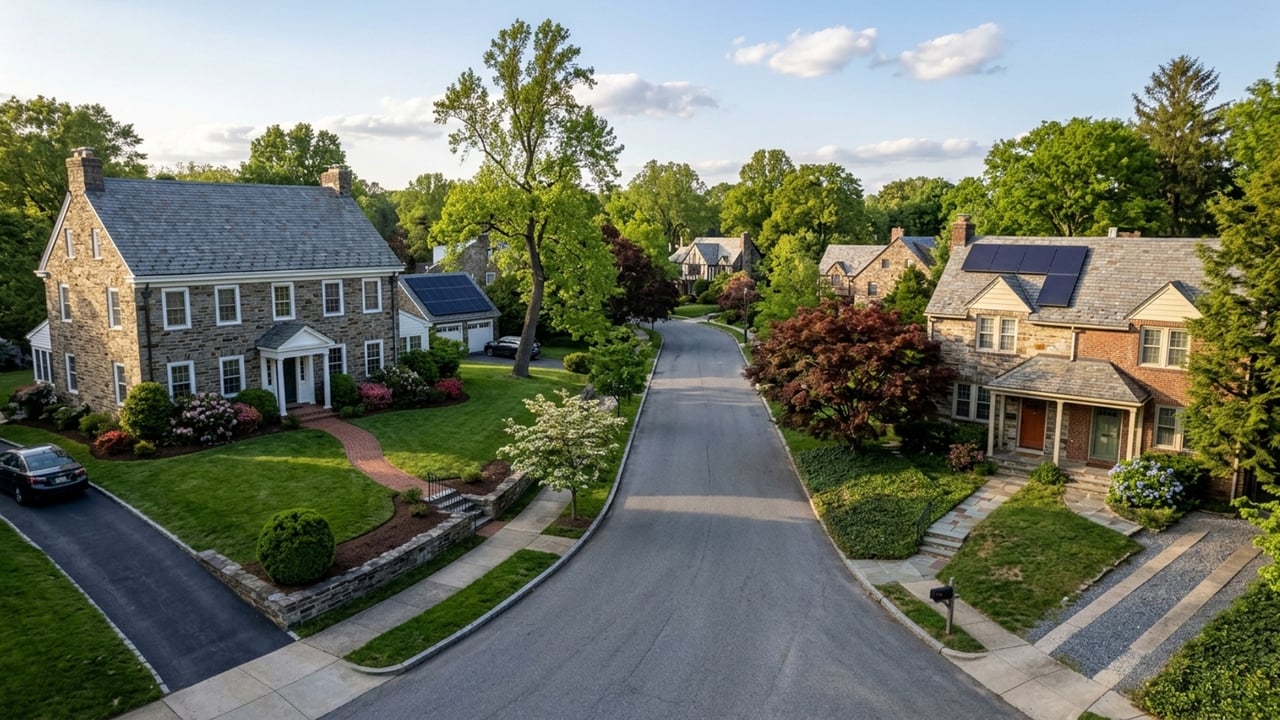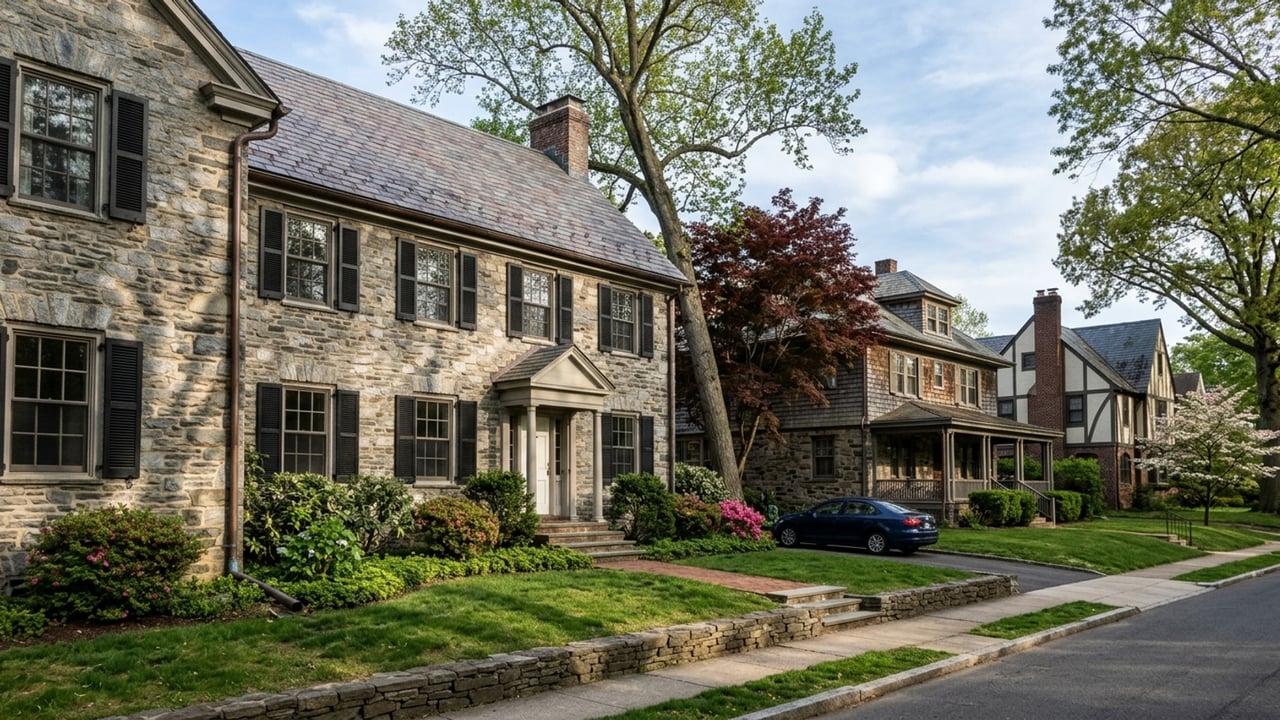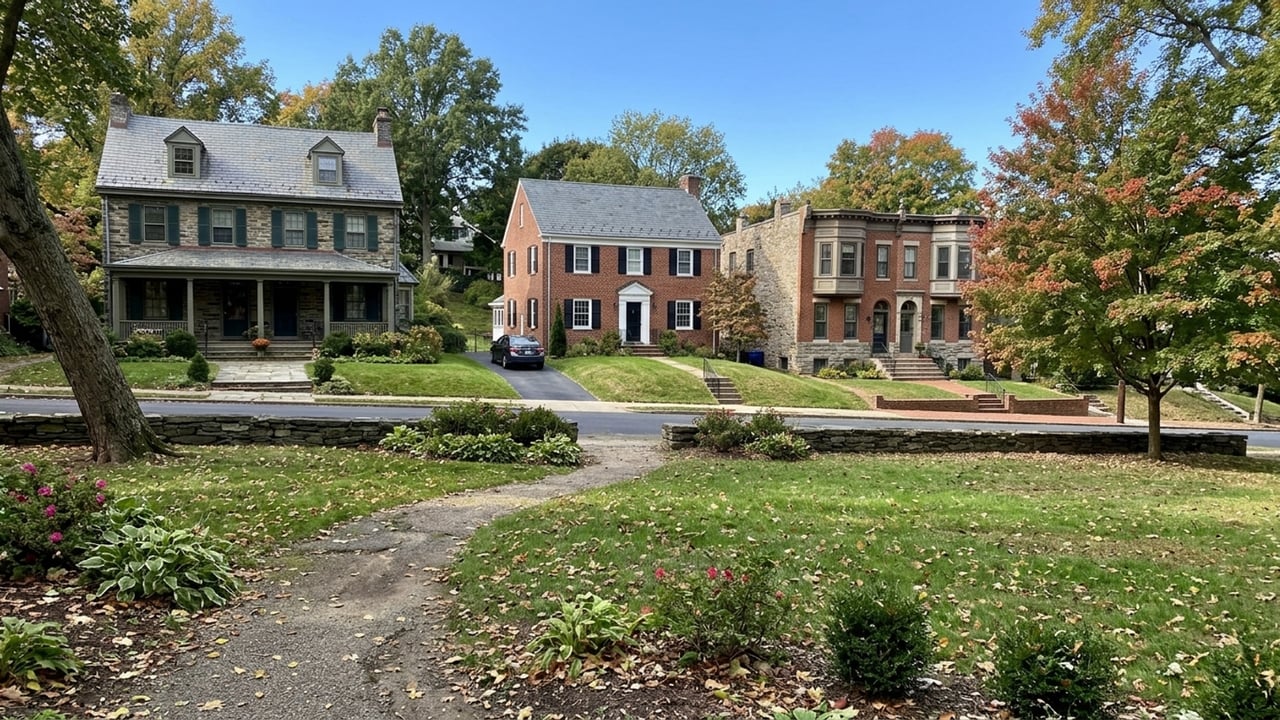
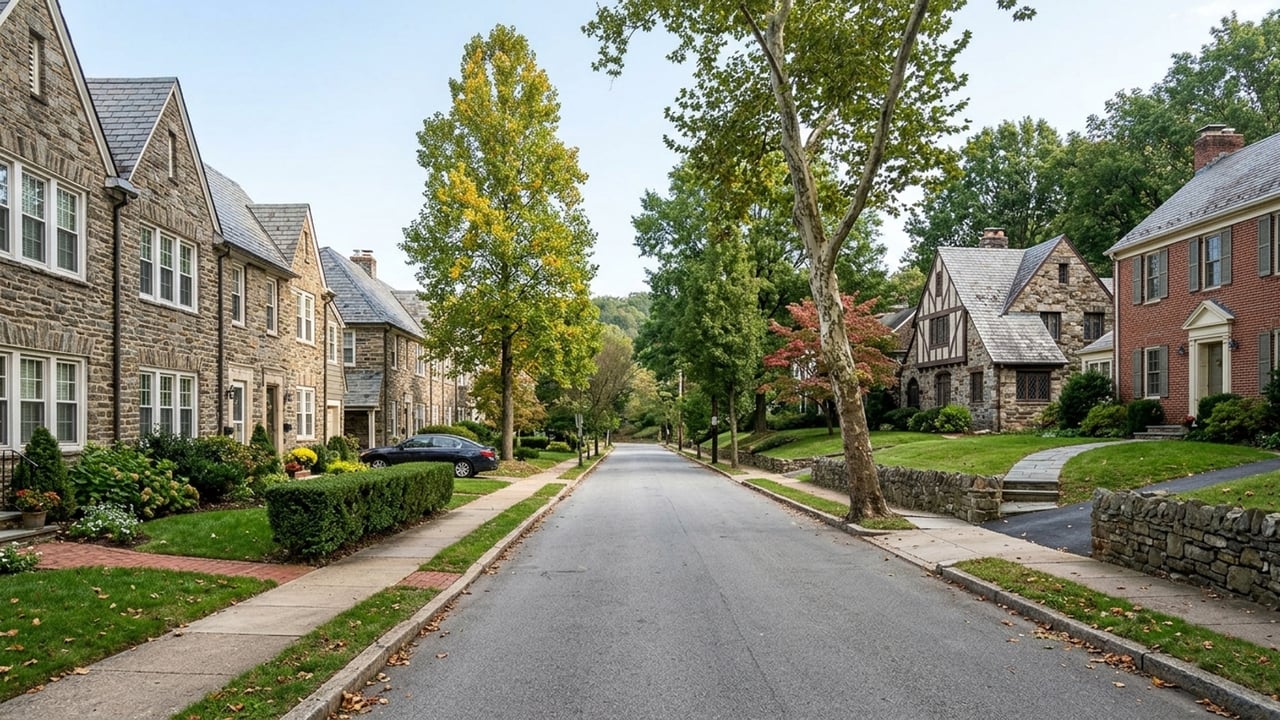
The choice between Chestnut Hill and the Main Line often comes down to the type of house you want to maintain and the tax structure you prefer. Buyers pay nearly the same rate for the interior space regardless of wall structure, which means the neighborhood's price range is a function of size rather than house type. The real decision is whether to buy a smaller attached home inside Philadelphia's city limits or a detached house in a suburban Main Line township.
Key Takeaway
Start with Chestnut Hill if you want a walkable, rail-served village inside Philadelphia and can live in an attached home: townhouses sold at a median of $750,000 based on 17 sales (90 days ending 2026-09-30). Look first at the Main Line if a large detached house is the priority and you'd rather pay township and school property taxes than Philadelphia's resident wage tax.
Who This Guide Is For
You're buying in the Philadelphia area and deciding between Chestnut Hill and a Main Line township, weighing home type, taxes, and the commute.
Chestnut Hill vs Main Line: Home Types and Tax Basics
The decision here turns on home type and tax structure, not prestige. In Chestnut Hill, townhouses recently sold for $389 a square foot based on 17 sales, and detached homes sold for $400 a square foot based on 11 sales. Because buyers pay almost the same rate per square foot either way, you're paying for size, not for the house type.
For the bigger picture, see Pros and Cons of Living in Chestnut Hill, Philadelphia.
The core trade-off is a smaller attached home inside Philadelphia subject to the resident wage tax, versus a detached house under Main Line township and school-district property taxes. Chestnut Hill sits entirely inside Philadelphia city limits. The Main Line is suburban townships outside the city. Those two facts drive every other comparison in this guide.
Once you know which tax and housing structure fits your budget, the lifestyle details of Chestnut Hill are easier to weigh.
Home Types and Prices
The housing supply runs from attached homes near commercial avenues to standalone houses on larger suburban lots, and the zoning on either side of the city line means those property types rarely overlap neatly.
You'll need to decide how much interior space you need and how much exterior maintenance you want to take on before the comparison gets useful.
Townhouses in Chestnut Hill
The attached home is Chestnut Hill's entry point to a walkable, rail-served address. It's also the segment where you'll need to move quickly: townhouses typically went under contract in about three weeks (22 median days, 17 sales). With roughly two months of supply available, there are few properties to choose from and little time to put together an offer.
Don't expect a discount because the home is attached, either. The per-square-foot rate matches that of a detached house.
Shared walls mean shared upkeep. Ask the seller or association for current fees and who maintains party walls, roofs, and exteriors before you get too far along.
Single-Family Homes in Chestnut Hill
Detached homes give you the most house and land inside city limits. These properties took longer to sell than townhouses but still closed at 104.6% of asking on average (11 sales). The median sale price recently hit $1,999,668, though that rests on only 11 sales, so treat it as a read on current inventory rather than a fixed market rule.
You'll have slightly more time to look, but budget over the asking price regardless. Bidding above list is common for the detached inventory that reaches the market.
The other thing to factor in: many detached homes sit within a locally designated historic district, which limits what you can do with the exterior. Check whether a specific address is on the Philadelphia Historical Commission register before planning any exterior work, and schedule a historic home inspection.
Homes on the Main Line
The Main Line is a collection of distinct suburban markets, not a single pricing tier. Each township has its own housing supply, school district, and property tax rate. Lower Merion Township frequently acts as a comparison point for buyers looking just outside the city.
"Main Line prices" don't exist as one flat number. Pull recent sales for the specific township you're considering. That's the only way to understand what a detached house costs there.
Taxes and Commute Costs
Your address dictates your recurring tax burden, and the difference between these two locations is meaningful.
Chestnut Hill residents pay Philadelphia's resident wage tax, which sits at 3.735% for the second half of 2026, plus the city real estate tax of 1.3998% on the assessed property value. Main Line owners pay county, township, and school-district property taxes but avoid the Philadelphia resident wage tax. If you work in the city but live on the Main Line, you'll still owe the non-resident wage tax of 3.425%, so your wage-tax savings shrink to just the small difference between the resident and non-resident rates.
You can estimate a suburban property tax bill using a rate like Lower Merion Township's combined 2026 millage of 47.2727 mills. Check your employer's wage tax withholding to confirm which rate you currently pay, and look up the current assessment for a specific property through Philadelphia's Office of Property Assessment or the relevant county office.
Commute times depend on which Regional Rail line reaches your workplace. The Chestnut Hill East and Chestnut Hill West lines run into Suburban Station, with local trains taking roughly 40 to 45 minutes. The Main Line's Paoli/Thorndale line also serves Suburban Station, taking about 22 minutes from Ardmore. Time the trip from the station nearest the home you're considering to your workplace on SEPTA's current schedule before you commit to either side of the city line.
How to Research Local Schools
Chestnut Hill addresses fall under the School District of Philadelphia. Main Line townships operate their own independent school districts.
The School District of Philadelphia maintains an official online lookup tool where you can enter an address to see its catchment area and feeder pattern. Confirm school assignment for the exact address directly with the district as well. Boundaries and admission rules change, and the lookup tool reflects the current data, not necessarily what the listing agent tells you.
Choosing Between Chestnut Hill and the Main Line
Four questions will narrow this down faster than any comparison chart.
- Will you live in an attached home? If yes, start with the townhouse section. If you need a detached house with land, compare single-family homes in Chestnut Hill with Main Line properties.
- Where are your wages earned, and how large is your household income? The resident wage tax can outweigh a property-tax difference. Run the math on your salary before you rule either location out.
- Which Regional Rail line reaches your workplace? Chestnut Hill's two lines and the Main Line's Paoli/Thorndale line serve different parts of the city.
- Can you offer above asking on a detached house? Chestnut Hill single-family homes closed above list on average, so factor that into your budget before you fall in love with one.
If you want a walkable attached home near that townhouse median, start with townhouses in Chestnut Hill. If you want more listings and a bit more time to decide on a detached house inside the city, start with single-family homes in Chestnut Hill. If you want a detached house with a rail commute and no Philadelphia resident wage tax, start with homes on the Main Line. Philadelphia Home Collective can pull township-by-township comparisons alongside Chestnut Hill sales to help you review the housing market and plan your offer.
At a Glance
- Chestnut Hill, all homes (90 days ending 2026-09-30, based on 29 sales): median sale price $939,737, up 2.5% year over year; median $391 per sq ft
- Chestnut Hill, all homes (same window, 29 sales): 24 median days on market, 102.9% sale-to-list, 46.3% sold above list, 2.9 months of supply, 27 homes for sale
- Chestnut Hill, single-family (90 days ending 2026-09-30, based on only 11 sales): median sale price $1,999,668, up 63.9% year over year (with so few sales, this likely reflects which homes sold, not a market-wide jump); median $400 per sq ft
- Chestnut Hill, single-family (same window, 11 sales): 35 median days on market, 104.6% sale-to-list, 45.3% sold above list, 3.5 months of supply, 13 homes for sale
- Chestnut Hill, townhouses (90 days ending 2026-09-30, based on 17 sales): median sale price $750,000, up 24.5% year over year; median $389 per sq ft
- Chestnut Hill, townhouses (same window, 17 sales): 22 median days on market, 101.7% sale-to-list, 46.8% sold above list, 2.1 months of supply, 12 homes for sale
Chestnut Hill vs Main Line FAQs
Is Chestnut Hill a Good Neighborhood to Buy In?
Buyer demand is strong. In the 90-day period ending late September 2026, 46.3% of all homes sold above their list price based on 29 sales. Prepare to make competitive offers, and weigh the lifestyle details against your own priorities to decide if it fits.
Where Is the Main Line in Relation to Philadelphia?
The Main Line is a suburban region located west and northwest of Center City Philadelphia, sitting entirely outside the city limits. It spans parts of Montgomery, Chester, and Delaware counties. The name comes from the historical Pennsylvania Railroad main line that ran through these townships.
Is Chestnut Hill Part of Philadelphia, and What County Is It In?
Yes, Chestnut Hill is a neighborhood within the city of Philadelphia, which means it's also in Philadelphia County. Residents pay the city's resident wage tax, which sits at 3.735% for the second half of 2026.
Is Chestnut Hill Safe?
You can review official crime statistics through the Philadelphia Police Department crime data or the OpenDataPhilly portal for the police district covering 19118. To make the data useful, compare the same offense categories and time periods using per-resident rates against township police or state UCR data for any Main Line town you're considering.
How Far Is Chestnut Hill from Downtown Philadelphia?
The neighborhood sits in the northwest corner of the city. Map the specific driving distance from a Chestnut Hill address directly to City Hall to get a realistic read on the car commute.
What Zip Code Is Chestnut Hill In?
The neighborhood is primarily in the 19118 zip code, which is also where the Philadelphia Home Collective office sits on Germantown Avenue. Zip code boundaries and neighborhood lines don't always line up perfectly when you're checking home prices by zip code.
What Is Chestnut Hill Known For?
The area is known for the Germantown Avenue commercial corridor and its location bordering Wissahickon Valley Park. It also carries a large stock of historic architecture, with the Chestnut Hill Historic District formally listed on the National Register of Historic Places.
Is Parking Hard in Chestnut Hill?
The Chestnut Hill Parking Foundation operates six public parking lots along Germantown Avenue and its side streets, with kiosks and monthly permits available for $175. Confirm whether a specific property includes off-street parking or a garage before you assume street spaces will cover it.
Sources
- Redfin: Data Center
- City of Philadelphia: Wage Tax
- City of Philadelphia: Property Tax
- Montgomery County: Millage Rates
- SEPTA: Trip Planner
- Wikipedia: Ardmore Station
- Wikipedia: Philadelphia Main Line
- School District of Philadelphia: School Finder
- National Park Service: Chestnut Hill Historic District
- Chestnut Hill Business District: Parking