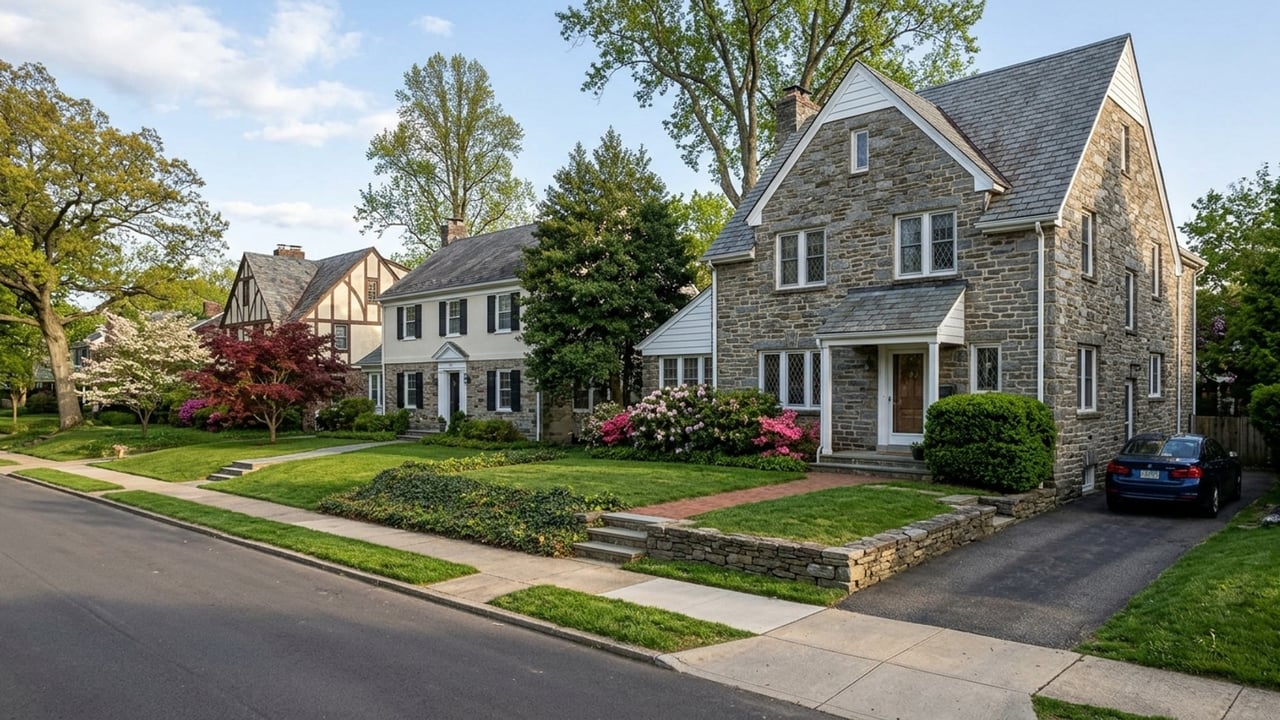
The median sale price for a home in the Chestnut Hill neighborhood of Philadelphia, PA recently hit $939,737. That figure covers a wide range of properties, from attached stone rowhomes near the train stations to multi-million-dollar detached estates bordering the park.
The neighborhood draws heavy buyer interest and holds very limited inventory, so nearly half of all listings close above asking. Deciding what to buy comes down to understanding the price difference between property types and putting together an offer that can compete in a low-supply environment.
Key takeaway
If you want the lower entry price, start with townhouses: the median Chestnut Hill townhouse sold for $750,000 in the 90 days ending September 30, 2026. You pay nearly the same per square foot as for a detached house, so you're buying less space, not a discount. Choose a single-family house if you need the room and want a little more time to decide, but expect to bid above asking either way.
Who this guide is for
You're deciding between a townhouse and a detached house in Chestnut Hill and want to know what each costs, how quickly they sell, and how far over asking to budget your offer.
Chestnut Hill housing market outlook
In Chestnut Hill, a townhouse costs almost exactly what a detached house costs per square foot. Over the 90 days ending September 30, 2026, townhouses sold for a median of $389 per square foot, while single-family homes sold for $400. Choosing an attached home doesn't buy you a cheaper-built property, only a smaller one.
Compare listings by total square footage and condition rather than by property type. The real difference between these categories is pace. The entire neighborhood sits at 2.9 months of supply, which favors sellers. Don't expect homeowners to wait for you to make up your mind.
Every figure on this page rests on fewer than 30 sales within a 90-day window. Individual streets and specific houses vary widely in price, so treat these numbers as a general direction rather than a binding appraisal. The complete market breakdown is in the "At a glance" list near the end of this guide.
Townhouse or single-family home in Chestnut Hill?
The neighborhood doesn't have sub-area breakdowns by location, so the best way to understand the market is to break it down by property type. Townhouses and detached houses move at different speeds and attract different levels of competition.
How these segments behave will shape how you time your tours and set your expectations. The short version: the townhouse market requires speed, and the single-family market requires a careful read of recent sales data.
Townhouses in Chestnut Hill
Townhouses are the fastest-moving segment of the local market. They carry the tightest supply of any property type at just 2.1 months, and homes typically go under contract in 22 days. The best-priced attached homes are gone in about three weeks.
Properties in this category range from older attached homes along the main corridors to newer clustered developments. Association dues vary by community, so ask any townhouse association for current monthly dues, what they cover, the reserve balance, and any planned special assessments before you write an offer.
A Chestnut Hill townhouse costs almost the same per square foot as a detached house, as the overall market data makes clear. What you're giving up is square footage, not quality. And with roughly two months of supply, you'll rarely have time for a second showing or a leisurely decision. Get pre-approved before you tour.
Single-family homes in Chestnut Hill
The median sale price for single-family homes showed a 63.9% year-over-year jump recently, but that figure comes from just 11 sales. It reflects which houses happened to sell during this window, not a massive surge in neighborhood property values. That 64% jump tells you about the mix of homes that closed, not what any specific house is worth.
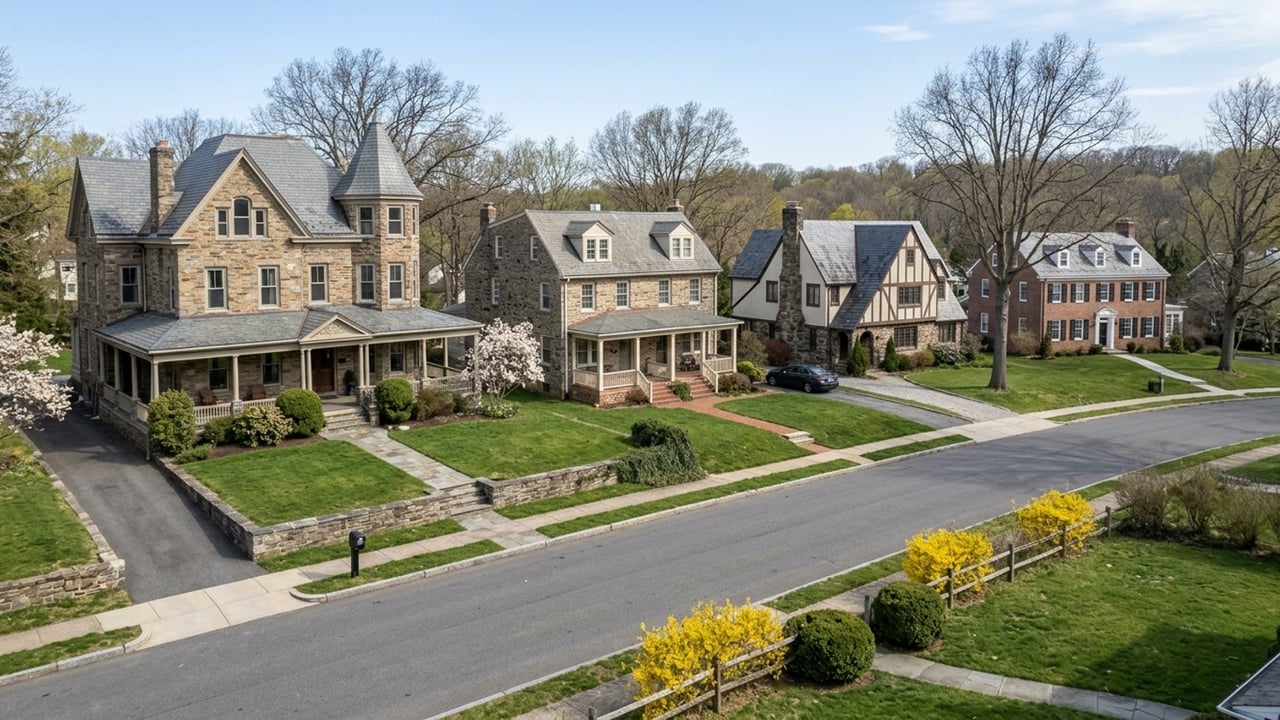
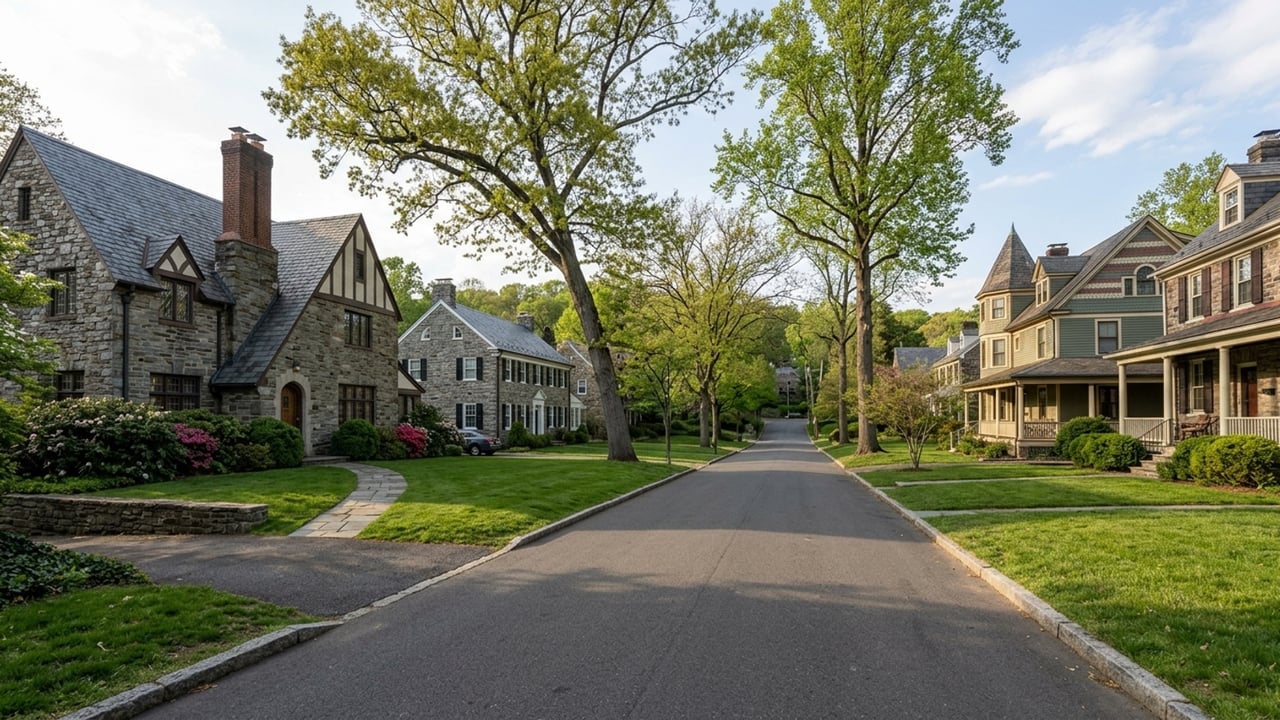
The single-family stock includes stone colonials, Victorians, and larger estates on bigger lots. These homes sat for a median of 35 days on the market, but the extra time doesn't signal softer pricing: single-family properties still closed at 104.6% of their list price, which means well-priced houses draw competing offers once the right buyer arrives.
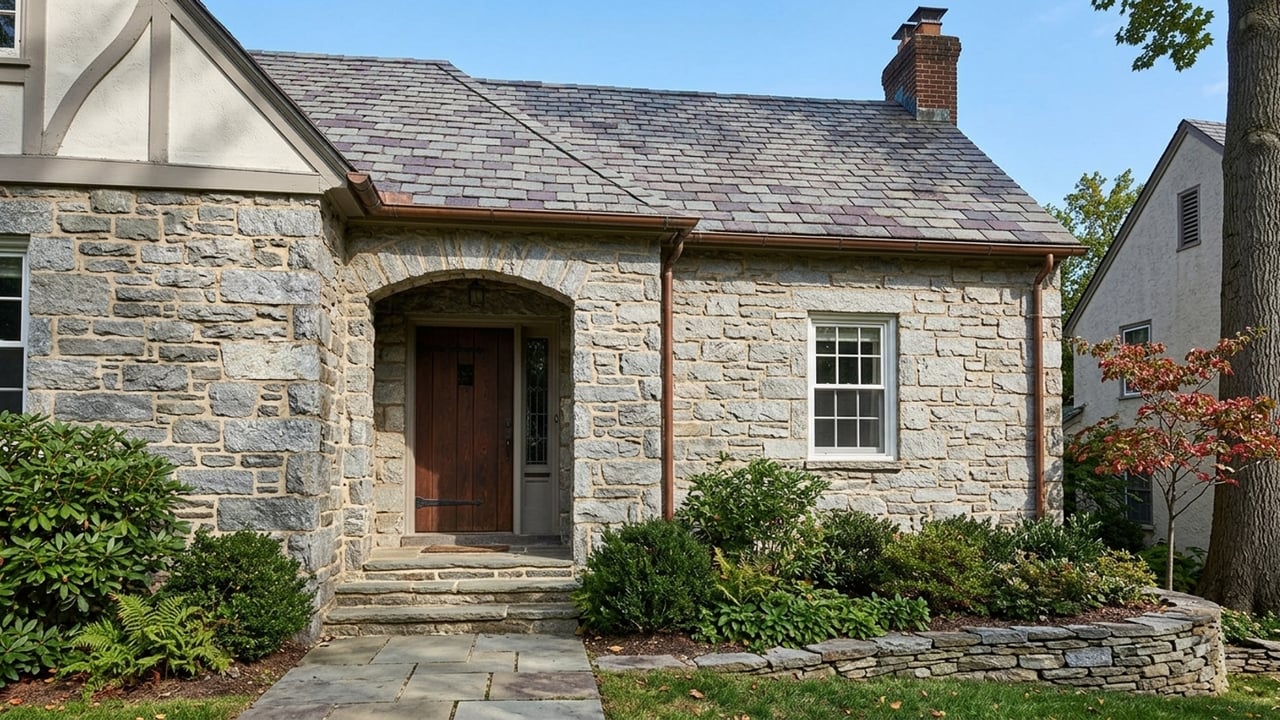
You get more time to decide, but the houses that sell are going over asking. Older stone and slate homes also carry inspection and upkeep costs a newer townhouse may not. Ask your inspector specifically about slate or flat roofs, stone pointing, original wiring, and any buried oil tank.
Condos and smaller homes in Chestnut Hill
Too few condos sold in this window to report a reliable neighborhood median. Condo buyers here are working from very few recent comparable sales, so pricing has to come from a hand-pulled set of similar units rather than a neighborhood median.
With so few sales, it's genuinely hard to tell whether a condo is priced right. Ask for the building's last several sales, current HOA dues, the reserve study, and whether the building is FHA-approved before you commit.
How to make an offer in Chestnut Hill
Across all home types, 46.3% of buyers paid over asking during the recent 90-day window. Because nearly half of homes sell above list, set your search ceiling below your true maximum budget. That gap is what gives you the financial room to bid aggressively when you find the right property.
For illustration only: if you find a hypothetical townhouse listed at $800,000 and it closes at the recent townhouse sale-to-list rate of 101.7%, it would sell for about $813,600. Budget that difference into your down payment and appraisal-gap planning before you start touring, not after you're in contract.
Match your pace to the property type. Offer quickly on townhouses, and use the extra days on single-family homes for a thorough inspection rather than treating that time as negotiating room. Note that pre-1978 homes come with federal lead-paint disclosure requirements, and Pennsylvania sellers must provide a property disclosure statement detailing known defects. Read the disclosure carefully before you write your offer.
Buying a historic home in Chestnut Hill
Only a small fraction of properties here carry individual local protection. According to the Chestnut Hill Conservancy, just 90 of the neighborhood's roughly 2,700 properties are designated on the Philadelphia Register of Historic Places. Exterior work on those locally designated properties requires review by the Philadelphia Historical Commission.
The broader Chestnut Hill Historic District is listed on the National Register of Historic Places, which covers roughly 1,920 acres. National Register listing alone doesn't impose owner restrictions on alterations; the status is primarily honorific. Confirm with the Philadelphia Historical Commission whether a specific address is in a locally designated historic district before you plan any exterior work, whether that's windows, roofs, or additions.
Taxes and closing costs in Chestnut Hill
Philadelphia's realty transfer tax is one of the larger closing costs in the region. The total rate is 4.578%, made up of a 3.578% city portion and a 1% Pennsylvania state portion, and it's customarily split evenly between buyer and seller.
On an $813,600 purchase, a buyer paying half the transfer tax would owe roughly $18,623 at closing. For property taxes, Philadelphia's combined rate is 1.3998% of assessed value. Look up a property's current assessment and tax bill on the City of Philadelphia's Office of Property Assessment site rather than relying on the listing.
Philadelphia also offers a Homestead Exemption that reduces a primary residence's assessed value by $100,000, saving the typical homeowner about $1,399 a year. There are no income or age requirements, and owners can apply online via the Philadelphia Tax Center by the December 1 deadline.
Where is Chestnut Hill?
Chestnut Hill is a neighborhood within the City of Philadelphia (ZIP code 19118) in Northwest Philadelphia. It's served by two SEPTA Regional Rail lines, the Chestnut Hill East and Chestnut Hill West lines, both of which run between the neighborhood and Center City. To reach Philadelphia International Airport, you take either line into Center City and transfer to the Airport Line.
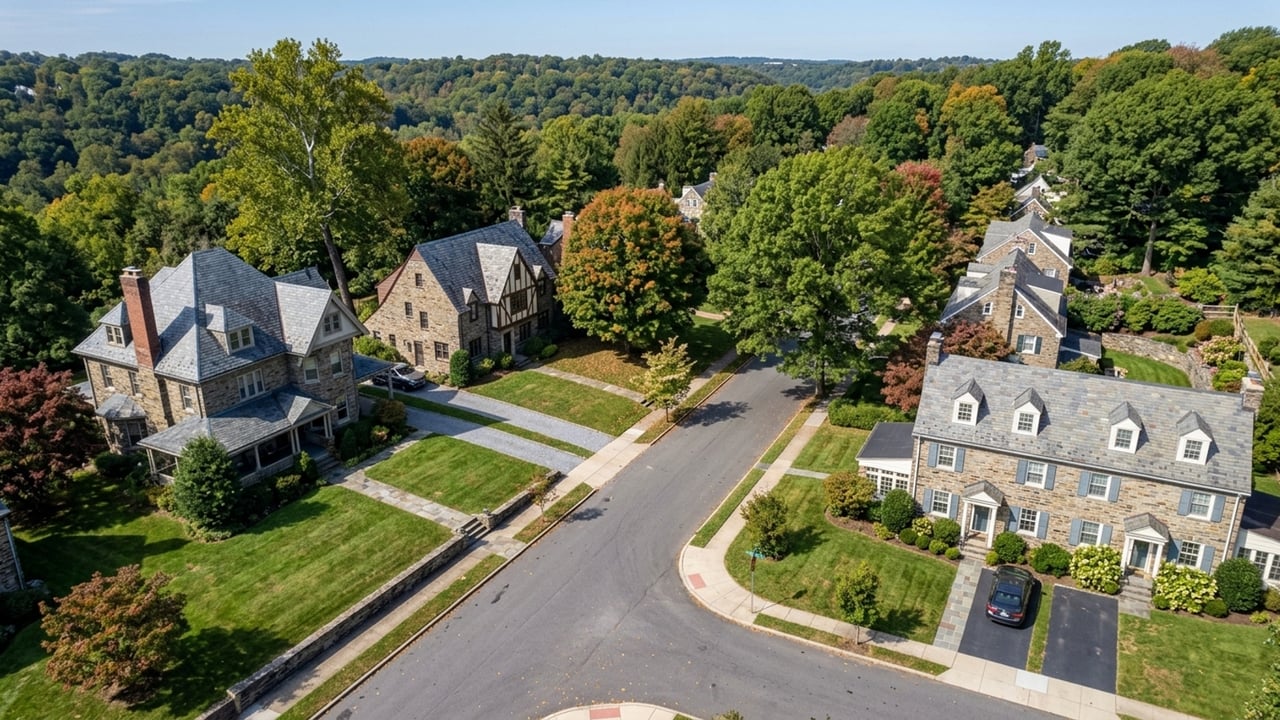
The neighborhood borders Wissahickon Valley Park, which protects approximately 2,042 acres of woodland surrounding Wissahickon Creek. Residents also have access to the Morris Arboretum and Gardens, a 92-acre public garden on East Northwestern Avenue. The Germantown Avenue commercial corridor serves as the main retail strip.
For public education, use the School District of Philadelphia school finder tool. Enter an exact address to confirm the assigned neighborhood schools for that specific home.
How to narrow your search
Choosing the right home here requires balancing your space needs with the speed of the market. Work through a few practical questions before you start touring:
- Do you need more space than a typical townhouse offers? If yes, look at single-family homes. If no, start with townhouses and condos.
- Can you tour and offer within the first couple of weeks a home is listed? If not, review the timing advice in the offer section.
- Is your budget capped at the list price, or can you go above it? Work through the transfer-tax math before setting your search ceiling.
- Do you plan to change the exterior? Check the local historic designation before you fall for a property.
If you want the lowest entry price and can tour quickly, start with townhouses. If you want more space and a little more time to decide, single-family homes are the better fit. For listings that have sat longer than 24 days, you're more likely to stay at or near the list price. Kristin McFeely's Compass team works from Germantown Avenue and can pull recent comparable sales for a specific street to help you start your search.
Related guides: Best real estate agent in Chestnut Hill, Philadelphia, Choose a buyer's agent in Chestnut Hill, Philadelphia, Selling a home in Chestnut Hill, Philadelphia, Pros and cons of living in Chestnut Hill, Philadelphia, Chestnut Hill, Philadelphia pa zip codes, Chestnut Hill, Philadelphia pa housing market, Best neighborhoods in Chestnut Hill, Philadelphia.
At a glance
- All homes, 90 days ending 2026-09-30: median sale price $939,737, up 2.5% year over year (based on 29 sales; treat as directional)
- All homes, same window: 24 median days on market; 102.9% sale-to-list; 46.3% sold above list
- All homes, same window: 2.9 months of supply; 27 homes for sale; $391 median price per square foot
- Single-family homes, same window: median sale price $1,999,668, up 63.9% year over year (based on 11 sales; reflects which homes sold, not a 64% value rise)
- Single-family homes, same window: 35 median days on market; 104.6% sale-to-list; 45.3% sold above list; 3.5 months of supply; 13 for sale; $400 median price per square foot (11 sales)
- Townhouses, same window: median sale price $750,000, up 24.5% year over year (based on 17 sales)
- Townhouses, same window: 22 median days on market; 101.7% sale-to-list; 46.8% sold above list; 2.1 months of supply; 12 for sale; $389 median price per square foot (17 sales)
FAQ
Is Chestnut Hill, Philadelphia a good place to live?
Living here gives you direct access to Wissahickon Valley Park and two Regional Rail lines connecting to Center City. The trade-off is the premium price: nearly half of all homes sell above asking, and Philadelphia's transfer tax adds meaningfully to your closing costs. The property-type breakdown earlier in this guide will help you see what fits your budget.
What is the 3-3-3 rule for buying a house?
The 3-3-3 rule is an informal rule of thumb with several versions used to quickly estimate housing affordability. Applying the price-to-income version to the townhouse example from earlier, a buyer might estimate needing an income around $271,200 to afford the home. This is a rough screen, not lending criteria or advice. Talk to a lender for exact figures.
Sources
- Redfin: Data Center
- City of Philadelphia: Realty Transfer Tax
- City of Philadelphia: Real Estate Tax
- City of Philadelphia: Homestead Exemption
- City of Philadelphia: Property Search
- Chestnut Hill Conservancy: Historic Designation
- Wikipedia: Chestnut Hill Historic District
- SEPTA: Regional Rail Schedules
- School District of Philadelphia: School Finder
- Wikipedia: Wissahickon Valley Park
- University of Pennsylvania: Morris Arboretum
- Pennsylvania General Assembly: Seller Disclosure Law
- EPA: Lead-Based Paint Disclosure