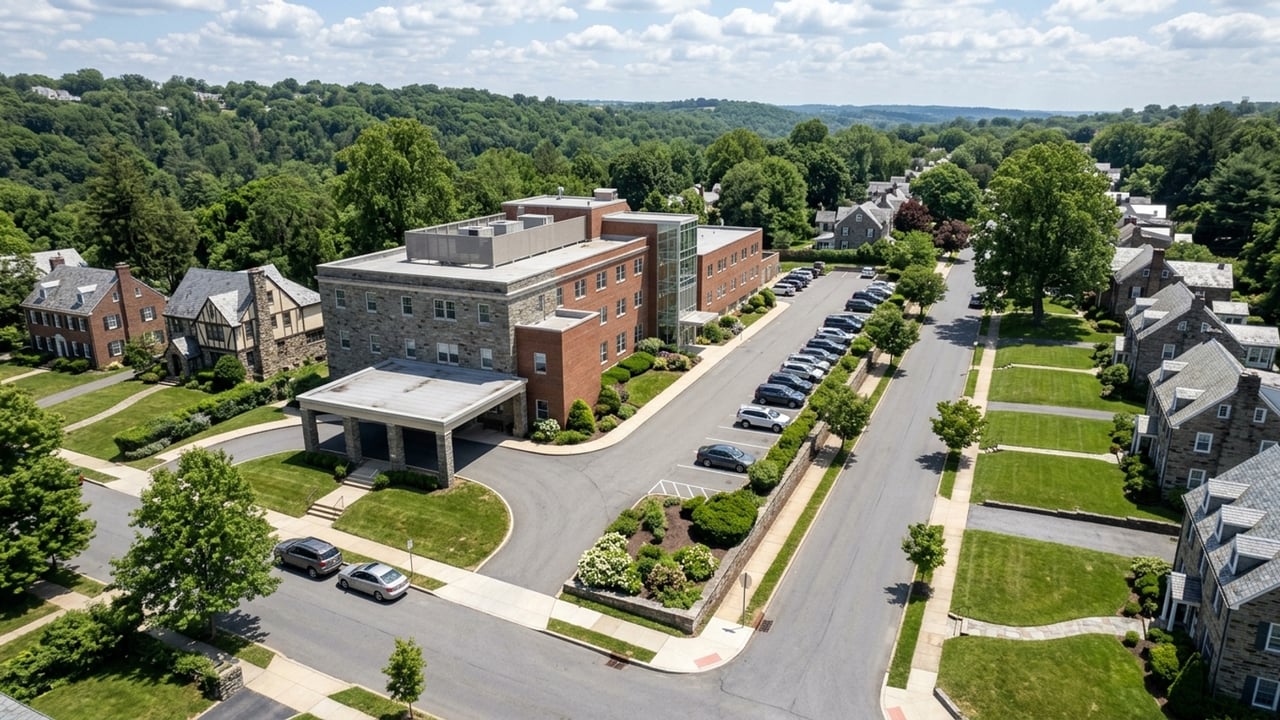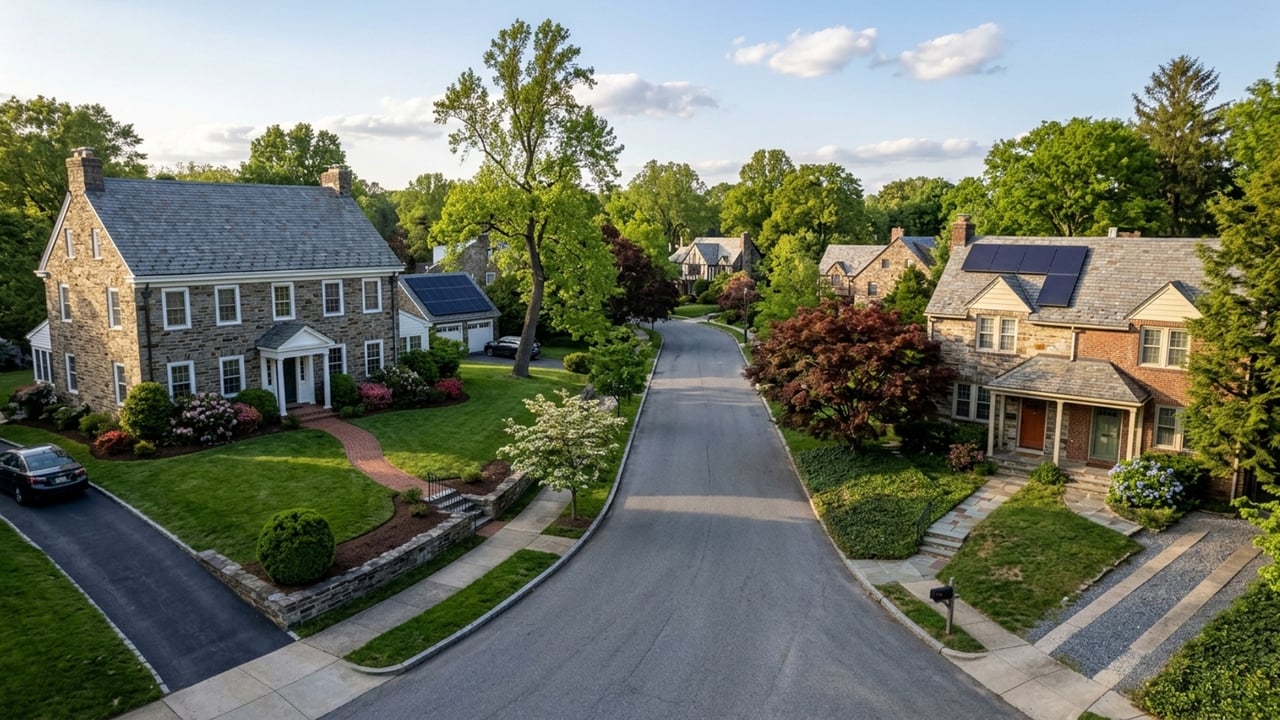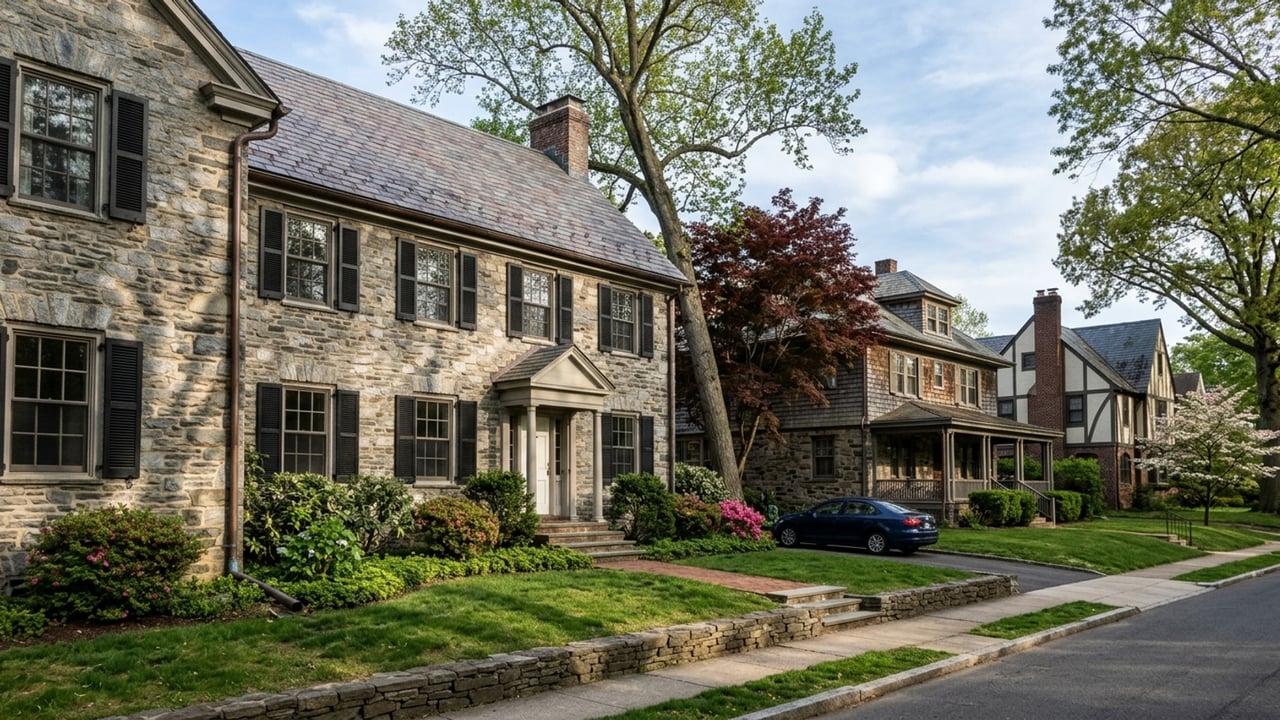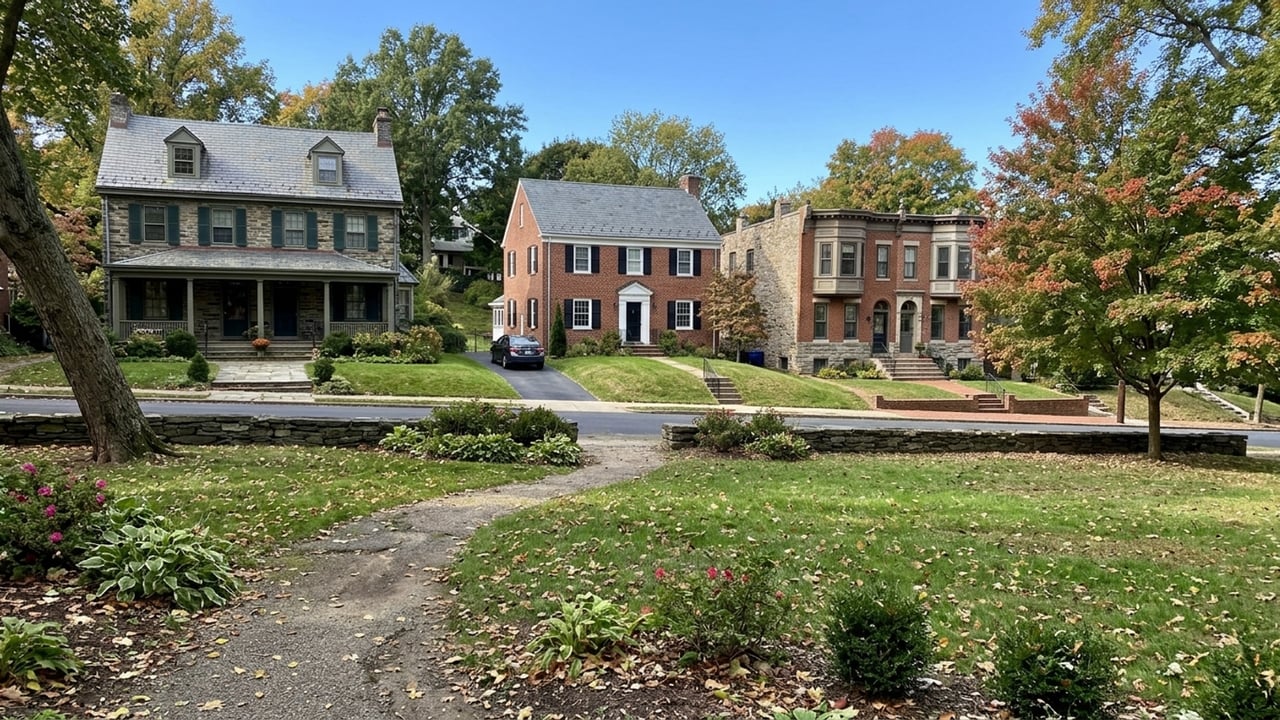
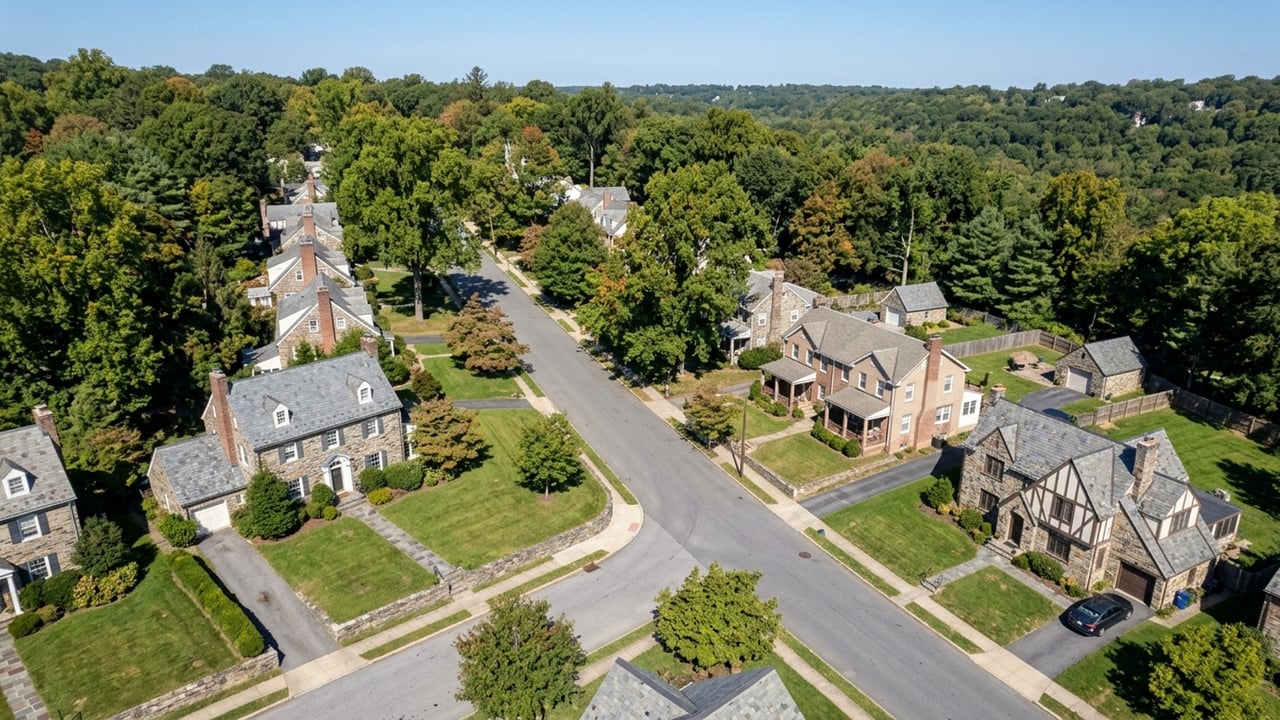
Chestnut Hill sits in the northwest corner of Philadelphia, with historic architecture and direct rail access to Center City. When buyers start looking at the cost of living in Chestnut Hill, Philadelphia, PA, they usually start with the sticker price. The median sale price for all homes here is around $939,737, based on 29 sales during the 90 days ending September 30, 2026.
That figure covers everything from smaller rowhomes to large estates, so your true monthly and yearly expenses depend on the specific type of property you want. You also have to account for the local taxes that come with living inside the city limits. This page walks through the exact costs you'll face before and after closing so you can build a budget that holds up.
Key Takeaway
Most of Chestnut Hill's cost is the price of getting in. Townhouses are the cheaper entry, with the lowest median of any type (90 days ending Sept. 30, 2026), and because they cost about the same per square foot as detached homes, you're paying for less space, not a lesser home. If you need a yard and more room, detached homes cost far more, and with either type you should plan to pay above asking and add Philadelphia's wage and property taxes to your yearly budget.
Who This Guide Is For
You're considering buying or renting in Chestnut Hill and need to work out what it will cost each year, beyond the list price, before deciding between a townhouse and a detached house.
Is Chestnut Hill Expensive to Live In?
In Chestnut Hill, what you'll pay is set by how much house you buy, not which kind. Townhouses sold for $389 per square foot in the 90 days ending September 30, 2026, while detached homes sold for $400 per square foot. A townhouse gets you less space, not a cheaper product. Both types closed above asking, which means your real budget starts above the list price before Philadelphia's wage, property, and transfer taxes enter the picture.
Overall prices rose 2.5% year over year (based on 29 sales), so waiting is unlikely to lower your entry cost by much. The rest of this page adds the costs a list price hides: paying above asking, transfer tax, older-home upkeep, and commuting. You can review housing market trends to see how these figures shift over time.
How to Estimate What Chestnut Hill Will Cost You
Skip the sections that don't apply to your situation, such as transfer taxes if you plan to rent. This is general information, not financial or tax advice. A lender and tax professional should confirm your numbers.
Four questions worth asking yourself before you dig in:
- Do you need detached space and land, or would a townhouse with less square footage do? See "Townhouses" and "Detached single-family homes."
- Can your budget absorb an offer above the asking price plus transfer tax at closing? See "Paying above the asking price," "Transfer tax and closing costs," and the worked example.
- Will you live and work under Philadelphia's wage tax, and does that change your yearly math compared with living just over the city line? See "Philadelphia wage tax."
- Will you commute to Center City by train or by car? See "Regional Rail to Center City" and "Parking near Germantown Avenue."
Home Prices: Townhouse or Detached House
The housing options in this part of the city fall mainly into two categories, and that choice sets your entry price. Buyers are deciding between attached rowhomes with minimal exterior upkeep and larger standalone properties with private lots.
Because the price per square foot is nearly identical across both types, your budget directly dictates your square footage. You can review neighborhoods by home type to see where these different styles are located across the area.
Townhouses
Townhouses are the lower-cost way into Chestnut Hill, with a median sale price of $750,000 (90 days ending Sept. 30, 2026). Because the rate per square foot matches detached homes, you give up space, not finish. The market for these homes moves quickly: a median of 22 days on the market and just 2.1 months of supply based on 17 recent sales, the tightest segment in Chestnut Hill.
Ask the listing agent whether a townhouse has an HOA or shared-wall maintenance agreement and what the current dues are. With about two months of supply, the most affordable homes here are also the fastest to go. Get financing approved before you tour, because a slow decision can mean losing the cheapest way in.
Detached Single-Family Homes
Detached homes sit on the market noticeably longer, a median of 35 days based on 11 recent sales, which gives you more time for inspections and contractor quotes on older houses. The median sale price reached $1,999,668, though with a sample that small, a swing this large likely reflects the mix of homes that sold rather than values rising 64% in a year.
You can read up on historic home guides, since many detached homes here are older. Extra weeks on the market don't mean a discount: detached homes still closed above asking at the highest sale-to-list ratio of any type. The time you gain is for due diligence, not for negotiating down.
Renting in Chestnut Hill First
Renting lets you test the commute and daily costs before committing to an above-list purchase price. According to the Census Bureau's 2020-2024 American Community Survey 5-Year Estimates, the median gross rent in ZIP code 19118 is $1,818 per month. You can review Chestnut Hill, Philadelphia ZIP codes for more on the 19118 area.
This rent data comes from a different source and period than the sale figures. Census rent figures are multi-year survey estimates that trail current asking rents, so compare them with live listings. Rent paid builds no equity while purchase prices keep moving.
Up-Front Costs of Buying in Chestnut Hill
The list price is only the starting point. Buyers need to prepare for immediate cash requirements that go well beyond the standard down payment.
Between competitive bidding and local taxes due at the closing table, your initial cash to close will be higher than the base loan math suggests. Getting these items into your budget early prevents surprises on closing day.
Paying Above the Asking Price
Nearly half of all Chestnut Hill homes sold for more than their asking price. Across 29 recent sales, 46.3% of homes closed above list. Townhouses closed above list based on 17 sales, while single-family homes hit 104.6% across 11 sales.
Each 1% above list on a $2 million home is $20,000 in extra cost. If a home appraises below your offer, the lender finances only the appraised value and you cover the gap in cash. Ask your lender how an appraisal gap would affect your down payment before you write an offer.
Transfer Tax and Closing Costs
Philadelphia's realty transfer tax is charged on top of Pennsylvania's state rate, so buyers inside the city pay both. The combined rate is 4.578% of the actual consideration: the city's 3.578% rate plus the state's 1% rate. The purchase agreement sets who pays what share of this tax, so confirm the split in your agreement of sale rather than assuming.
Get quotes for title insurance, lender fees, and a historic home inspection before closing day. Transfer tax is due at closing, generally can't be rolled into the loan, and scales with price, so paying above asking also raises your transfer tax bill. Ask your lender for a Loan Estimate that shows it in dollars.
Yearly Costs of Owning a Home in Chestnut Hill
After you close, the ongoing expenses of living inside the city limits take over. These recurring line items shape your monthly budget just as much as your mortgage payment.
The local tax structure and the realities of maintaining older architecture shape your true carrying costs. You can read up on livability, pros and cons to see how these expenses weigh against what the neighborhood offers.
Property Taxes
Philadelphia taxes the Office of Property Assessment (OPA) assessed value at the city rate. The combined rate for Tax Year 2025 is 1.3998%, consisting of 0.6159% levied by the City of Philadelphia and 0.7839% levied by the School District of Philadelphia. Owner-occupants can have part of their assessed value exempted through the Homestead Exemption, but they have to apply for it.
Check whether the current owner has the Homestead Exemption; if you'll live there, apply for it yourself after buying. For school assignment, use the School District of Philadelphia's lookup tool for a specific address. This page makes no claims about school zoning. Your tax bill is based on the city's assessment, not your purchase price. A reassessment after a high-priced sale can raise it, so check the property's current assessment and tax bill before you budget.
Philadelphia Wage Tax
Chestnut Hill is inside the city, which means residents owe the resident wage tax on earnings wherever they work. Effective July 1, 2026, the Wage Tax rate is 3.735% for Philadelphia residents. For every $100,000 earned, that's $3,735 a year.
Cross Chestnut Hill's border into Wyndmoor and you stop paying Philadelphia's resident wage tax, though you'd still owe the non-resident rate if you work in the city. Wyndmoor is in Springfield Township, Montgomery County, where the local Earned Income Tax rate is 1.0%. The wage tax is withheld from every paycheck for as long as you live here, so it's a lasting cost of living, not a one-time purchase cost. Confirm with your employer or a tax professional how it applies to your income.
Insurance and Upkeep on an Older Home
Maintenance and coverage vary widely depending on the age and materials of the house. Get a historic home insurance quote before your offer deadline, especially for stone or slate-roof homes. Ask the seller for 12 months of PECO and PGW bills to estimate utilities, and price out slate, stone, and window work through contractors when renovating a historic home.
You can review historic tax credits to see if they might offset some costs. If the home is in the historic district, exterior work may need Philadelphia Historical Commission review. Ask whether the property is designated historic before planning changes, because those rules can affect both cost and timeline.
Getting Around: Rail Fares and Parking
Commuting into Center City or running local errands adds another layer to your yearly spending. Whether you rely on the train or keep a car, you'll need to budget for fares or parking permits.
Evaluate your daily travel needs to see which of these expenses will apply to your household.
Regional Rail to Center City
Chestnut Hill is the end of the line for two separate Regional Rail routes into Center City. Both Chestnut Hill East and Chestnut Hill West stations are in Regional Rail Fare Zone 2. The corresponding Zone 2 TrailPass monthly pass is valued at $180, covering unlimited travel within Zones 1, 2, and Center City.
That works out to $2,160 per rider per year. The two lines leave from different stations on opposite sides of the neighborhood, so which one works for you depends on where you live. Check the walk to your nearest station before you commit to a car-free commute.
Parking Near Germantown Avenue
Shopper parking along Germantown Avenue is run through the Chestnut Hill Parking Foundation's lots rather than relying only on street meters. The Foundation operates six public lots: the Yellow, Blue, Green, Orange, Turquoise, and Purple lots. Monthly parking permits cost $175.00 per month.
Those lots solve errands, not overnight parking. Many older homes and townhouses lack a driveway, so check street parking on the block at evening and weekend hours before you close on a home with no off-street parking.
First-Year Cost of a Chestnut Hill Townhouse
To see how these numbers interact, consider a townhouse purchase. The townhouse sale-to-list ratio of 101.7% (see the at-a-glance list) applied to that median gives a purchase price of about $762,750. Assuming a 20% down payment of $152,550, you take out a $610,200 loan. At the 30-year fixed-rate mortgage average of 7.24% for the week of October 29, 2026, you can calculate your monthly principal and interest.
At closing, you add the 4.578% combined transfer tax on the purchase price, split according to your agreement of sale. For recurring yearly costs, you add property tax based on the OPA assessed value times the 1.3998% city rate, minus the Homestead Exemption (substitute the real assessment for your specific property). Then add the resident wage tax per $100,000 earned, your quoted insurance premium, and $2,160 for twelve months of rail passes.
That separation between one-time cash at closing and recurring yearly costs is what makes the budget readable. This is an illustration, not a quote or financial advice. Kristin McFeely and Philadelphia Home Collective can pull assessments and recent sales for specific townhouses to help you run the exact numbers.
Chestnut Hill Cost of Living at a Glance
- All homes, median sale price: $939,737, up 2.5% year over year (90 days ending Sept. 30, 2026; based on 29 sales, so treat with caution)
- Townhouse, median sale price: $750,000, up 24.5% year over year (90 days ending Sept. 30, 2026; based on 17 sales, so the yearly change may reflect which homes sold)
- Single-family, median sale price: $1,999,668, up 63.9% year over year (90 days ending Sept. 30, 2026; based on 11 sales, so a swing this large likely reflects the mix of homes sold, not a 64% rise in values)
- Median price per square foot: all homes $391, townhouse $389, single-family $400 (90 days ending Sept. 30, 2026)
- Median days on market: all homes 24, townhouse 22, single-family 35 (90 days ending Sept. 30, 2026)
- Sale-to-list ratio: all homes 102.9%, townhouse 101.7%, single-family 104.6% (90 days ending Sept. 30, 2026)
- Share sold above list price: all homes 46.3%, townhouse 46.8%, single-family 45.3% (90 days ending Sept. 30, 2026)
- Months of supply: all homes 2.9, townhouse 2.1, single-family 3.5 (90 days ending Sept. 30, 2026)
- Homes for sale (inventory): all homes 27, townhouse 12, single-family 13 (90 days ending Sept. 30, 2026)
Chestnut Hill Cost of Living FAQs
Is Chestnut Hill More Expensive than the Rest of Philadelphia?
Yes, mainly due to housing costs. The all-homes median based on 29 sales is well above typical city levels; check the current citywide median to compare. Wage and property tax rates are the same across Philadelphia, so the difference is mainly in the purchase price.
Is Chestnut Hill, Philadelphia Wealthy?
Property values here are among the highest in the city. The all-homes median price per square foot was $391 during the 90 days ending September 30, 2026, based on 29 sales. You can check the at-a-glance list for medians by property type and review the housing market trends for ongoing updates.
What Salary Do You Need to Live in Chestnut Hill?
Your required income depends on the home you buy and current interest rates. Lenders compare your total monthly debt, including property tax and insurance, to your gross income, so ask a lender for the debt-to-income limit on your loan type. The Philadelphia resident wage tax also reduces your take-home pay, which is worth factoring in.
Is Chestnut Hill a Good Place to Live?
Many residents choose the area for its historic architecture and transit access, as two Regional Rail lines end in the neighborhood. Review the livability, pros and cons for a full picture of what the area offers.
How Safe Is Chestnut Hill, Philadelphia?
Chestnut Hill is served by the 14th Police District of the Philadelphia Police Department. City-wide crime incident data, which can be filtered by police district, is published on the City's official open data portal, OpenDataPhilly, and refreshed nightly. Run the lookup for your specific block to compare per-period counts and read the data notes.
Is Chestnut Hill in Philadelphia County?
Yes, Chestnut Hill is a neighborhood of the City of Philadelphia, which is also Philadelphia County, covered by ZIP code 19118. Being inside the city means the resident wage tax at the rate listed above and city property tax apply. This differs from neighboring Wyndmoor in Montgomery County, which has a 1.0% local earned income tax.
How Far Is Chestnut Hill from Downtown Philadelphia?
The commute depends on your mode of transit. Check SEPTA's schedule for travel times from the Chestnut Hill East and Chestnut Hill West stations to Center City. You can also map the road distance from your specific address to City Hall for driving times.
What Is the Sales Tax in Chestnut Hill, Philadelphia?
Check the Pennsylvania Department of Revenue for the current combined state and local sales tax rate in Philadelphia. Because it applies citywide, shopping in Chestnut Hill costs the same in sales tax as anywhere else in Philadelphia.
Sources
- Redfin: Data Center
- City of Philadelphia: Real Estate Tax
- City of Philadelphia: Wage Tax
- Springfield Township: Earned Income Tax
- City of Philadelphia: Realty Transfer Tax
- SEPTA: Chestnut Hill East Station
- Chestnut Hill Parking Foundation
- ZIP Codes: 19118
- Freddie Mac: PMMS
- Philadelphia Police Department: 14th District
- OpenDataPhilly: Crime Incidents
- School District of Philadelphia: School Finder