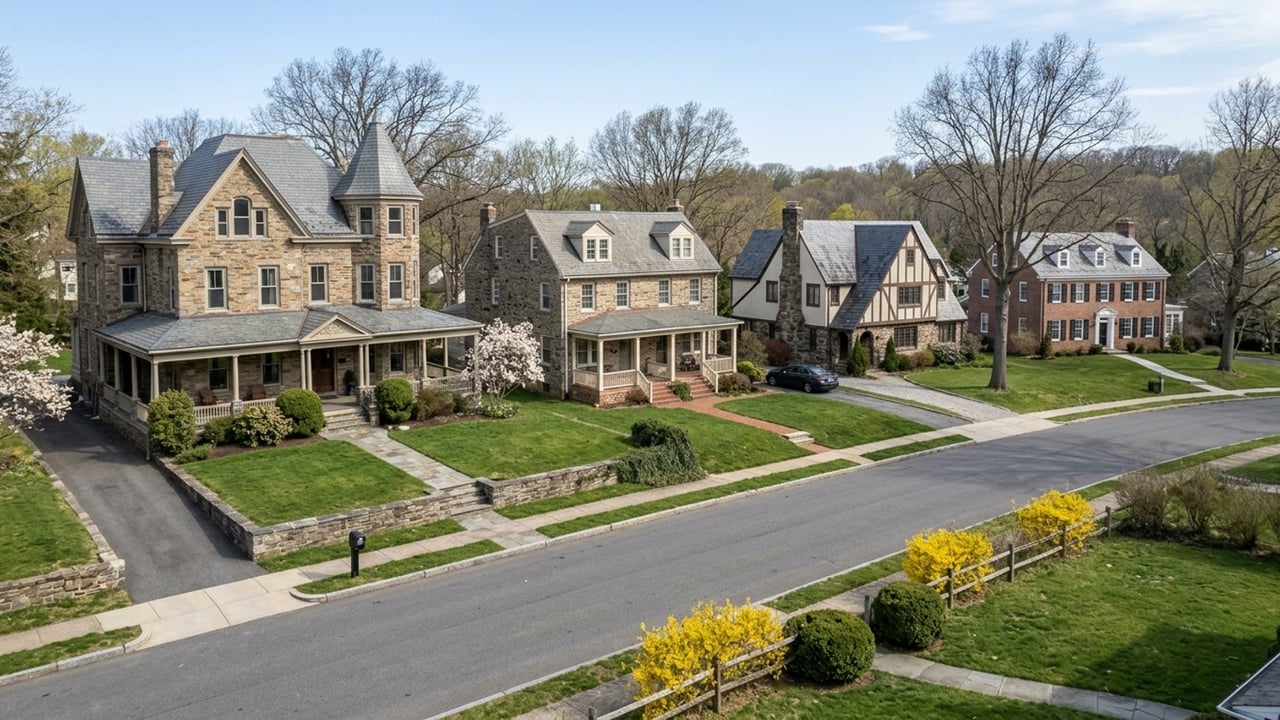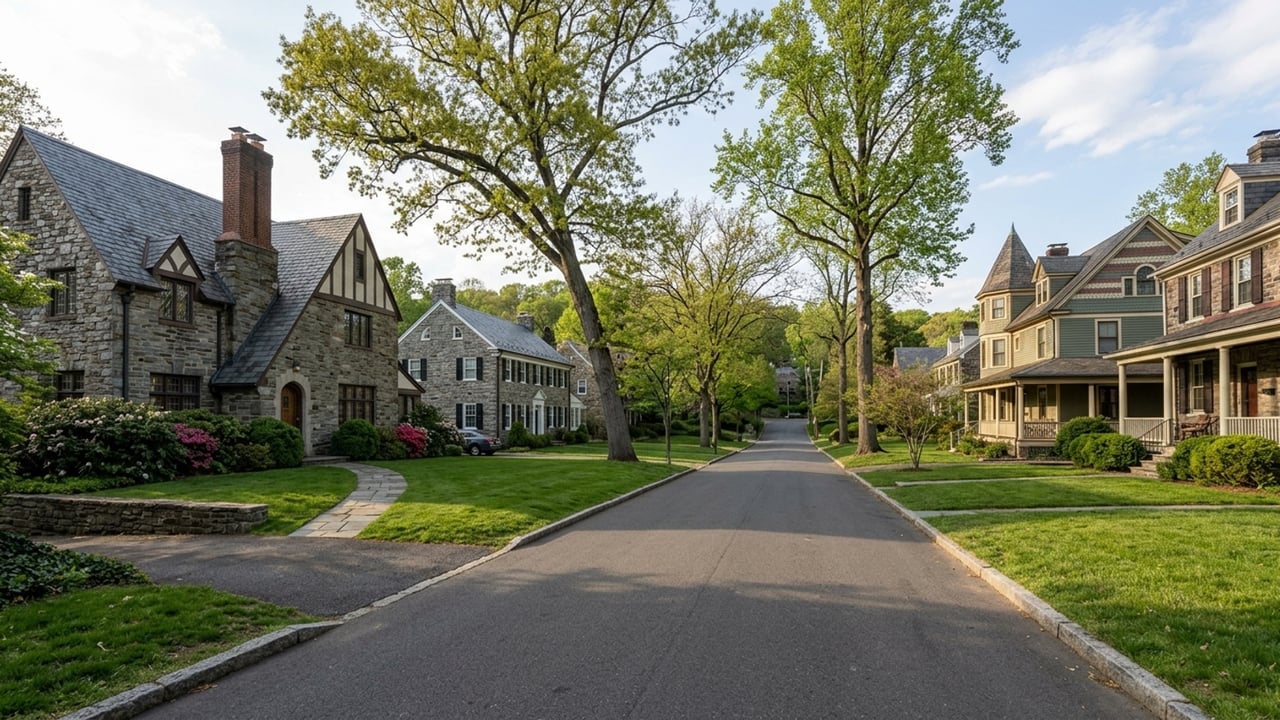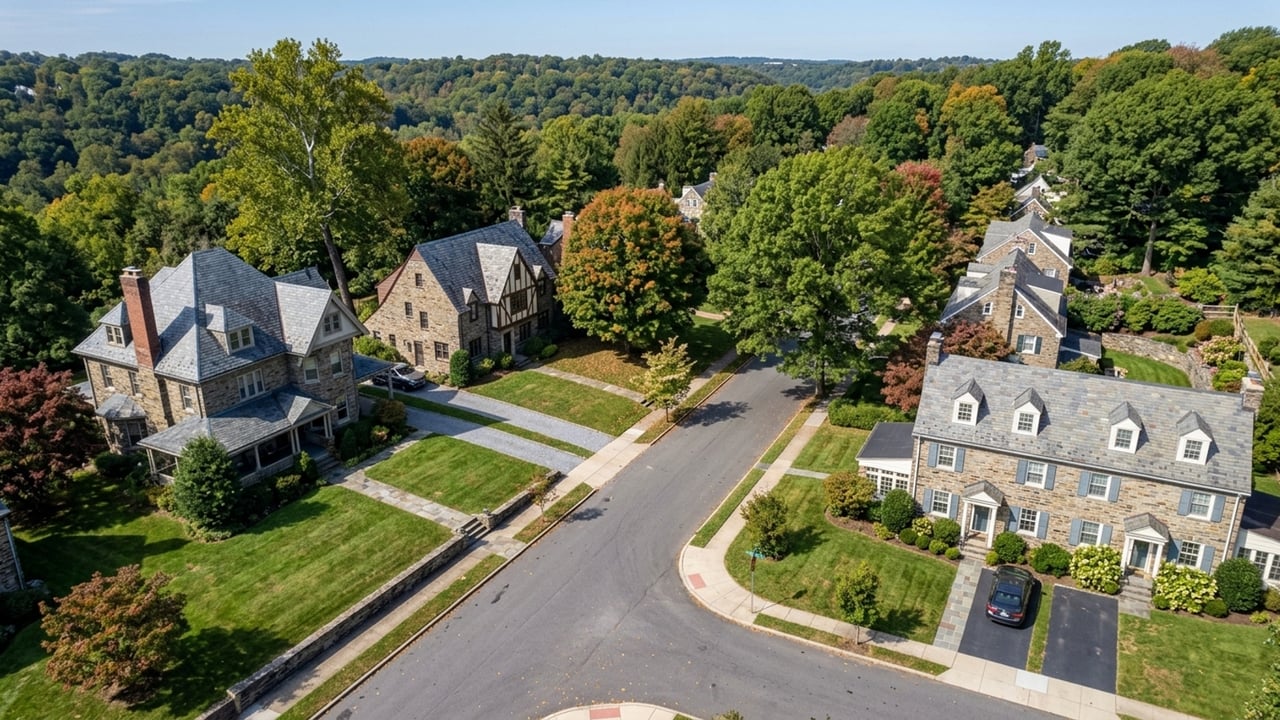
Buying an older house in Chestnut Hill means evaluating centuries-old stone, steep slate roofs, and buried clay pipes. These are systems a standard home inspection doesn't fully cover.
The local market moves quickly, and there's little room for a drawn-out discovery process. Knowing which specialists to call before you submit an offer protects your budget and keeps your timeline intact.
Key takeaway
Line up a historic-experienced inspector, plus a slate roofer, a chimney sweep, and a sewer camera, before you write an offer on an older Chestnut Hill house. Recent sales went under contract in a median 24 days, which leaves little time to schedule specialists afterward. If you can't book them in time, a contingency you can use protects you better than waiving the inspection.
Who this guide is for
You're about to bid on, or have just gone under contract on, an older Chestnut Hill house and need to decide what to inspect, who to hire, and how to fit it into a short offer timeline.
Why inspection timing matters in Chestnut Hill
Roughly 46.3% of recent Chestnut Hill sales closed above list price, and buyers paid about 102.9% of the asking price overall (based on 29 sales in the 90 days ending September 30, 2026; treat this small sample as a direction rather than a firm trend). Sellers routinely pick offers with short or no contingencies.
A buyer who hasn't already lined up specialists either waives protection or runs out of days to negotiate. A standard inspection appointment doesn't include walking a slate roof, scoping the sewer, or running a camera down a chimney flue. Line up who you're bringing to the house before you sign the agreement of sale.
What a historic home inspection covers
A general home inspector reports on visible, accessible components. Historic Chestnut Hill houses hide their biggest future repair bills in the masonry, roofs, flues, and buried lines.
To find those issues, you'll likely need separate specialists. These professionals evaluate the materials that general inspectors can't test.
Stone walls, mortar and stucco
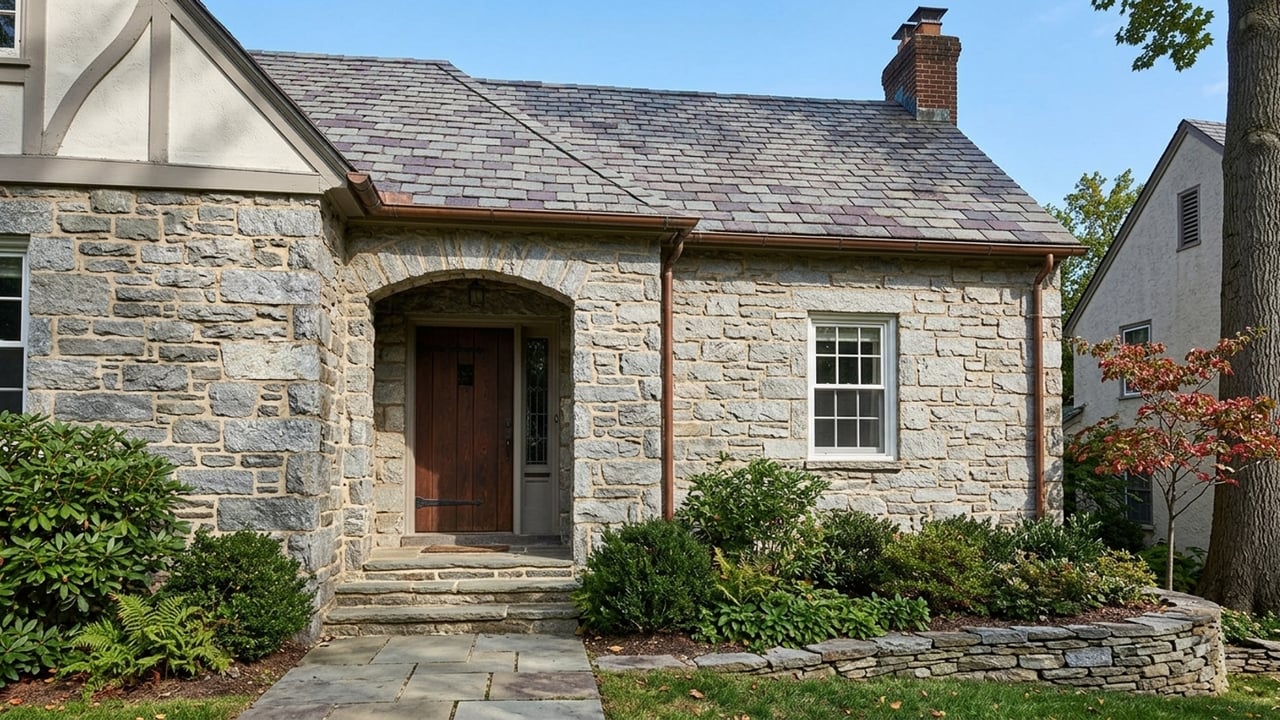
Much of the neighborhood was built from locally quarried Wissahickon schist. The main masonry concern is usually the mortar rather than the stone itself. The National Park Service warns that repairing old stone with hard modern cement mortar can damage it, as new mortar should be softer and more vapor-permeable than the historic stone.
Stucco applied over stone can trap moisture and hide structural cracks. Ask the inspector to note hairline versus stepped cracks, spalling, efflorescence, damp basement walls, and previous repointing that looks gray and hard. Where repointing looks recent or patchy, get a mason's opinion.
No visual inspection can see behind stucco or inside a wall. Finding hidden moisture usually takes invasive or moisture-meter testing, which requires the seller's permission, and some sellers won't allow it before closing.
Slate roofs, flashing and chimneys
A high-quality slate roof can last 60 to 125 years, meaning it often outlives the flashing, nails, and gutters around it. The slate itself is rarely the most expensive part to maintain. Hire a slate roofer to assess the roof; many general inspectors won't walk on slate because foot traffic can crack the shingles.
Chimneys in older houses often need a camera inspection of the flue to check for missing mortar or cracked liners. The NFPA 211 national standard calls for a Level 2 chimney inspection, which includes a video scan of the flue interior, whenever a property changes ownership.
The roof and chimney assessments become separate appointments with separate vendors. That's exactly what makes scheduling difficult in a short contingency window.
Sewer lines, wiring and old pipes
Book a sewer camera scope to check the line from the house to the street. In Philadelphia, the property owner is responsible for repairing the sewer lateral from the house to the city main, which often includes the stretch under the street.
Old houses can still hide knob-and-tube wiring, galvanized supply pipes, or cast-iron drains behind updated finishes. An electrician or plumber can confirm what a general inspector flags.
One thing to keep in mind: a sewer scope shows a problem but not the full repair bill. Lateral work under a street can require city permits and excavation, so get a contractor quote before the contingency ends rather than estimating from the camera footage alone.
Townhouses and twins vs. detached houses
Chestnut Hill townhouses recently went under contract in a median 22 days and had just 2.1 months of supply (based on 17 sales). That's the shortest possible window to inspect properties whose roof, flashing, party wall, and sometimes drain lines connect directly to a neighbor's. Inspect the visible side of shared elements and ask the seller whether there's a written or informal arrangement with the neighbor for shared maintenance.
For detached single-family houses, buyers saw a median 35 days on market and paid above list price (based on 11 sales, a very small sample). A missed failed lateral or rebuilt chimney stacks right on top of a premium you already paid. For these larger properties, add outbuildings, retaining walls, and carriage houses to the inspection scope.
How historic designation affects repairs
A National Register listing is largely honorary for private owners spending their own money, but local designation changes how you handle repairs. Designation on the Philadelphia Register of Historic Places means exterior work generally needs Philadelphia Historical Commission review.
A defect like failing windows, roofing, or masonry may need to be repaired in a way the Commission approves. That affects the cost, the timeline, and whether a seller can legally complete repairs before closing. Preservation easements are a separate restriction that runs with the deed, sometimes permanently protecting architecturally significant buildings from alterations.
Look up the address on the Commission's register and ask the seller and the title company whether a preservation or façade easement is recorded on the deed.
How to plan your inspection before you make an offer
You have four main questions to answer before drafting your offer terms. If the house shares a wall with a neighbor, start by planning for shared roofs and party walls, which need checking in the market's fastest-moving segment. If the property is on the Philadelphia Register of Historic Places or under a preservation easement, read the designation rules before you plan any repair request or renovation budget.
If you can see a slate roof, original chimneys, or stucco over stone from the street or in the listing photos, you'll usually need a separate specialist for each. Then look at how many days the seller's offer deadline leaves you. If it's under a week, book specialists before you tour a second time.
Book the general inspector and specialists before that second showing. Read the seller's disclosure and any past permits and repair records, asking the seller for records of past repointing, roof, chimney, and sewer work. Confirm the designation and easement status, then decide what contingency terms you can realistically offer.
Pre-offer inspections are sometimes possible with seller permission. Review the agreement-of-sale terms with an agent or attorney. Kristin McFeely's team can help line up historic-experienced inspectors and specialists ahead of an offer so you're ready to move quickly.
Related guides: Best Historic Home Real Estate Agent in Chestnut Hill, Philadelphia, Historic District Rules.
Chestnut Hill housing market at a glance
All segments below rest on fewer than 30 sales, so treat these figures as a general direction rather than a firm trend.
- All homes, 90 days ending 2026-09-30 (based on 29 sales; small sample): median sale price $939,737, up 2.5% year over year; median $391 per square foot
- All homes, 90 days ending 2026-09-30 (29 sales): median 24 days on market, 102.9% sale-to-list, 46.3% sold above list, 2.9 months of supply, 27 homes in inventory
- Single family, 90 days ending 2026-09-30 (based on 11 sales; very small sample, treat with caution): median sale price $1,999,668; year-over-year change of 63.9% likely reflects which homes sold rather than a market-wide jump; median $400 per square foot
- Single family, 90 days ending 2026-09-30 (11 sales): median 35 days on market, 104.6% sale-to-list, 45.3% sold above list, 3.5 months of supply, 13 homes in inventory
- Townhouse, 90 days ending 2026-09-30 (based on 17 sales; small sample): median sale price $750,000, up 24.5% year over year; median $389 per square foot
- Townhouse, 90 days ending 2026-09-30 (17 sales): median 22 days on market, 101.7% sale-to-list, 46.8% sold above list, 2.1 months of supply, 12 homes in inventory
Frequently asked questions
What qualifications should a home inspector have in Pennsylvania?
Pennsylvania doesn't issue a state license for home inspectors. State law requires inspectors to be full members in good standing of a national home inspection association and to carry liability insurance of at least $100,000 per occurrence. Ask the inspector about their experience with stone masonry, slate, and older electrical systems, and whether they bring or refer specialists.
Can I test a historic house for lead paint before buying?
Yes. For homes built before 1978, sellers must disclose known lead-based paint, and buyers get an opportunity to conduct a lead inspection or risk assessment. You can waive or shorten this window by agreement, but hire a certified lead inspector or risk assessor if you choose to test.
Will an insurer cover an old house with knob-and-tube wiring?
Insurers vary widely on this. Some decline coverage, add a surcharge, or require an electrician's evaluation for knob-and-tube wiring. Confirm with your homeowners insurer and get a binding quote during the contingency period to see if the wiring affects your coverage or price.
What happens if the inspection finds major problems on a historic house?
Under the standard agreement of sale, you generally have the option to ask for repairs, ask for a price reduction or credit, or end the agreement within the contingency terms. On designated or easement-protected properties, seller repairs may need historical approval, which can make a credit simpler than a repair. Talk to an agent or real estate attorney for agreement-specific advice.
Sources
- Redfin: Data Center
- Chestnut Hill Conservancy: Wissahickon schist
- National Park Service: Preservation Brief 2
- National Park Service: Preservation Brief 29
- Chimney Safety Institute of America: NFPA 211
- Philadelphia Water Department: Customer Guide
- City of Philadelphia: Find a historic property
- Pennsylvania General Assembly: Title 68 Chapter 75
- Pennsylvania Association of Realtors: Standard Agreement