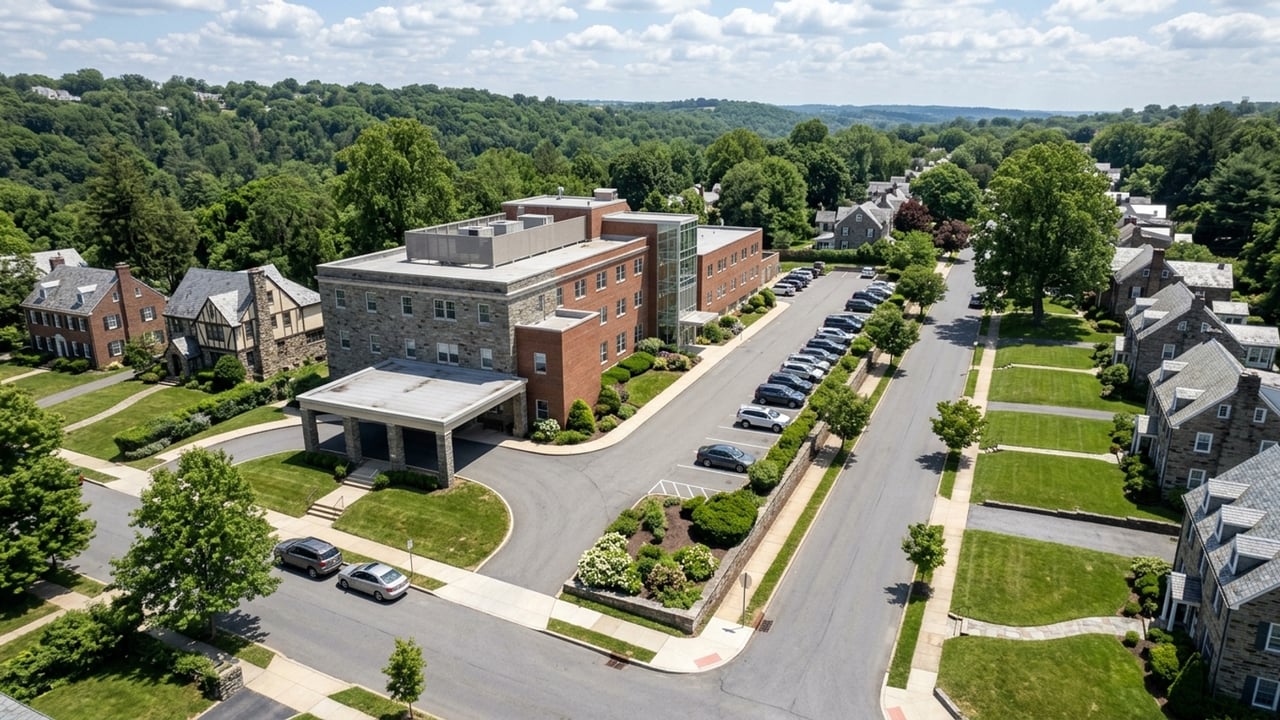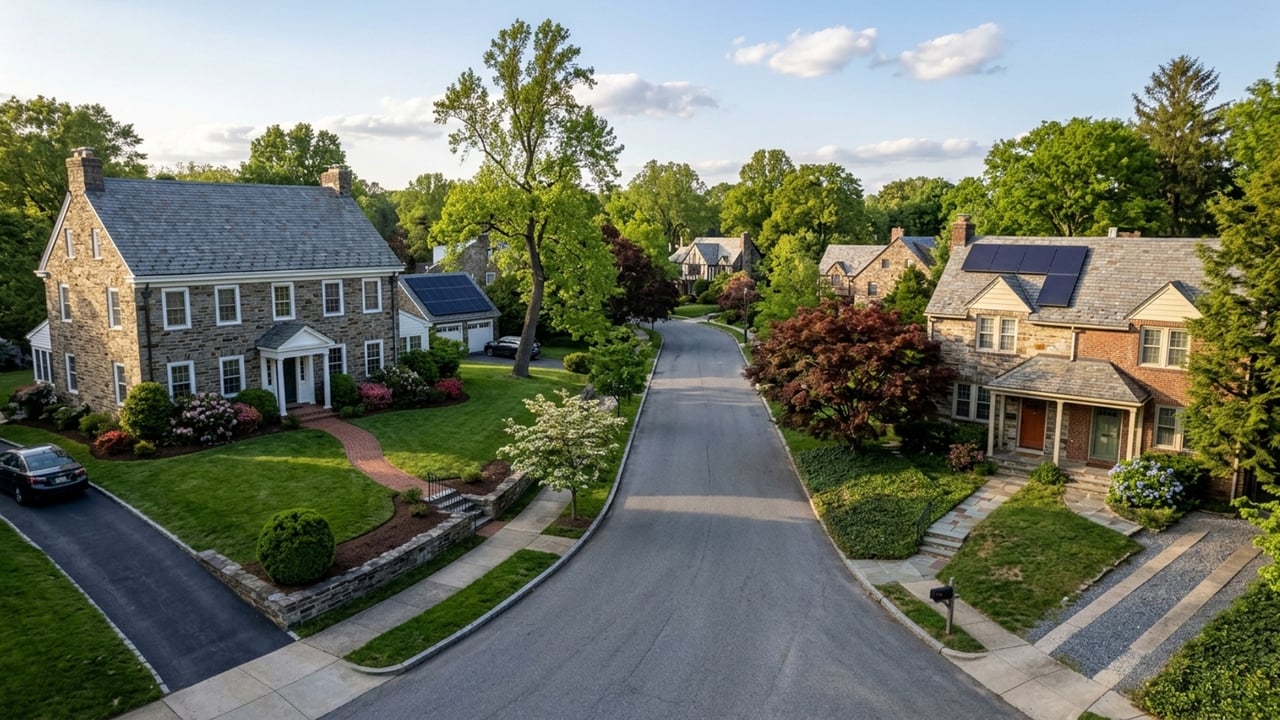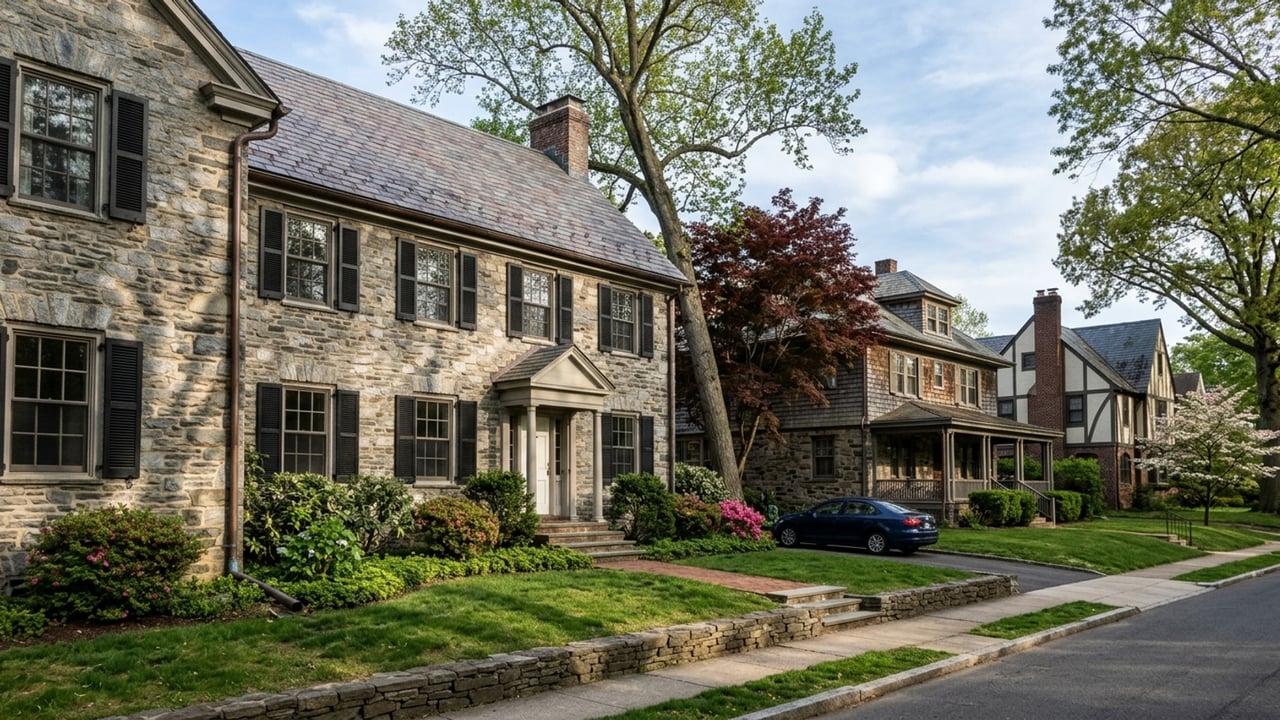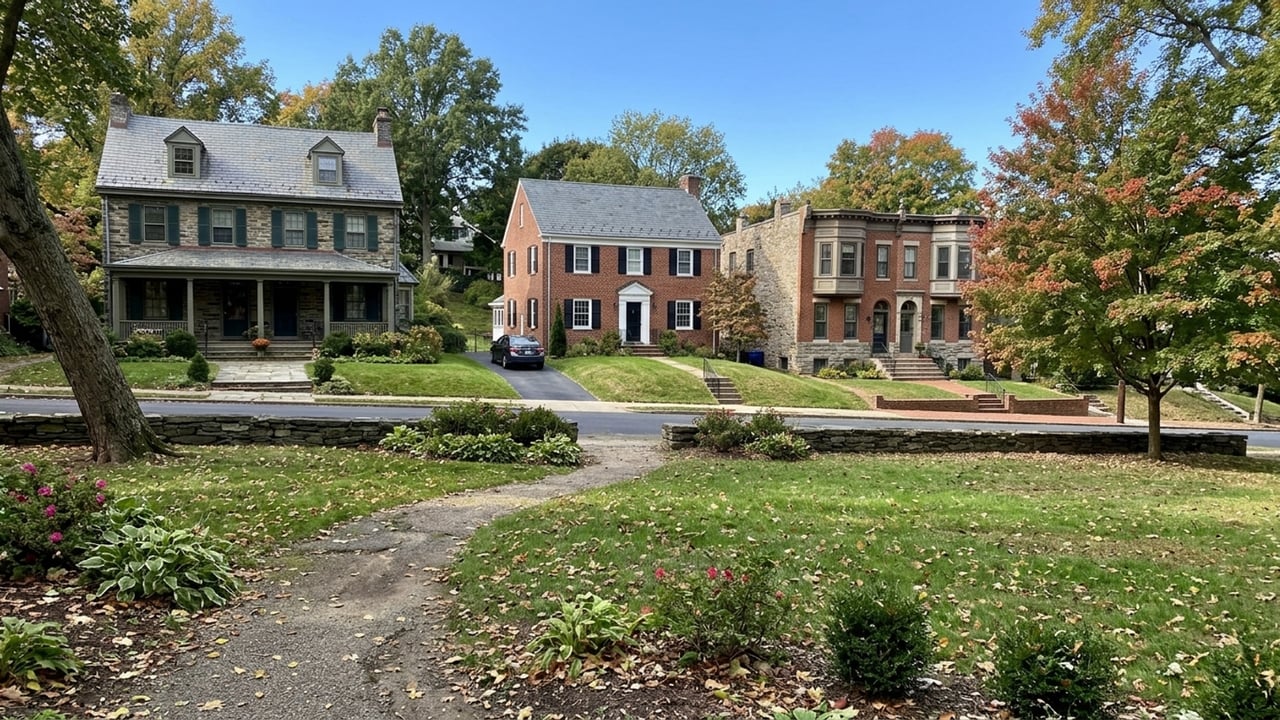
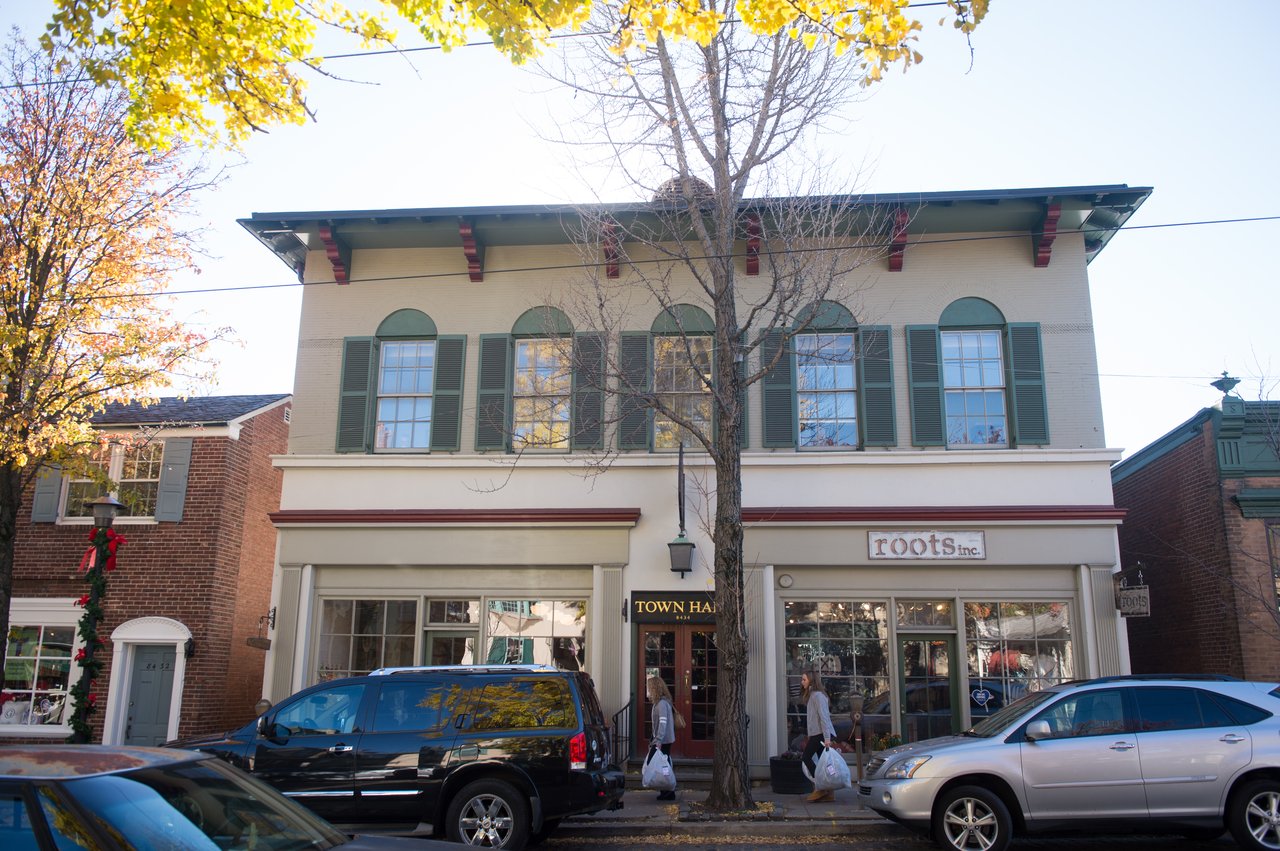
In Chestnut Hill, the typical home recently sold for around $391 a square foot, with nearly half of all sales closing above the listing price. Homes spend a median of just 24 days on the market before going under contract. Those preparing for a purchase can review the steps for buying a historic home in Chestnut Hill.
Closing on an older property here means securing the right coverage before your contingencies expire. A standard policy based on your winning bid won't pay the true cost of rebuilding a slate roof or Wissahickon schist walls if a fire occurs.
Key takeaway
Insure a Chestnut Hill historic home for what it would cost to rebuild under Philadelphia Historical Commission rules, not for the price you paid. You should ask for replacement-cost dwelling coverage with an ordinance-or-law endorsement, and get quotes inside your inspection contingency. An HO-8 modified policy is the fallback when a carrier declines replacement cost, but it usually pays to rebuild with ordinary materials rather than original stone and plaster.
Who this guide is for
You're buying, or under contract on, an older house in Chestnut Hill and need to line up insurance that would pay to rebuild it before your inspection contingency runs out.
Why your purchase price is the wrong number to insure
Your purchase price is the wrong number to insure. In Chestnut Hill, where 46.3% of homes recently sold above list, a fire claim turns on what it costs to rebuild Wissahickon schist, slate, and plaster under Philadelphia Historical Commission review. The coverage that protects you is replacement cost plus ordinance-or-law, sized from a rebuild estimate rather than your winning bid.
Market values swing in ways rebuild costs don't. Single-family home prices in Chestnut Hill jumped 63.9% year over year to a median of $1,999,668, though that figure is based on just 11 recent sales and likely reflects which specific homes sold rather than a market-wide rise. Confirm your coverage options with a licensed Pennsylvania insurance agent to verify your dwelling limit matches the cost of local materials and labor.
Which insurance policy fits a historic home
Three main coverage choices apply when insuring an older property in Philadelphia, PA. The right option depends on the home's condition, the materials used in its original construction, and whether standard carriers will accept the risk.
Paying more for a policy that rebuilds what's currently there protects your investment in a designated district. Paying less for a modified policy can help you close on time, but it leaves you covering the difference if local rules require expensive historic materials.
Replacement cost coverage
A standard HO-3 policy with replacement-cost dwelling coverage pays to rebuild with like kind and quality. That's what a Wissahickon schist house with a slate roof needs after a major loss. You can also ask for extended or guaranteed replacement cost if the insurer offers it.
This coverage only works when the dwelling limit comes from an accurate rebuild estimate. Ask whether the insurer does an on-site inspection or relies on software. Owners can use the Free Library of Philadelphia's digitized fire-insurance atlases going back to the 1800s to document original construction for an insurer.
The downside is cost, and extended or guaranteed replacement is usually capped. Many policies also require you to insure to a set share of full replacement cost or they reduce the payout, so underinsuring to match a lower estimate can backfire.
HO-8 modified coverage
The HO-8 is the standard policy for houses whose rebuild cost far exceeds their market value, or that standard carriers decline. It pays to repair the home with common, functionally equivalent materials, or it pays actual cash value.
Some buyers use this as a bridge policy to secure financing and close on the house, then requote for replacement cost after upgrading the wiring, roof, or heating systems.
What you give up is the guarantee of matching historical materials. A slate roof or plaster walls could be paid back as asphalt shingles and drywall, meaning you'd fund the difference yourself if the Historical Commission requires in-kind materials.
Ordinance or law coverage
This endorsement pays the extra cost of rebuilding to current codes and laws, plus demolition and debris removal. It connects your property insurance directly to Philadelphia's preservation rules and building codes.
This is the most important question to ask an insurer when you're buying a designated house. Ask each insurer in writing whether Historical Commission material requirements are covered under ordinance-or-law, and what the default limit is.
The catch is that policies differ on whether Historical Commission material requirements count as a "law" under this coverage. Ordinance-or-law coverage is often included only as a small percentage of the dwelling limit by default, so you may need to raise it.
How Chestnut Hill's historic designation affects a rebuild
The Chestnut Hill Historic District was added to the National Register of Historic Places in 1985. It's the local Philadelphia Register of Historic Places, though, that sets the rules for exterior alterations, demolition, and reconstruction. Many houses in the neighborhood are contributing properties to this local district.
The Philadelphia Historical Commission must approve exterior work and reconstruction on designated or contributing properties. Their rules permit the replacement of slate roofing materials and deteriorated historic features, but the substitute materials must closely approximate the original color and shape. Check whether a property is individually designated or contributing to a historic district through the Philadelphia Historical Commission before requesting quotes.
A recorded preservation easement can add entirely separate rebuild obligations. The Chestnut Hill Conservancy monitors eased properties annually to confirm exterior alterations stay consistent with the historic character of the building, even after casualty damage. Check the title search for a recorded preservation easement and read its rebuild terms carefully.
What insurers check on an older house
Underwriters look closely at the age and condition of a home's major systems before offering replacement cost coverage. They evaluate the wiring for knob-and-tube or old fuse panels, check the roof's age and material, and look for galvanized or cast-iron plumbing. Heating type matters too, including any oil tanks on the property.
Outdated systems can result in a declined application, a premium surcharge, or an HO-8 offer instead of replacement cost. Have the home inspector record the age and type of the wiring, roof, plumbing, and heating for insurers, and ask the seller for the home's insurance claims history, known as a CLUE report.
If standard carriers decline to write a policy, the Pennsylvania FAIR Plan operates as the state's insurer of last resort. Also check the property's flood zone on the FEMA flood map. Standard homeowners policies don't cover flood damage.
Insuring a townhouse or twin with a shared wall
Attached homes make up a significant portion of the local market, representing 17 of the 29 recent sales in the area. Townhouses in Chestnut Hill recently sold for a median of $750,000. Someone buying near that median price shouldn't set the dwelling limit to match it, because that figure includes the land and the local market competition.
A shared party wall raises specific questions about whose policy responds when fire or water crosses the property line. Have the insurer price the rebuild of the structure, including its share of the party wall. In a historic district, the rebuild must also match the attached neighbor's exterior.
Philadelphia's party wall rules are set by the city. For a twin or townhouse, ask the insurer how a party-wall loss is handled and whether the neighbor's coverage affects your claim.
When to get insurance quotes during a purchase
Chestnut Hill currently has just 2.9 months of housing supply, and with homes selling at a median 102.9% of the list price, there's little time to resolve coverage issues after going under contract. Insurance on an older house can take longer to place than you'd expect, so request quotes as soon as the inspection is booked.
Start by confirming the home's designation status and sending the inspection findings to two or three agents or brokers. Get the ordinance-or-law wording in writing, and bind the policy before the contingency or settlement deadline your agreement sets. Confirm your contract's inspection contingency and settlement dates, as well as your lender's proof-of-insurance deadline.
Mortgage lenders require proof of insurance before closing. Kristin McFeely can share a list of the questions above for your agent and inspector.
Related guides: Historic Home Inspection, Best Historic Home Real Estate Agent in Chestnut Hill, Philadelphia.
Chestnut Hill housing market at a glance
- All homes: median sale price $939,737, up 2.5% year over year (90 days ending 2026-09-30; based on 29 sales, so treat as a rough guide)
- Single family: median sale price $1,999,668, up 63.9% year over year (90 days ending 2026-09-30; based on only 11 sales, so the jump likely reflects which homes sold rather than a market-wide rise)
- Townhouse: median sale price $750,000, up 24.5% year over year (90 days ending 2026-09-30; based on 17 sales)
- Median price per square foot: $391 all homes, $400 single family, $389 townhouse (90 days ending 2026-09-30; based on 29, 11 and 17 sales)
- Median days on market: 24 all homes, 35 single family, 22 townhouse (90 days ending 2026-09-30; based on 29, 11 and 17 sales)
- All homes sold for a median 102.9% of list price, and 46.3% sold above list (90 days ending 2026-09-30; based on 29 sales)
- Months of supply: 2.9 all homes, 3.5 single family, 2.1 townhouse (90 days ending 2026-09-30)
Frequently asked questions
What is the Philadelphia Historic Preservation Ordinance?
It's the city law under Chapter 14-1000 of the Philadelphia Code. The Philadelphia Historical Commission uses this ordinance to designate buildings and districts on the Philadelphia Register and to review exterior alterations, demolition, and new construction. This ordinance connects directly to your insurance policy's ordinance-or-law coverage.
What is the National Historic Preservation Act?
The National Historic Preservation Act is the 1966 federal law that created the National Register of Historic Places. For private owners using private money, National Register listing generally doesn't restrict what they can do to their property. The local Philadelphia Register is the set of rules that governs a Chestnut Hill rebuild.
Sources
- Redfin: Data Center
- Philadelphia Code Chapter 14-1000
- Philadelphia Historical Commission Rules & Regulations
- Find a Historic Property or District
- Chestnut Hill Historic District (Philadelphia)
- What are the loss settlement options for an HO-8 policy?
- Pennsylvania FAIR Plan
- Free Library of Philadelphia Map Collection
- In celebration of International Rock Day
- Chestnut Hill Conservancy Easement Brochure