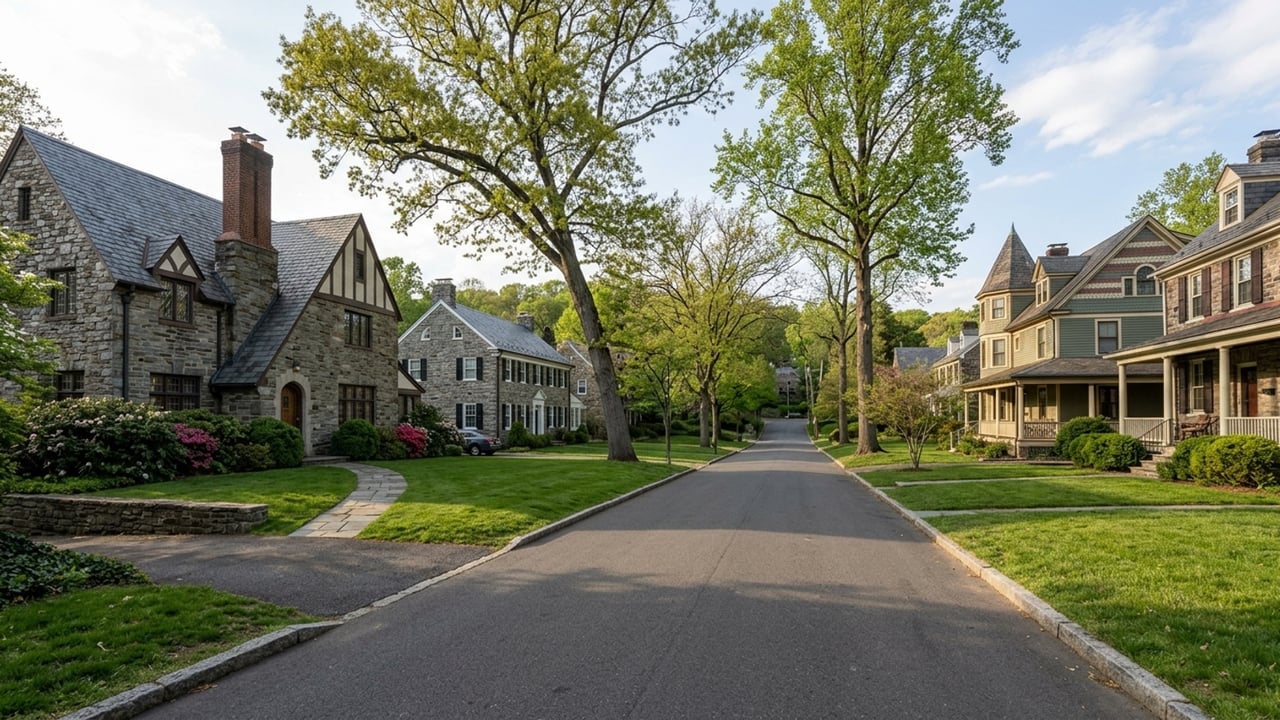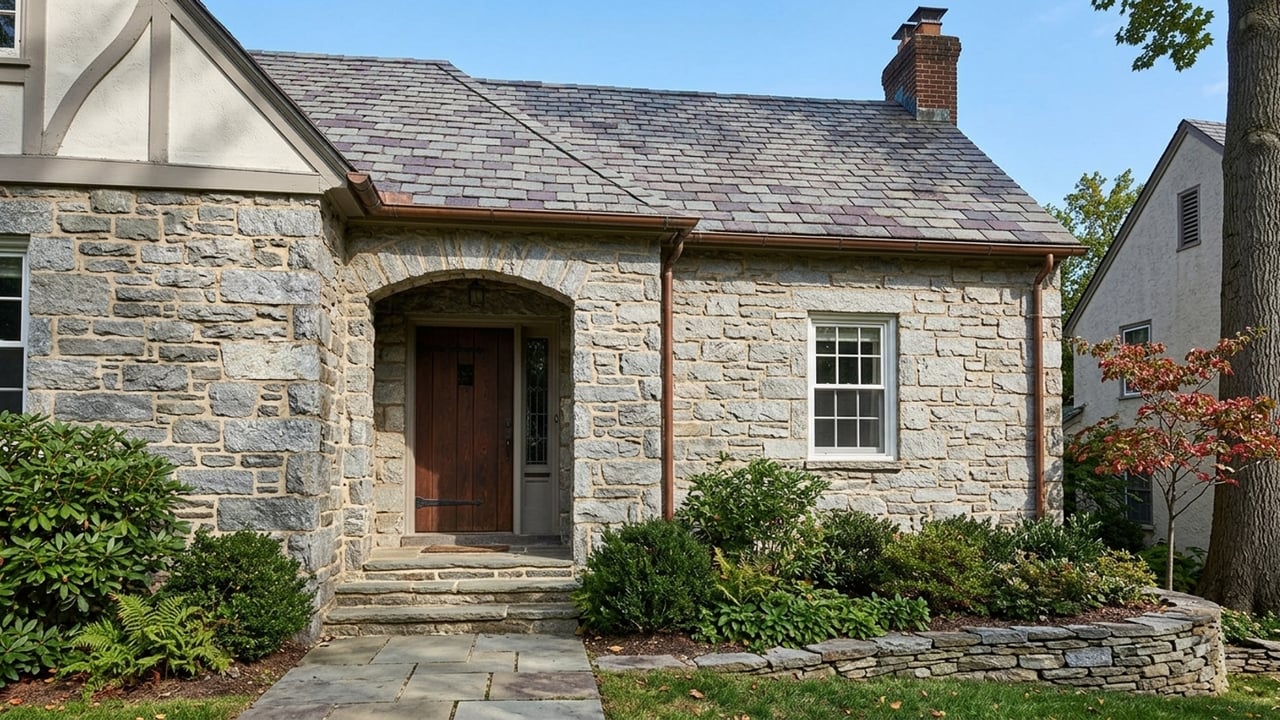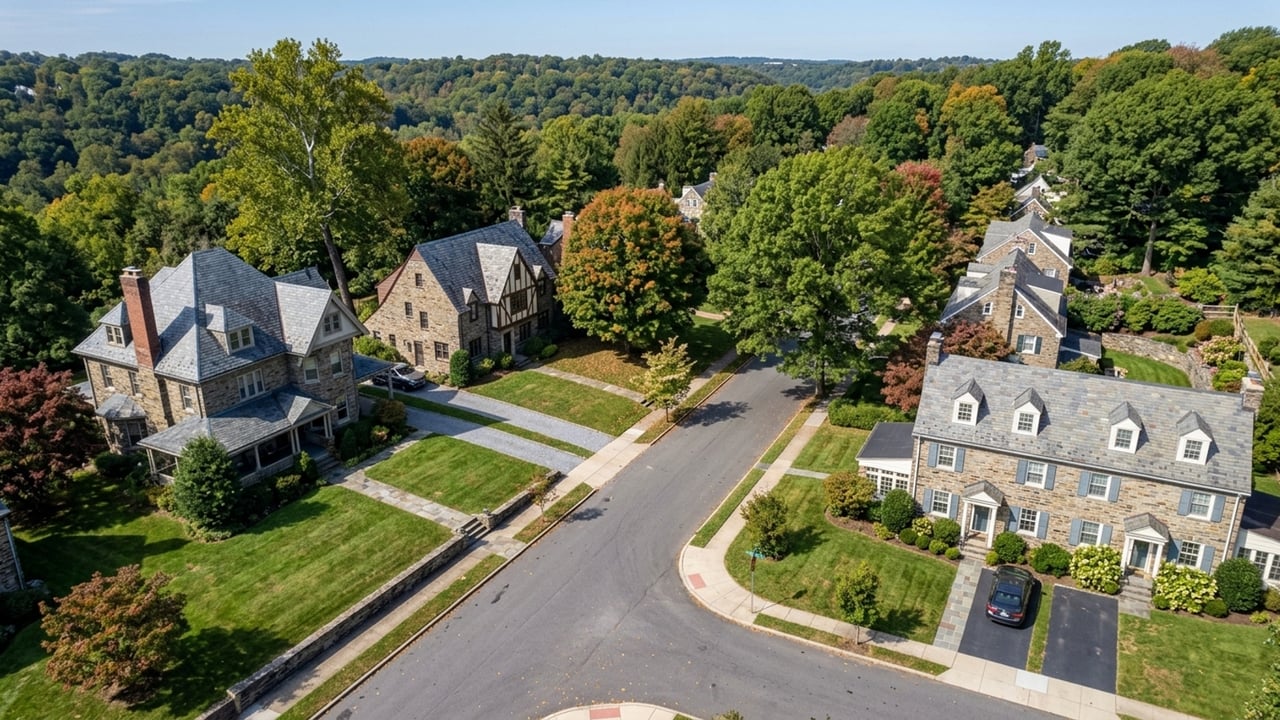
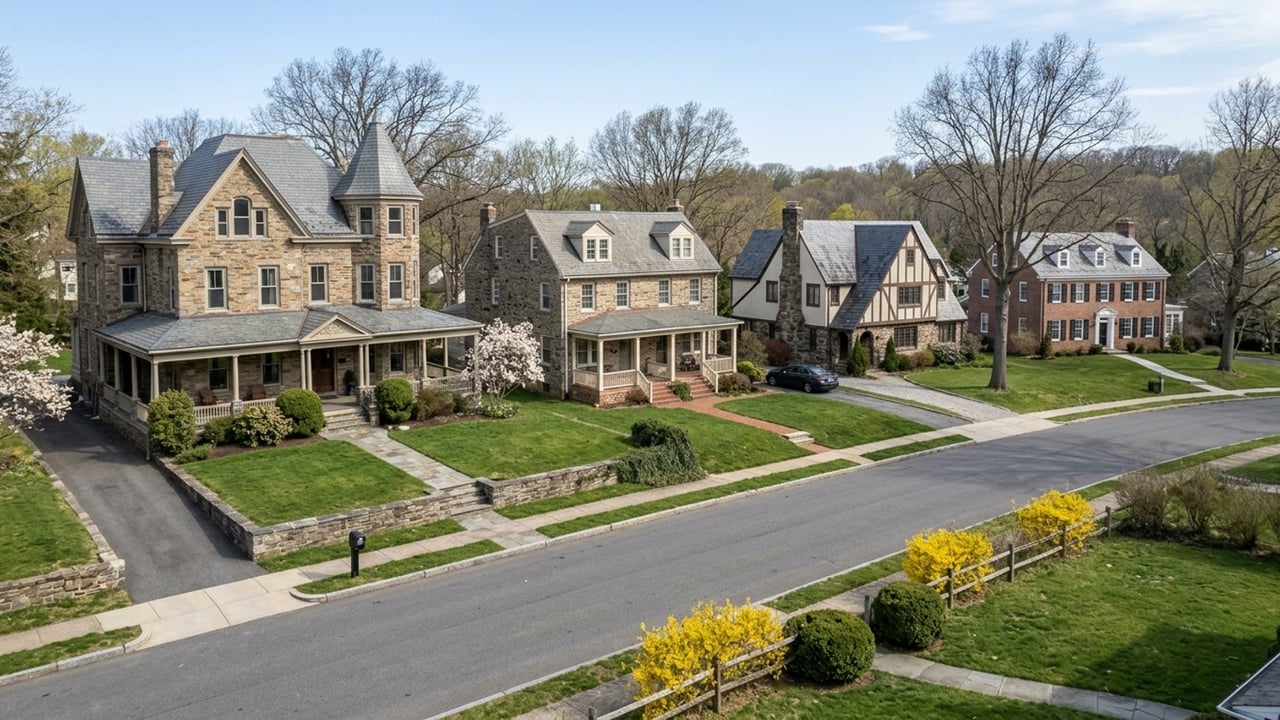
Most of Chestnut Hill, PA falls inside the Chestnut Hill Historic District, listed in the National Register of Historic Places in 1985. The district covers more than 2,600 buildings dating from 1744 to the present, which means you're almost certainly looking at an older property if you're shopping here. Buyers can reference our breakdown on buying a historic home in Chestnut Hill for additional details.
Restoring one of these homes takes real capital, and the biggest federal and state programs are designed for commercial projects, not primary residences.
Key takeaway
Pennsylvania and federal historic tax credits pay only on buildings that produce income, so a Chestnut Hill house you buy to live in won't qualify unless part of it is rented. For a home you occupy, look at a preservation easement or Philadelphia's abatement on renovation value instead. If you rent out a carriage house or unit, the federal credit alone returns a significant share of qualified rehabilitation costs.
Who this guide is for
You're buying or already own an older Chestnut Hill house and want to know which historic tax incentives, if any, can lower the cost of restoring it before you set your renovation and offer budget.
Can you get a historic tax credit on a home you live in?
The federal and Pennsylvania historic credits pay nothing on a house you live in. In a market where 46.3% of homes sold above list in the 90 days ending September 30, 2026, a buyer restoring a home to occupy should budget the work with no credit in it. Treat a preservation easement, Philadelphia's improvement abatement, or a rented unit as the only actual offsets.
Under the federal Historic Preservation Tax Incentives program, the credit is available only to properties rehabilitated for income-producing purposes. Owner-occupied residences don't qualify. The IRS only counts buildings used to produce income.
There is an exception for income-producing space on the same property, such as a rented carriage house or a separate apartment unit. Ask a CPA how a mixed-use property is treated under these programs before assuming you qualify.
If you plan to occupy the entire property, you have three alternative offsets to consider: a preservation easement, the Philadelphia improvement abatement, and rental use. Build your restoration estimate as if no federal or state historic credit exists for your primary living space.
Which historic tax incentive fits your plans?
If any part of the property will earn income, such as a rented carriage house, apartment, or unit, read the federal credit and Pennsylvania credit sections. These programs reward income-producing spaces. If no part of the property will generate income, skip directly to the preservation easements and the Philadelphia abatement sections.
Next, determine whether the building is a certified historic structure, either individually listed or a contributing building in a National Register district. If you don't know the property's status, start with the section on checking a Chestnut Hill home's status.
Consider whether the planned work is large, meaning it exceeds the building's adjusted basis or $5,000 under the federal substantial rehabilitation test. If the project is small, the abatement and easement sections matter more than the state and federal credits.
Finally, decide if you want a tax benefit without a major renovation, and whether you can accept permanent limits on exterior changes. If yes, go to the preservation easements section. If you're planning permit work on a designated property, read what designation means for renovation work.
How the federal historic tax credit works
The federal Historic Preservation Tax Incentives program offers a 20% credit for properties rehabilitated for income-producing purposes. The project must meet the substantial rehabilitation test: rehabilitation costs must exceed the greater of the building's adjusted basis or $5,000. This work generally needs to be completed within a two-year period, or five years for multi-phase projects.
That credit applies to qualified rehabilitation expenditures and is claimed ratably over a five-year period beginning in the year the building is placed in service. For a rented carriage house with a qualifying project, the annual benefit equals one-fifth of the total credit claimed.
The downside is that the credit is subject to recapture over a five-year period. If the property is disposed of, changes use, has an ownership-interest reduction of more than one-third, or suffers casualty destruction during that time, you lose a portion of the benefit. Work done before National Park Service (NPS) approval can also be disallowed entirely.
Pennsylvania historic preservation tax credit
Pennsylvania's Historic Preservation Tax Credit provides tax credits to taxpayers completing the restoration of a qualified historic structure into an income-producing property. The credit equals up to 25% of qualified rehabilitation expenditures, capped at $500,000 per qualified taxpayer per fiscal year. The program is jointly administered by the Department of Community and Economic Development (DCED) and the Pennsylvania Historical and Museum Commission (PHMC).
If awarded at the program rate, the state credit adds up to 25 cents for every dollar of qualified rehabilitation expenditure on a rented unit. Check with a CPA to confirm how state credits interact with your federal basis and how these credits can be sold or transferred.
The catch is that the program is highly competitive and relies on an annual cap. As of the fiscal year 2024-2025 state budget, the statewide annual allocation for the credit increased to $20 million. That annual cap means an approved project can still go unfunded in a given round if the state runs out of money.
Is your Chestnut Hill home a certified historic structure?
Most of the neighborhood falls inside the Chestnut Hill Historic District, listed in the National Register of Historic Places in 1985. The boundaries extend from Northwestern Avenue on the north to Cresheim Valley Drive on the south, and from Wissahickon Creek on the west to Stenton Avenue on the east. The Chestnut Hill Village and Market Square developments are excluded from this district.
The Philadelphia Historical Commission maintains a separate list called the Philadelphia Register of Historic Places. While the National Register district covers nearly all of Chestnut Hill, the local commission designates properties individually. For example, 2 East Chestnut Hill Avenue was added to the Philadelphia Register on January 12, 2018.
Checking a property's status
To check a property's status, look up the address in PHMC's CRGIS system to see whether it's a contributing building in the National Register district. Also ask the Philadelphia Historical Commission whether the property is on the Philadelphia Register before planning any exterior work.
A building's age alone doesn't qualify it for incentives. A non-contributing building inside the National Register district boundary gets none of the tax benefits. If that same building is locally designated on the Philadelphia Register, it may still face permit review for renovations.
Preservation easements in Chestnut Hill
Donating a preservation easement to a qualified organization can produce a federal income tax deduction for a home you live in. This process is subject to IRS appraisal and documentation rules, along with post-2006 requirements for buildings in registered districts.
The Chestnut Hill Conservancy manages a nationally accredited program that currently holds 52 conservation and preservation easements. These easements protect more than 105 acres of open space and 21 historic façades across Chestnut Hill, Mt. Airy, Springfield Township, and the lower Wissahickon watershed.
Ask your title company whether a preservation easement is already recorded on any house you're offering on, since it binds the next owner. Hire a qualified appraiser and tax advisor before donating an easement yourself.
What you give up is flexibility. The easement is permanent and limits future exterior changes for every later owner. It usually requires a stewardship contribution to the holding organization and regularly draws IRS scrutiny.
Philadelphia property tax abatement for renovations
Philadelphia's improvement abatement can shield the added assessed value from a qualifying renovation for a set period. This local tax break applies whether or not the house is historic.
For an owner-occupant planning a large restoration, this abatement may be worth more in practice than any historic program. Confirm the improvement abatement application deadline relative to your building permit with the Philadelphia Department of Revenue.
The abatement covers only the improvement value, not the land or the existing structure. The benefit also phases down over its term, meaning your tax bill will eventually rise to reflect the full renovated value of the home.
What historic designation means for renovation work
Under federal law, listing a property in the National Register places no restrictions on what a non-federal owner may do with their property. Owners are free to do as they wish within the framework of local laws, meaning the national listing alone doesn't restrict privately funded work on a private home.
Local designation operates differently. The Philadelphia Historical Commission requires approval for any exterior alteration to a property on the Philadelphia Register, even if a building permit isn't otherwise required. This review covers the back, sides, and roof, and includes work like replacing windows, cleaning masonry, or painting façades.
If you take the federal or state tax credits, you add NPS review of all work, including the interior, evaluated against the Secretary of the Interior's Standards for Rehabilitation. Ask contractors for past projects approved by the Historical Commission or NPS, and schedule review time into your renovation timeline.
Replacement windows, siding, and roofing materials are where review most often slows or reshapes a project. The Historical Commission's Rules and Regulations outline what materials can be used on a designated exterior.
Chestnut Hill housing market and your renovation budget
In the 90 days ending September 30, 2026, 46.3% of all Chestnut Hill homes sold above list price, based on 29 total sales. That leaves little room to negotiate a seller credit for restoration, so your renovation budget sits entirely on top of your offer price.
The median price per square foot is nearly identical for single-family homes ($400, based on 11 sales) and townhouses ($389, based on 17 sales). The large price gap between the two types is mostly about size. More square footage means a larger restoration bill, so size your renovation budget to the house's footprint rather than its purchase price.
At a median sale-to-list ratio above 100%, buyers in this market are paying above the asking price. Because the single-family data rests on just 11 sales, the figures point to a general direction of the market rather than an absolute trend.
Kristin McFeely's team can help check a property's designation and easement status before you make an offer.
How to apply for federal and Pennsylvania historic tax credits
Start by confirming the property has an income-producing use and a certified historic status. The federal Historic Preservation Certification Application has three parts, all submitted first to the State Historic Preservation Office, which in Pennsylvania is the PHMC.
You must file Part 1 to evaluate significance and Part 2 to describe the proposed rehabilitation work before construction begins. Get National Park Service Part 2 approval before any work starts if you're pursuing the credits, while also applying for the state credit in the corresponding DCED round.
After you complete the work, file Part 3 to document that the finished construction matches what was proposed. Once approved by the NPS, the project is a certified rehabilitation, and you claim the federal benefit on IRS Form 3468.
The NPS charges a review fee for Part 2 and Part 3 applications based on total estimated Qualified Rehabilitation Expenditures. Projects of $80,000 to $3,849,999 pay $800 plus 0.15% of costs over $80,000. These review fees, along with consultant or architect documentation costs, can eat into the credit on a small project.
Related guides: Insuring a Historic Home, Historic Home Inspection.
At a glance
- Chestnut Hill, all homes: median sale price $939,737, up 2.5% year over year (90 days ending 2026-09-30; based on 29 sales)
- Chestnut Hill, all homes: median 24 days on market, 2.9 months of supply, 27 homes in inventory, $391 median price per square foot (90 days ending 2026-09-30; 29 sales)
- Chestnut Hill, all homes: median sale-to-list ratio 102.9% (90 days ending 2026-09-30; 29 sales)
- Chestnut Hill, single family: median sale price $1,999,668, up 63.9% year over year. Based on only 11 sales, so the jump says more about which homes sold than about values (90 days ending 2026-09-30)
- Chestnut Hill, single family: median 35 days on market, 104.6% sale-to-list, 45.3% sold above list, 3.5 months of supply, 13 in inventory, $400 per square foot (90 days ending 2026-09-30; 11 sales)
- Chestnut Hill, townhouse: median sale price $750,000, up 24.5% year over year (90 days ending 2026-09-30; based on 17 sales)
- Chestnut Hill, townhouse: median 22 days on market, 101.7% sale-to-list, 46.8% sold above list, 2.1 months of supply, 12 in inventory, $389 per square foot (90 days ending 2026-09-30; 17 sales)
Common questions
What are the requirements for a property tax exemption in Pennsylvania?
Historic designation by itself does not exempt a home from property tax. The main exemption for an owner-occupied primary residence in Philadelphia is the Homestead Exemption, which reduces the taxable portion of a primary residence's assessed value by $100,000. Any owner-occupant who applies via the Philadelphia Tax Center saves up to $1,399 a year on their Real Estate Tax bill starting in 2025, with no income or age requirements. This is general information, not tax advice, and differs from the improvement abatement for renovations.
Sources
- Redfin: Data Center
- IRS: Rehabilitation Credit
- Pennsylvania DCED: Historic Preservation Tax Credit
- National Park Service: Application Process
- Chestnut Hill Conservancy: Chestnut Hill Historic District
- City of Philadelphia: Recent Nominations
- Chestnut Hill Conservancy: Easements
- National Park Service: Standards for Rehabilitation
- National Park Service: National Register FAQs
- City of Philadelphia: Historic District Manual
- City of Philadelphia: Homestead Exemption