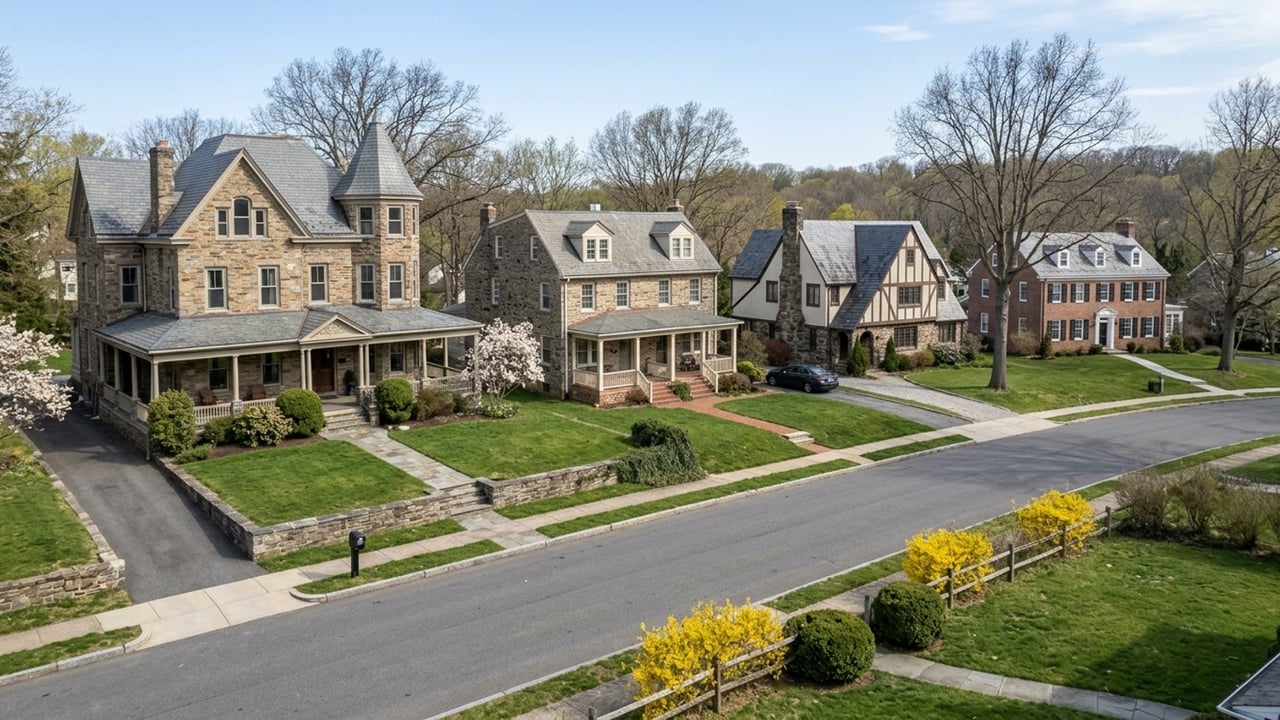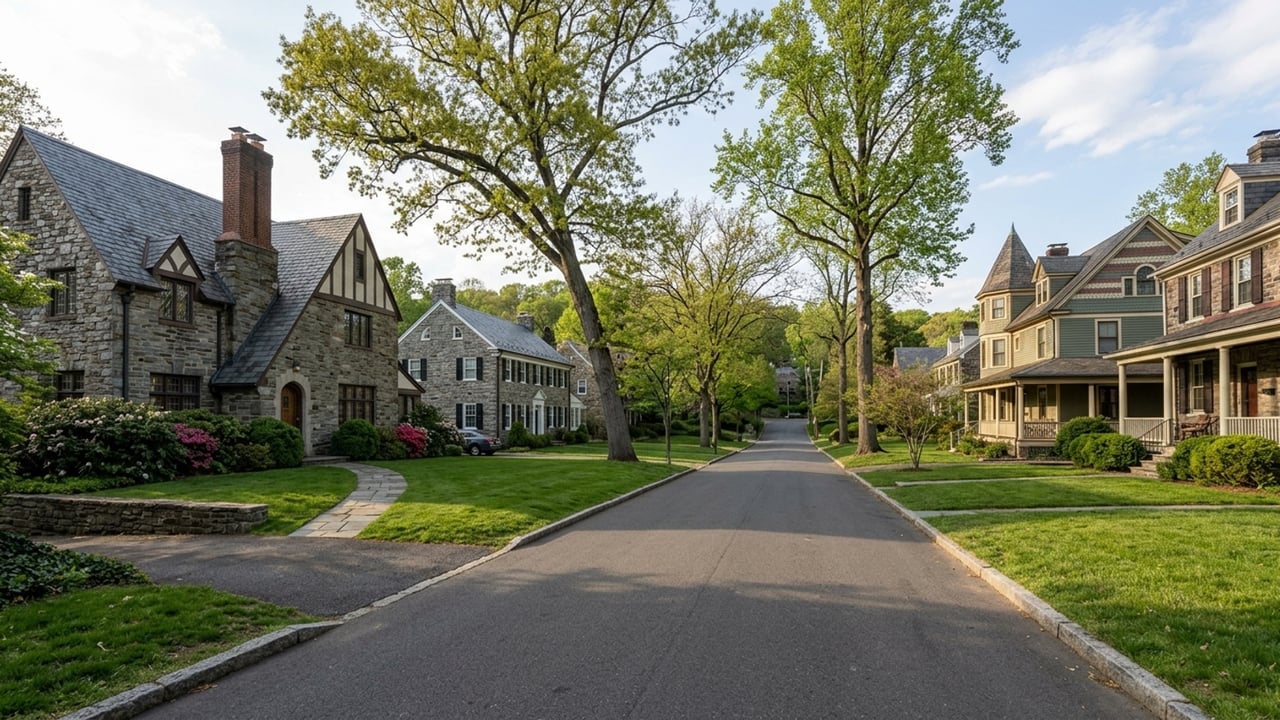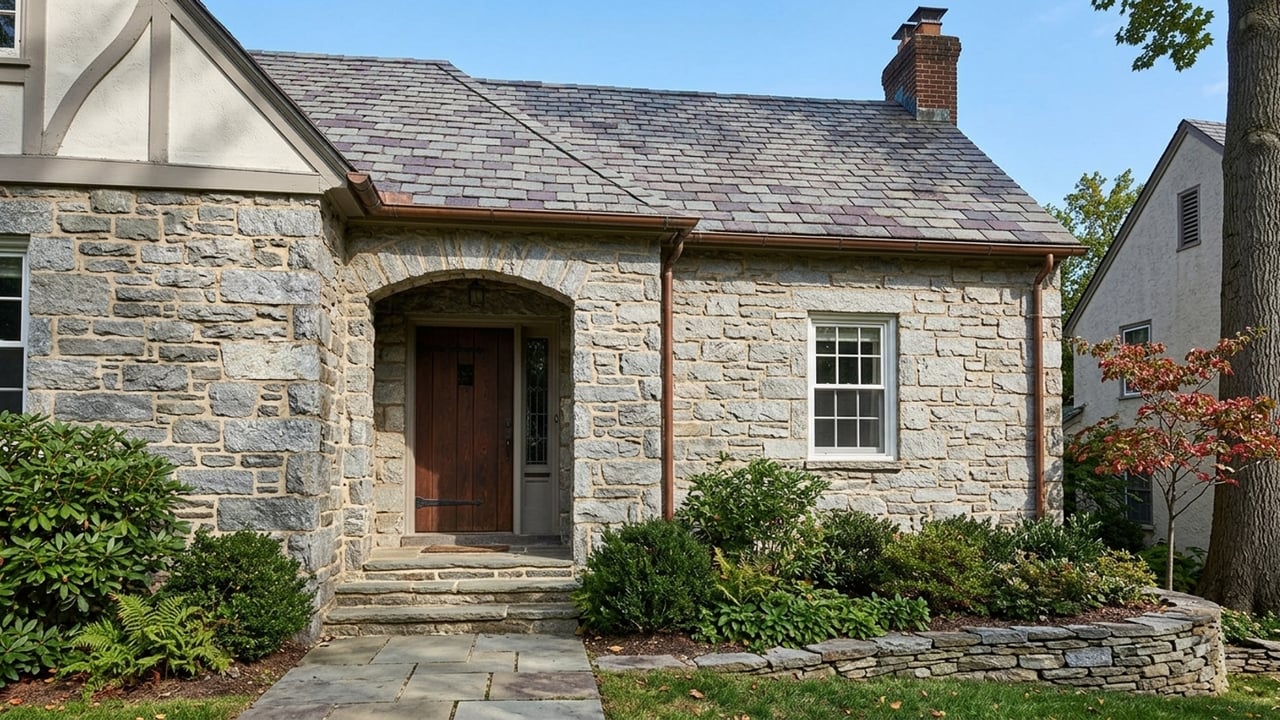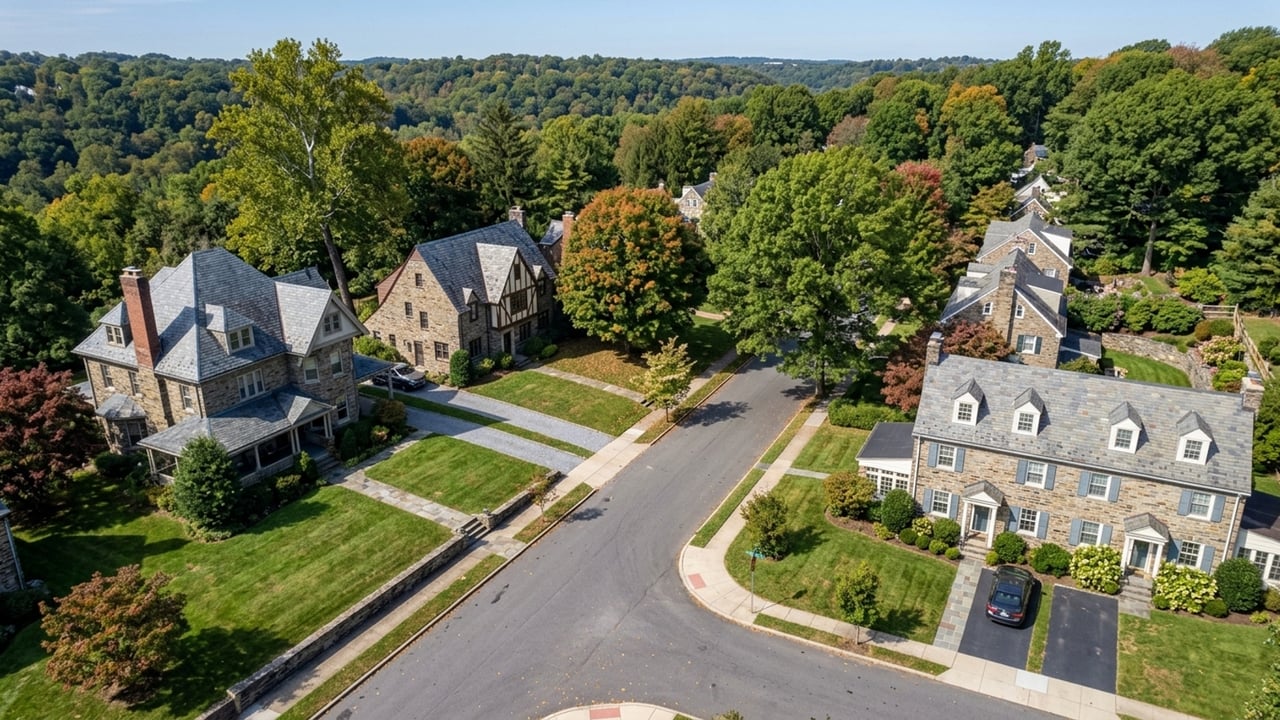
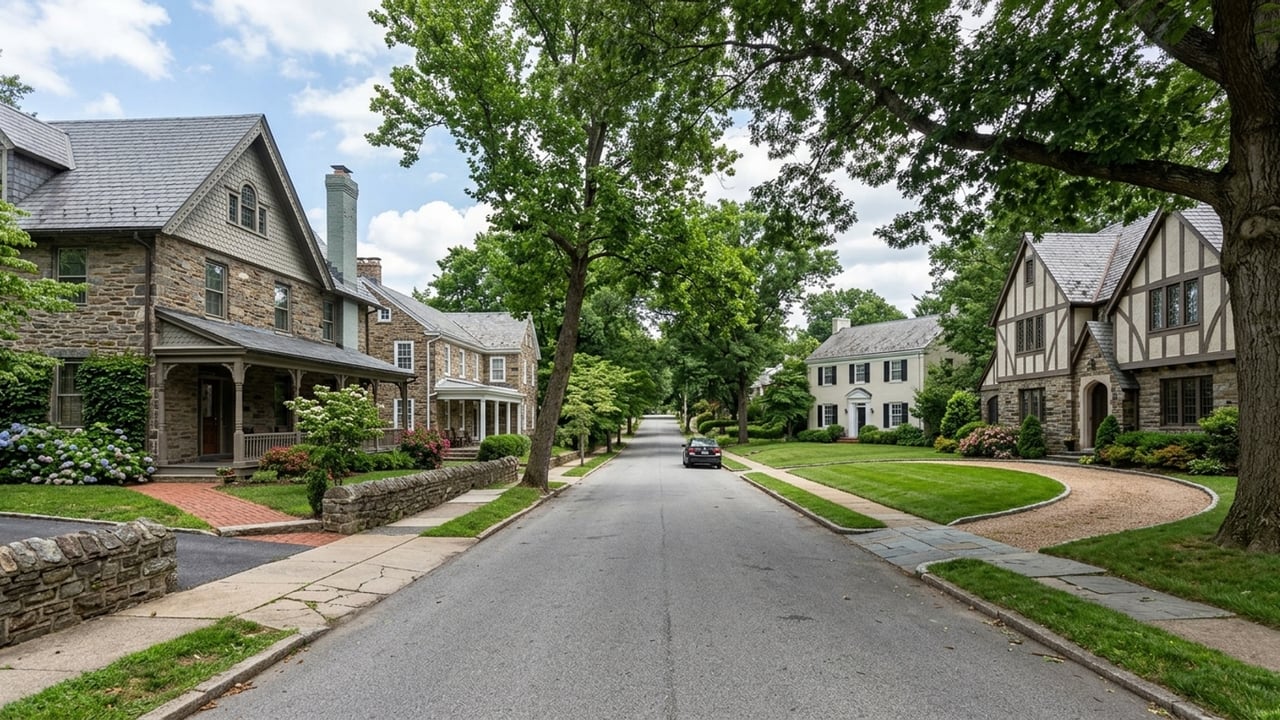
Chestnut Hill's historic architecture follows the natural topography, with nearly 2,000 contributing buildings reflecting 19th- and early 20th-century architect-designed work. Many of these older homes make extensive use of native Wissahickon schist and fieldstone, complete with historic slate shingles. We provide a neighborhood overview for anyone buying a historic home in Chestnut Hill.
For the bigger picture, see Buying a Home in Chestnut Hill, Philadelphia.
Purchasing one of these properties means deciding how much maintenance you're willing to take on and understanding local preservation rules. You'll want to verify a home's register status and physical condition before you submit a bid.
Key takeaway
In Chestnut Hill, a detached historic house costs more mainly because it's bigger. Single-family homes sold for less than 3% more per square foot than attached homes over the last 90 days. Start with an attached home if you want a lower total price and less exterior to maintain, or a detached house if you want more space at nearly the same per-foot cost. Either way, confirm the home's historic-register status and any preservation easement before you offer.
Who this guide is for
You're considering an older home in Chestnut Hill and deciding between an attached and a detached house, and you need to know what to verify about a specific property before you make an offer.
Attached vs. detached historic homes in Chestnut Hill
The choice between an attached and a detached historic home in Chestnut Hill is really about how much old building you want to own, not about paying a detached-house premium. Townhouses sold at a median of $389 per square foot based on 17 sales, while single-family houses sold at $400 per square foot based on 11 sales in the 90 days ending September 30, 2026. The per-foot price is nearly identical across types, so comparing listings by square footage and upkeep requirements makes more sense than comparing by property type alone.
A twin or row home shares walls, which means less roof surface, masonry, and site area to maintain over time. A detached house gives you more space at almost the same cost per foot, though the median single-family sale price jumped 63.9% year over year (based on 11 sales) to roughly $2 million, a swing that reflects which specific homes sold during a small sample period rather than any reliable trend. One more thing to watch: Redfin's "townhouse" category covers attached homes such as twins and rows, so check how a given listing is classified before you use these figures for comparison.
How competitive is the Chestnut Hill market?
Timelines here are tight. Across all home types, 46.3% of the 29 recent sales closed above the asking price. Attached homes moved especially fast, spending a median of just 22 days on the market before going under contract.
Detached houses give you a little more room to arrange inspections and specialist visits, with a median of 35 days on the market. They still regularly sell above list price, so there is little room to negotiate on price. Because these homes move quickly, your homework should be done before you even tour the house.
What to check before you make an offer
An older home does not automatically come with binding renovation rules. Regulations vary entirely by the property's specific legal status. The Chestnut Hill Historic District was added to the National Register of Historic Places in 1985, covering nearly 2,000 contributing properties over 1,920 acres, but being inside that boundary tells you less than you'd think about what you can and can't do with the house.
Local rules and private agreements are where the real limits live. You need to identify exactly which layers of oversight apply to a property before you can accurately estimate renovation costs and timelines.
Check which historic register the home is on
The National Park Service notes that listing a property in the National Register places no restrictions on what a non-federal owner may do with private funds. Local designation is what triggers city review, and Chestnut Hill doesn't have a comprehensive local historic district. Only about 90 of the neighborhood's roughly 2,700 properties within the national district boundary are individually designated on the Philadelphia Register of Historic Places.
You can confirm a property's local status by asking the Philadelphia Historical Commission. The address alone isn't enough. If the home is locally designated, permit-level exterior work, things like window replacement, roofing material changes, or masonry repointing, goes through Commission review. That adds time and can require costlier, matching materials. Price that into your renovation plans before you offer.
Ask whether there is a preservation easement
Some properties carry a preservation or facade easement held by the Chestnut Hill Conservancy. An easement is recorded with the deed and binds every future owner, acting as a separate layer of oversight from any city designation. It runs with the property, so it applies to you even though a previous owner granted it.
Ask the listing agent and the title company to search for a recorded preservation easement, and get a copy before your inspection period ends. Read it carefully to understand exactly what it covers and who approves changes. A home with no local designation can still have tight limits if an easement is in place, and that easement is effectively permanent.
Hire an inspector who knows old houses
General inspectors may not properly assess stone masonry, slate roofs, original plaster, older wiring, or old drainage wells. You'll want specialist visits from a masonry expert, a slate roofer, and an electrician, and you should book them early. For homes built before 1978, federal lead-based paint disclosure rules also give you the opportunity to test for lead.
Specialist inspections take days to complete. In a market where nearly half of homes sell above list price, a seller may favor offers with shorter inspection periods. Line up your specialists before you find the house. Asking for extended inspection time once you're under contract can make your offer less competitive, and that's a bad position to be negotiating from.
Financing and insuring a historic home
A detached-house purchase near the single-family median likely requires a loan well above the 2026 conforming limit for Philadelphia County, which is $832,750 for a one-unit home. Jumbo loan terms and appraisal timing will matter for these larger purchases. If you plan to fund repairs through your mortgage, the FHA Limited 203(k) program allows up to $75,000 in rehabilitation costs without requiring a HUD consultant, while FHA Standard 203(k) or Fannie Mae HomeStyle Renovation loans cover larger structural work.
Older construction materials have a direct impact on homeowners insurance premiums. Replacement costs for Wissahickon schist and slate roofs can be high, and older wiring can affect insurability. Get a replacement-cost insurance quote during the inspection period. Look up the property's assessed value and current tax on the City's Office of Property Assessment site so you have a clear picture of your ongoing carrying costs before you're committed.
How to choose a historic home in Chestnut Hill
The right property depends on your budget, your renovation plans, and how much time you can realistically spend managing a purchase. Ask yourself whether your budget is closer to an attached home's median price or a detached house's price, keeping in mind that the per-foot costs are similar. If you're planning exterior changes, whether new windows, a roof replacement, an addition, or solar panels, verify the home's register and easement status before you tour seriously.
Start with an attached home if you want a historic property with a lower total price and less roof and masonry to maintain. Start with a detached single-family house if you want more interior space without paying much more per square foot, or if you want those extra days on the market to arrange specialist inspections before committing. If making significant exterior changes matters to you, focus on homes with no Philadelphia Register designation and no recorded easement. Checking a property's register and easement status before you prepare an offer is a straightforward step that saves a lot of surprises later.
Related guides: Historic district rules Chestnut Hill, Philadelphia, Renovating a historic home Chestnut Hill, Philadelphia, Historic home tax credits, Insuring a historic home Chestnut Hill, Philadelphia, Historic home inspection Chestnut Hill, Philadelphia, Best historic home real estate agent in Chestnut Hill, Philadelphia.
Chestnut Hill market at a glance
The local market moves quickly, with a limited number of properties changing hands in any given period. These figures reflect conditions over a recent three-month window. Because the sample sizes are small, treat the year-over-year percentage changes as a reflection of which specific homes sold rather than a guaranteed trend.
- All homes: median sale price $939,737, up 2.5% year over year (based on 29 sales, 90 days ending 2026-09-30; small sample, treat with caution)
- All homes: median 24 days on market, 102.9% median sale-to-list, 46.3% sold above list, 2.9 months of supply, 27 homes in inventory, $391 median price per sq ft (29 sales, 90 days ending 2026-09-30)
- Single family: median sale price $1,999,668, up 63.9% year over year (based on only 11 sales, 90 days ending 2026-09-30; the jump likely reflects which homes sold)
- Single family: median 35 days on market, 104.6% sale-to-list, 45.3% sold above list, 3.5 months of supply, 13 in inventory, $400 per sq ft (11 sales, 90 days ending 2026-09-30)
- Townhouse: median sale price $750,000, up 24.5% year over year (based on 17 sales, 90 days ending 2026-09-30; small sample)
- Townhouse: median 22 days on market, 101.7% sale-to-list, 46.8% sold above list, 2.1 months of supply, 12 in inventory, $389 per sq ft (17 sales, 90 days ending 2026-09-30)
Frequently asked questions
Are there tax benefits for buying a historic home in Pennsylvania?
Owner-occupied homes generally don't qualify for the main preservation tax credits. The federal 20% historic rehabilitation tax credit and Pennsylvania's Historic Preservation Tax Credit both require the building to be an income-producing property. Donating a preservation easement can carry federal tax implications under IRS rules, so consult a tax professional to discuss your specific situation.
Sources
- Redfin: Data Center
- Wikipedia: Chestnut Hill Historic District
- National Park Service: National Register FAQs
- Chestnut Hill Conservancy: Unprotected and vulnerable
- Preservation Alliance: Citizens Guide
- City of Philadelphia: Chestnut Hill Ave nomination
- Innovative Mortgage Brokers: 2026 Conforming Loan Limits
- HUD: Mortgagee Letter
- National Park Service: Tax Incentives Eligibility
- City of Philadelphia: Property Search