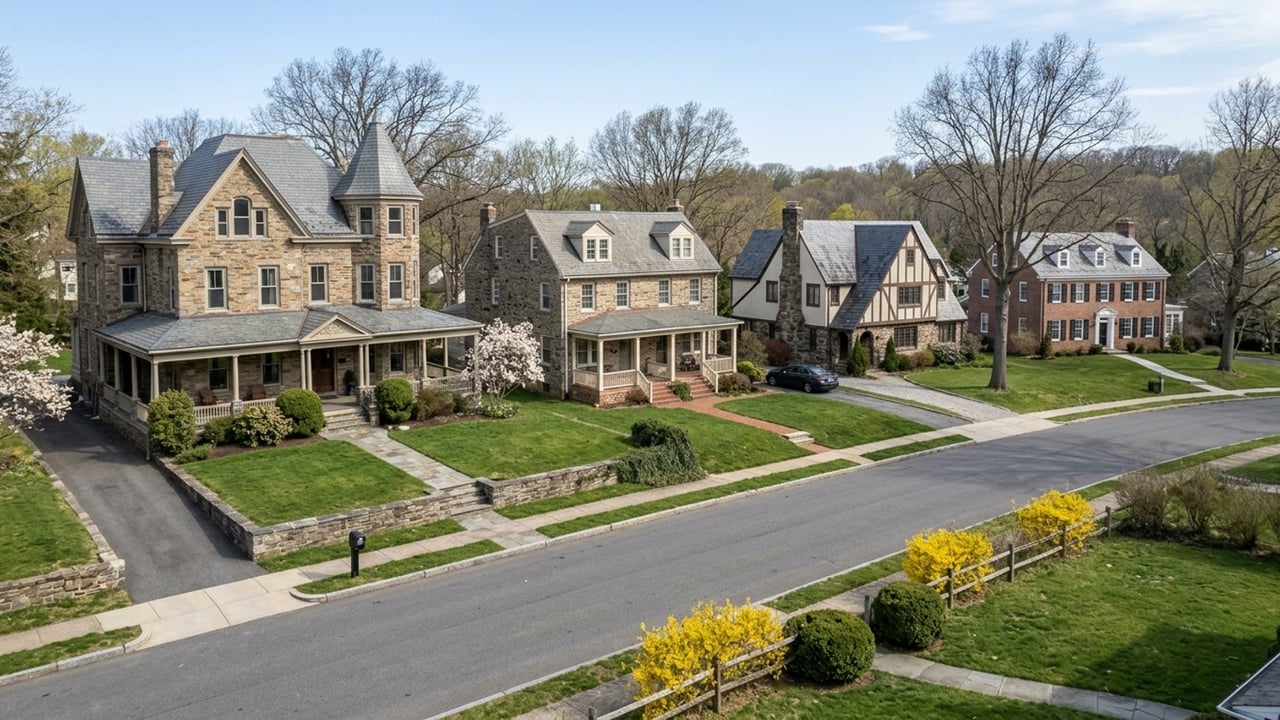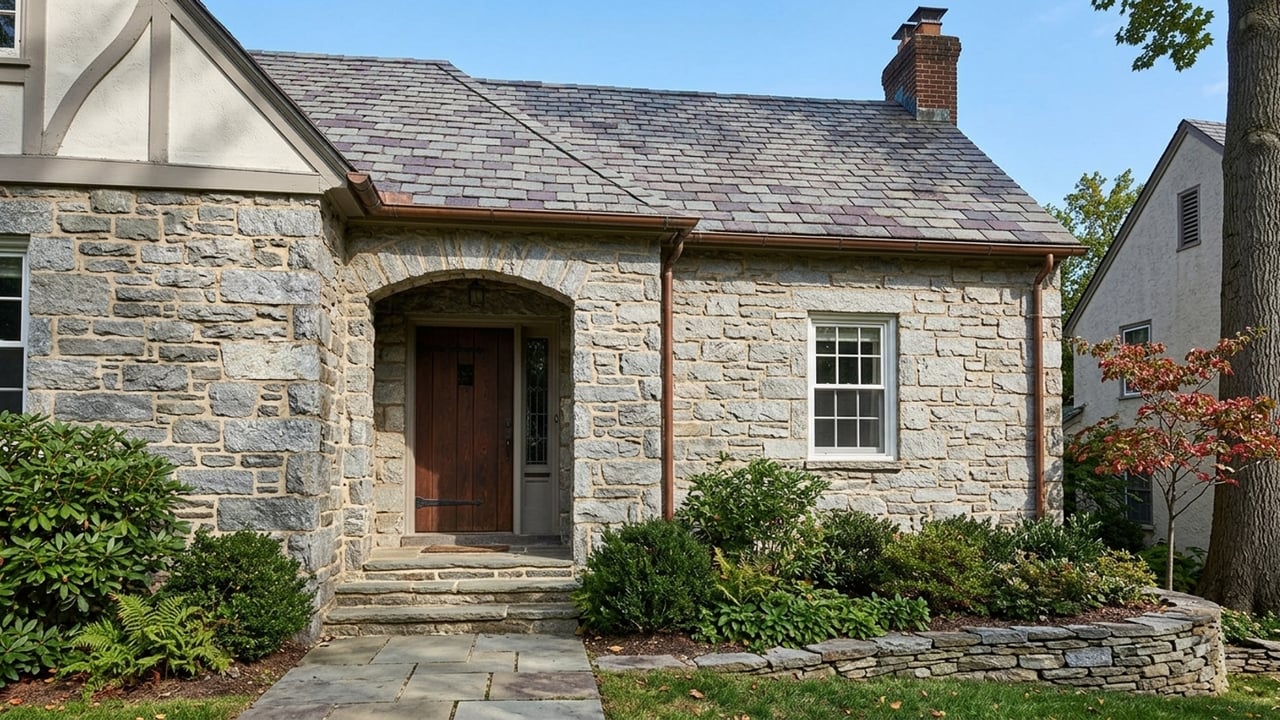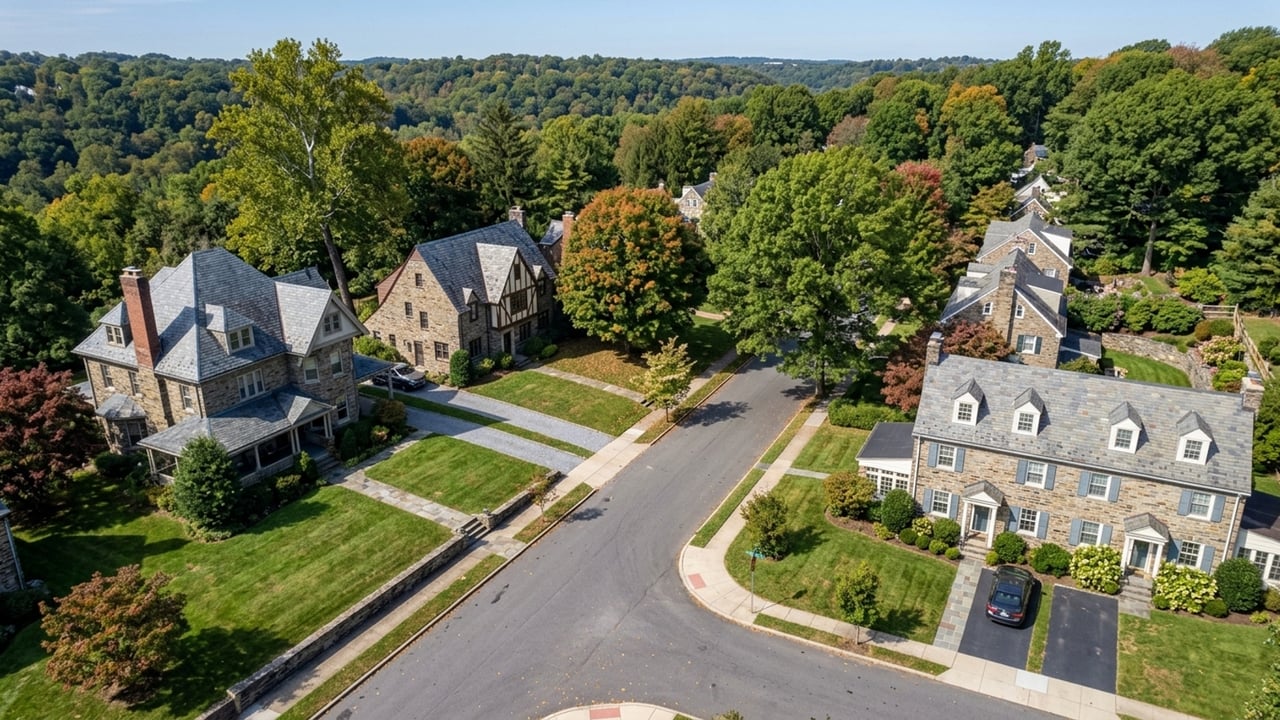
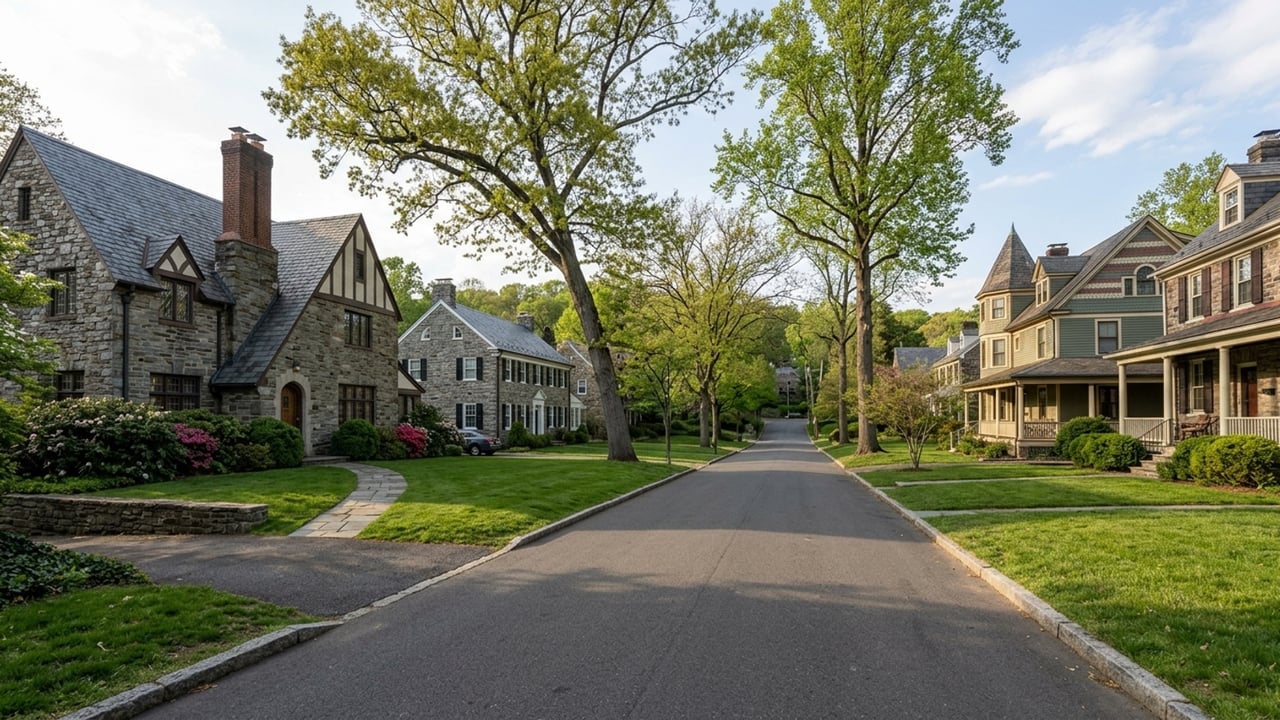
Chestnut Hill has a character you can't fake: older homes, many built from local gray Wissahickon schist, sitting on streets that don't look like anywhere else in the Philadelphia area. That distinctiveness is exactly what makes buying or selling here harder than it looks. It helps to understand the process of buying a historic home in Chestnut Hill before starting your search.
Key takeaway
For an older detached house in Chestnut Hill, hire the agent who can show recent list-versus-sale results on comparable older single-family homes. There were just 11 single-family sales in the last 90 days, so pricing comes down to judgment, not a comps printout. For a townhouse, sales are faster and comparables deeper, so broad local experience matters more than a historic specialty.
Who this guide is for
You are buying or selling an older house in Chestnut Hill and deciding which agent to trust with the pricing, the preservation questions, and the inspection.
What to look for in a Chestnut Hill real estate agent
The numbers here are worth sitting with for a moment. A single-family house in Chestnut Hill sells for about the same price per square foot as a townhouse, roughly $400 versus $389. But single-family homes took a median 35 days to sell compared to 22 days for townhouses, and they closed further over asking: 104.6% versus 101.7%. All of that comes from just 11 single-family sales and 17 townhouse sales over a 90-day period, which tells you something important about how thin this market really is.
The skill that matters in a historic-home agent is pricing a one-of-a-kind house from thin comparables, not knowing which building won a preservation award. You want someone who can document their pricing strategy, verify which preservation rules apply to a specific address, and actually call on inspectors who have worked with older systems before.
Chestnut Hill housing market right now
A well-priced detached house in this market draws competition. A mispriced one sits, and every week on market erodes a seller's position. The 13-day gap between single-family and townhouse median days on market isn't a curiosity, it's a direct consequence of how much harder it is to price a house that has few true peers. Single-family homes did close higher above list price in the end, but sellers had to be patient to get there.
With an all-homes supply of 2.9 months, buyers have few alternatives at any given moment. Every figure here rests on fewer than 30 sales over 90 days, so treat them as directional indicators rather than hard guarantees. The At a glance section below has the complete set of current market numbers.
Questions to ask an agent before you hire
Interviewing an agent means asking for proof of their results, not their opinions. Ask for a written list of their older-home sales in Chestnut Hill, with the original list price, the final sale price, and the days on market for each one. That record shows you how accurately they price properties and how well they negotiate, which is the whole game here.
Your specific questions should shift depending on the transaction type.
If you are selling an older house
Ask each agent to price your house in writing and show which sales they used to reach that number. Ask how they adjust for features that standard comparables can't capture: original Wissahickon schist construction, the condition of a slate roof, lot size. Ask what they'd fix, stage, or leave alone before listing, and why.
Pay attention to how they interpret recent data. An agent who quotes the 63.9% jump in the single-family median sale price as straightforward appreciation is misreading a mix effect from just 11 sales. That figure says more about which specific houses sold recently than about what your property is worth, and an agent who doesn't understand that distinction may overprice your house and leave it sitting.
Thin comparables increase your risk no matter how good the agent is. Even a well-reasoned price is still an estimate, and an overpriced detached house risks sitting well past the median 35 days.
If you are buying an older house
Ask which inspectors the agent has used for stone foundations, slate roofs, older wiring, and aging plumbing. Ask how quickly those specific inspectors can get on site. Ask how the agent checks for historic designation or a façade easement before you write an offer, because those rules will govern what you can do with the property for as long as you own it.
On offer strategy: ask how the agent decides when to bid over list price. Just under half of recent sales closed above list, which means overbidding is common but not automatic. A good agent makes that call house by house based on the seller's pricing strategy, not as a blanket policy.
The tradeoff is time. A fast market leaves little room for specialized inspections, and if the agent's inspector network can't schedule quickly, you may end up facing pressure to waive or shorten contingencies.
Preservation rules and tax credits in Chestnut Hill
Buying an older property often means accepting restrictions on what you can change, and Chestnut Hill has a few layers worth understanding before you make an offer.
Chestnut Hill is not designated as a single local historic district by the Philadelphia Historical Commission, but individual buildings are separately added to the Philadelphia Register of Historic Places. If a property is on that local register, you must get Commission approval for changes that require a building permit or alter the exterior facade.
You might also encounter deed restrictions tied to the Chestnut Hill Conservancy, which manages façade easements that protect historic structures from alterations. These easements are granted in perpetuity, which means they bind every future owner, including you. Ask the seller and the title company whether a Conservancy easement or other preservation easement is recorded on the deed before you close.
Don't assume you'll receive tax breaks for restoring a historic home. The federal 20% Historic Rehabilitation Tax Credit and Pennsylvania's Historic Preservation Tax Credit both target income-producing properties. Owner-occupied residential properties don't qualify. One more thing to confirm: check the property record to see whether the address falls within the City of Philadelphia or across the line in Montgomery County, because different rules and different tax bills apply.
Inspections, insurance, and financing for older homes
Older homes require specific due diligence, and the time to sort it out is before you close, not after. You'll need specialist inspections for older systems, and you should review the federal lead-based paint disclosure for any home built before 1978. Ask your inspector directly about their experience with stone foundations and slate roofs, and confirm their availability before you're in a time crunch.
Insurance and financing can create their own complications. Get an insurance quote, including the replacement cost for original materials, before your inspection period ends. Some lenders and appraisers struggle to value unusual older houses, so talk to your lender early in the process rather than discovering the problem at the last minute.
How to narrow your agent shortlist
Matching the agent's skills to the specific property is what this comes down to. For a detached house, comparable sales are scarce, so the pricing questions in the vetting section should come first. For a townhouse, speed and offer strategy matter more.
If you plan to change the exterior, read the preservation section before you make an offer and ask every agent you interview how they've handled Historical Commission review. If you're selling a house that needs work or staging before it lists, use the selling questions to compare how each agent would prepare and price it. For extra support, Kristin McFeely's team at Compass can walk through recent comparable older-home sales for a specific address.
Related guides: Historic District Rules, Renovating a Historic Home.
At a glance
- All homes, median sale price: $939,737, up 2.5% year over year (90 days ending 2026-09-30; based on 29 sales, so treat as directional)
- All homes: median 24 days on market, 102.9% sale-to-list, 46.3% sold above list (90 days ending 2026-09-30; 29 sales)
- All homes: 2.9 months of supply, 27 active listings, $391 median price per square foot (90 days ending 2026-09-30)
- Single family, median sale price: $1,999,668, up 63.9% year over year (90 days ending 2026-09-30; based on only 11 sales, so the jump likely reflects which houses sold, not true appreciation)
- Single family: median 35 days on market, 104.6% sale-to-list, 45.3% sold above list, 3.5 months of supply, 13 active listings, $400 per square foot (90 days ending 2026-09-30; 11 sales)
- Townhouse, median sale price: $750,000, up 24.5% year over year (90 days ending 2026-09-30; based on 17 sales)
- Townhouse: median 22 days on market, 101.7% sale-to-list, 46.8% sold above list, 2.1 months of supply, 12 active listings, $389 per square foot (90 days ending 2026-09-30; 17 sales)
Frequently asked questions
What is the average commission for a realtor in PA?
No law or official body sets a standard commission rate in Pennsylvania. Commissions are negotiated directly between the client and the brokerage. Get written quotes from each agent you interview and compare what services each fee covers, such as staging, marketing, and specialist inspections.
Can you negotiate realtor fees in PA?
Yes, real estate fees are negotiable. Since the 2024 industry settlement changes, buyers must sign a written agreement stating their agent's compensation before touring a home. Negotiate the rate, the services included, and the length of the agreement before you commit.
Sources
- Redfin: Data Center
- Wikipedia: Chestnut Hill Historic District
- Philadelphia Historical Commission: Information for property owners
- Chestnut Hill Conservancy: Easements
- National Park Service: Tax Incentives
- PA Historical and Museum Commission: Historic Tax Credits
- EPA: Lead-Based Paint Disclosure Rule
- NC Real Estate Commission: NAR Settlement
- Chestnut Hill Conservancy: PastPerfect Library