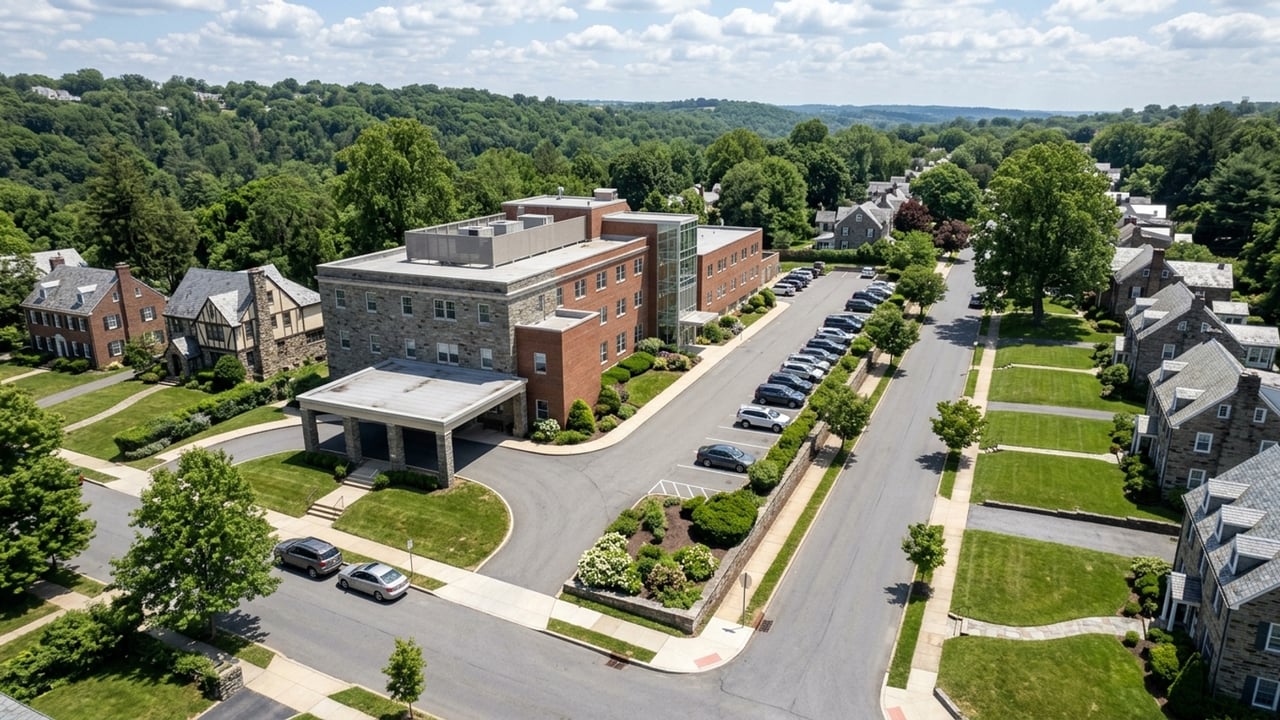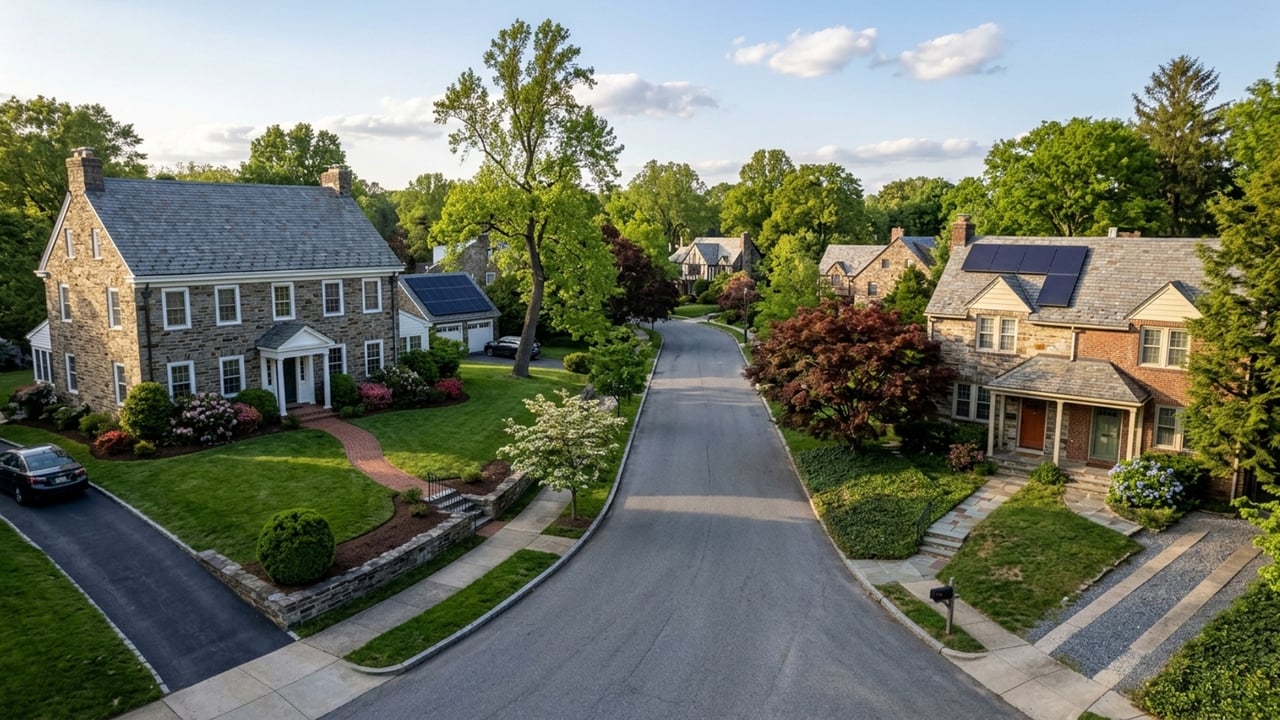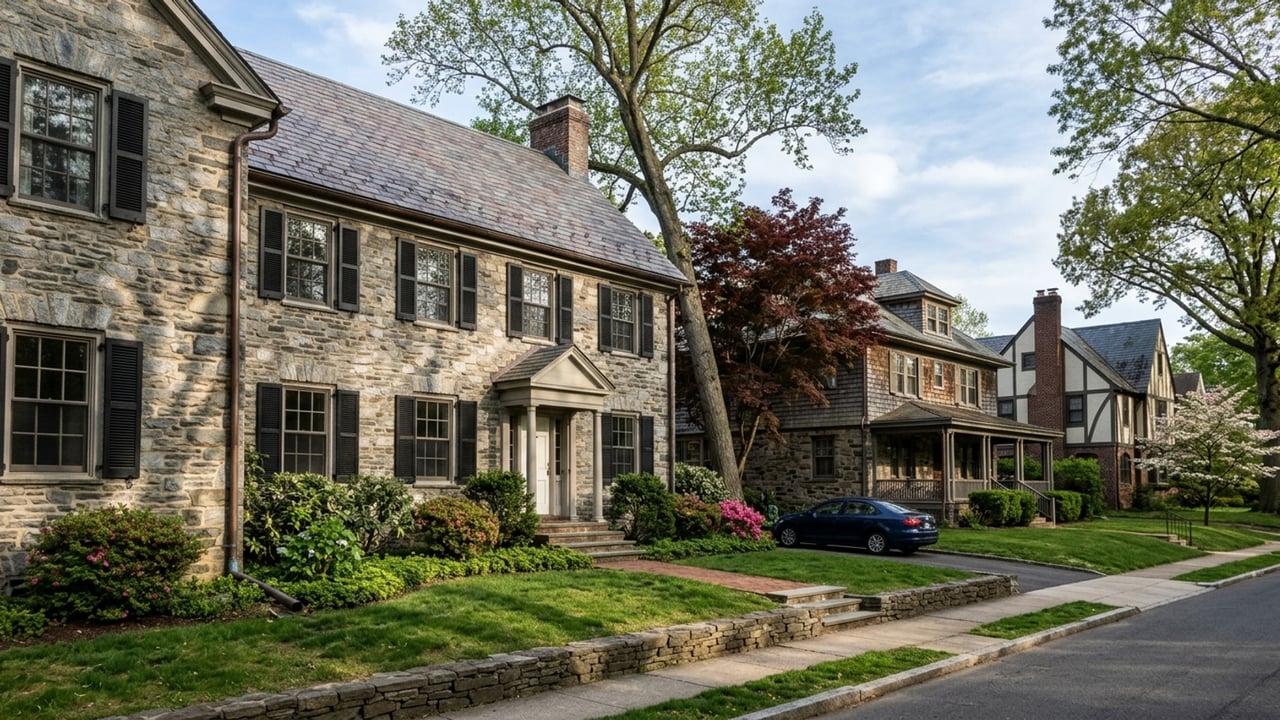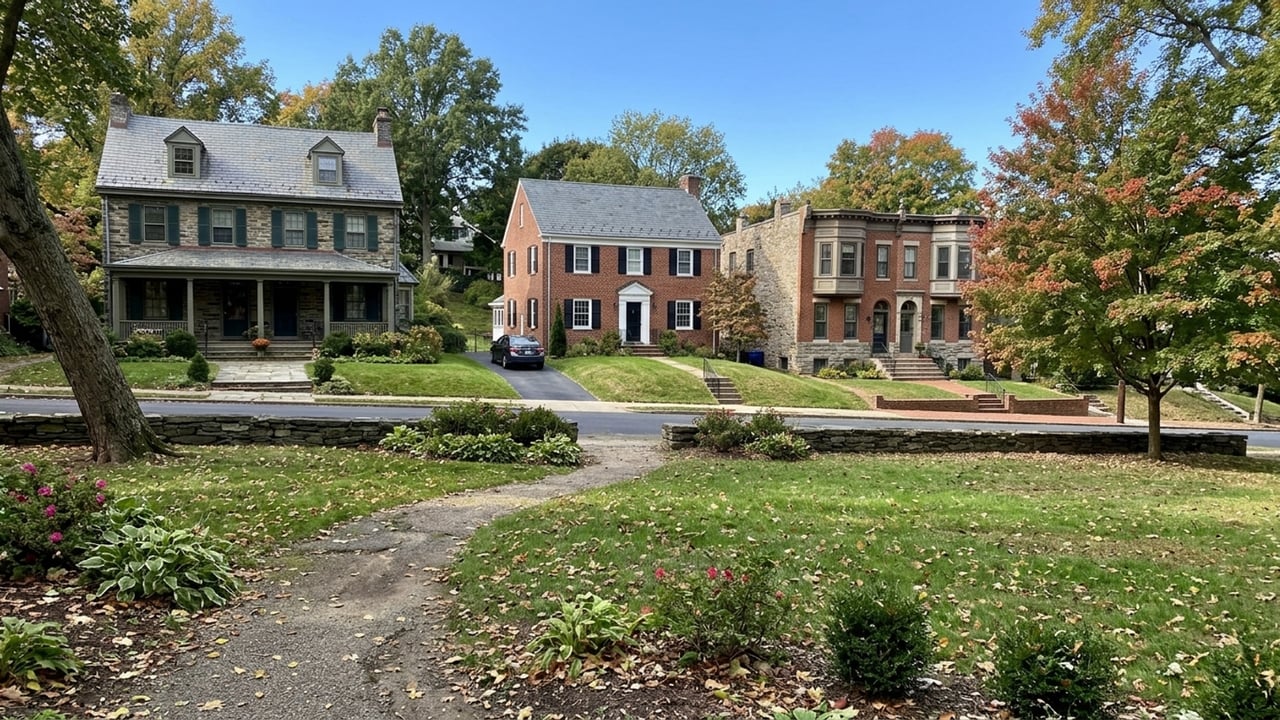
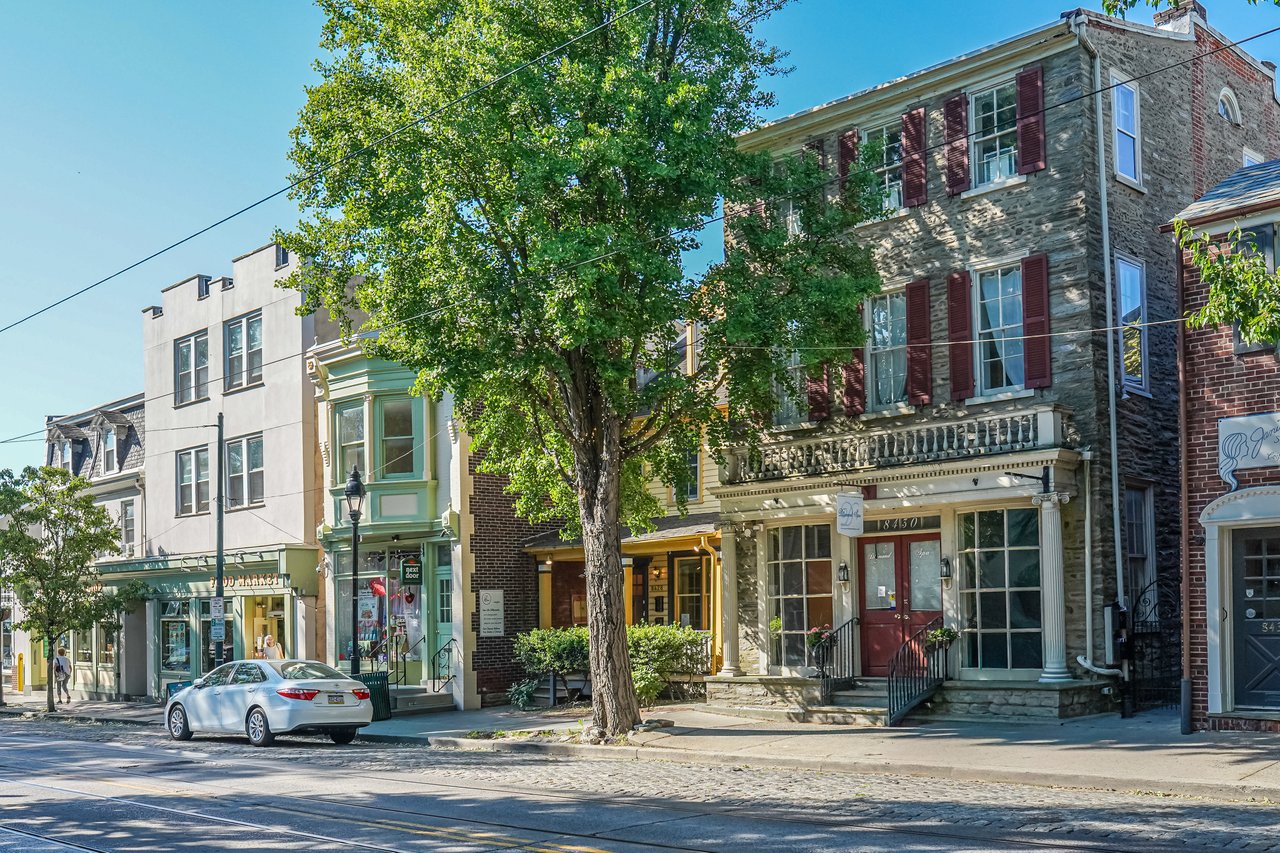
Chestnut Hill sits in the northwest corner of Philadelphia, bounded by Wissahickon Valley Park, Cresheim Valley, and the Montgomery County line. It marks the end of two separate SEPTA regional rail lines, making it a distinct pocket of the city where transit access and large green spaces sit side by side. If you are buying a home in Chestnut Hill, Philadelphia, PA, our neighborhood breakdown provides additional details.
Buyers looking at the best neighborhoods in Chestnut Hill, Philadelphia, usually choose between attached housing near the commercial corridor and detached properties closer to the park. The housing stock ranges from historic stone estates to early 20th-century twins, and where you focus your search depends on how much space you need and how you prefer to commute.
Key takeaway
Start with the townhouses and twins around Germantown Avenue. They sold for a median $750,000 in the 90 days ending Sept. 30, 2026 (based on 17 sales), at nearly the same price per square foot as detached houses, so paying more for a detached home buys space, not a better address. If you need a full detached house, look west toward Wissahickon Valley Park and expect to pay at or above asking.
Who this guide is for
You are shopping for a home in Chestnut Hill and deciding which part of it, and which kind of house, fits your budget and how you want to get around.
Chestnut Hill housing market: townhouses vs detached homes
Chestnut Hill's townhouses and detached homes sell for almost the same price per square foot, roughly $389 versus $400 in the 90 days ending Sept. 30, 2026. Paying more for a detached home buys roughly 5,000 square feet instead of the roughly 1,900 square feet typical of a townhouse sale, not a more valuable address. Dividing each type's median price by its median price per foot suggests those size estimates.
The attached market around Germantown Avenue is the tighter one: 2.1 months of supply and a 22-day median time on market. Arrive with financing approved and be ready to decide within days. Detached homes took a median 35 days to sell with 3.5 months of supply, so you get more time to compare houses, but they still closed at 104.6% of list price. Time on the market does not equal price advantage here.
These figures rest on small samples of 11 detached sales and 17 townhouse sales. The single-family median of $1,999,668 is about 2.7 times the townhouse median, and its 63.9% year-over-year jump (based on 11 sales) likely reflects a few large estates changing hands rather than values rising that fast across the board.
How to choose a part of Chestnut Hill
The neighborhood divides into walkable transit pockets and quieter park-adjacent streets. Four questions about your daily routine and budget will narrow it down fast.
- Do you need a detached house, or would a townhouse or twin work? If you're unsure, the lower townhouse median above is a strong reason to start with attached homes. Attached buyers go to the Germantown Avenue sections; detached buyers go to the Wissahickon and Morris Arboretum sections.
- Do you want to walk to Germantown Avenue's shops and a regional rail station without a car? If the answer is yes, start with townhouses and twins at the Top of the Hill, Bottom of the Hill, or East Chestnut Hill.
- Is daily trail and park access the priority over walking to shops? If you want a trailhead at the end of the block, start with West Chestnut Hill or the French Village.
- Are you open to a home just across the city line, with a different school district and tax setup? If comparing a Montgomery County tax and school-district arrangement alongside Chestnut Hill appeals to you, read the Wyndmoor profile below.
Neighborhoods near Germantown Avenue and the train lines
Buyers who want walkability and transit focus on the streets immediately surrounding Germantown Avenue. You trade large lots for smaller attached housing and gain the ability to walk to errands and regional rail stations.
Top of the Hill
The northern end of Germantown Avenue sits near the terminals for both the Chestnut Hill East and Chestnut Hill West regional rail lines. The Chestnut Hill West station is about a 49-minute ride to Suburban Station in Center City, making this the most car-light pocket for commuters. Housing near the avenue includes homes and apartments above shops, along with attached houses on the immediate side streets.
This is the busiest stretch of the avenue on weekends and event days, and many homes near the shops have no off-street parking. Confirm parking for the specific address before you tour.
Bottom of the Hill
The southern end of the avenue runs toward Cresheim Valley, which forms the boundary between Chestnut Hill and Mt. Airy. Avenue access remains straightforward, and the side streets carry heavy concentrations of attached homes and twins. Because it sits where Chestnut Hill and West Mount Airy meet, you can easily watch both markets from here.
It is farther from the rail terminals at the top of the hill. Look up the walking distance from any specific address to the nearest station on either line before assuming a train commute works.
East Chestnut Hill
The Chestnut Hill East line runs along this side of the neighborhood, with intermediate stations operating between the terminal and Center City. The area runs east of Germantown Avenue toward Stenton Avenue and the Wyndmoor city line, offering a mix of twins and detached houses.
It's the farthest side from Wissahickon Valley Park trailheads. Rail service frequency differs between the two lines, so compare current weekday schedules for whichever station is closest to an address you're considering.
Neighborhoods near the Wissahickon and Morris Arboretum
Buyers who prioritize lot size and park access look to the outer edges of the neighborhood. You gain larger detached houses and immediate green space, but you give up the short walk to the avenue's commercial center.
West Chestnut Hill
Streets west of Germantown Avenue run toward Wissahickon Valley Park and Forbidden Drive, a gravel road along Wissahickon Creek closed to cars. This is where the larger detached stone houses concentrate. If you want a detached house and time to compare several before committing, this pocket reflects the detached-home market described above, though you should still budget at or above the asking price.
Many houses here are old stone homes, which means slate roofs, stone pointing, and aging systems that are expensive to maintain. From the westernmost streets, the walk to the avenue is long. Ask for the age of the roof, heating, and electrical systems, and get a specialist inspection.
French Village and the Woodward houses
A small cluster of early 20th-century houses built by the Woodward family sits on the edge of the neighborhood. The French Village development includes roughly 24 homes built between 1924 and 1929 in a French Normandy-inspired style. Buyers target this pocket specifically for its architecture and history rather than its price point.
Few of these houses come up for sale, and historic details limit what you can change. Ask whether the property carries a Chestnut Hill Conservancy preservation easement or falls under historic review before you get attached to renovation plans.
Pastorius Park area
Pastorius Park is a city park with a pond that hosts a summer concert series. The streets around it let you walk to green space without being all the way out on the Wissahickon edge, which is a reasonable middle ground for buyers who want park proximity but not full car dependence for the avenue.
Event nights bring crowds and parked cars to surrounding streets, and only a handful of homes here are listed at any one time. Set a listing alert, because waiting is often the only route in.
Morris Arboretum and Northwestern Avenue
The northern edge of Chestnut Hill sits near Morris Arboretum & Gardens of the University of Pennsylvania, the official state arboretum. Northwestern Avenue borders Montgomery County here, creating a pocket with quiet traffic and immediate garden and trail access.
It's the farthest corner from the avenue's shops and the rail terminals. Most errands and commutes from here mean driving.
Nearby neighborhoods to compare
If Chestnut Hill's inventory or prices don't fit your budget, two bordering areas offer alternatives. Neither has sales figures available in this guide, so you'll need to check recent comparable sales.
West Mount Airy
Directly south across Cresheim Valley, West Mount Airy has its own stretch of Germantown Avenue and stations on the Chestnut Hill West line. It shares the Wissahickon edge on its west side, offering a similar mix of park access and transit.
Don't assume it's cheaper just because it's a different neighborhood. Ask for recent comparable sales on the specific streets you're considering.
Wyndmoor
A few blocks east can move you out of Philadelphia and into Springfield Township in Montgomery County. Wyndmoor operates under a different tax system, including the Springfield Township School District and Montgomery County property taxes. It also changes your wage tax position; effective July 1, 2026, the Philadelphia wage tax is 3.735% for residents and 3.425% for non-residents working in the city.
Trading the city's tax structure for township, county, and school taxes doesn't automatically mean a lower total bill. Compare actual tax bills for two similar homes, and talk to a tax professional about the wage tax if you work in Philadelphia.
What to check before you buy in Chestnut Hill
Philadelphia's tax rates, school zones, and historic preservation rules vary by address. You can verify these details using city and district databases before making an offer. Kristin McFeely's team at Compass can pull recent sales for specific streets.
Historic district review
The Chestnut Hill Historic District is listed on the National Register of Historic Places, but that designation alone generally does not restrict private owners from altering properties. About 90 properties carry local designation on the Philadelphia Register, and that's a different situation entirely.
If the house is locally designated, exterior changes such as windows, roofing, and additions require review by the Philadelphia Historical Commission. Confirm the property's status before planning renovations, since the approval process adds time and cost.
Property taxes and the wage tax
You can find a home's assessed value through the Office of Property Assessment property search. The City of Philadelphia's real estate tax rate is 1.3998% of the assessed value. The Homestead Exemption reduces a primary residence's taxable assessed value by $100,000.
Assessments can be revised, and the Homestead Exemption requires an application. The seller's current bill may not match yours once the city updates the record.
School and crime data lookups
Chestnut Hill is served by the School District of Philadelphia. You can use the district's online school finder to check the catchment school for a specific address. The Philadelphia Police Department's 14th District covers the area, and you can search a radius around an address using the city's official crime incident map or OpenDataPhilly.
School assignments are set by address and can change. Crime maps show only reported incidents, and small areas can swing year to year, so look at several years of data before drawing conclusions.
At a glance
- All homes, 90 days ending 2026-09-30 (based on 29 sales, a small sample): median sale price $939,737, up 2.5% year over year; median $391 per sq ft
- All homes, 90 days ending 2026-09-30: median 24 days on market; sold for 102.9% of list on average; 46.3% sold above list; 2.9 months of supply; 27 homes for sale
- Single-family homes, 90 days ending 2026-09-30 (based on only 11 sales; treat with caution): median sale price $1,999,668, up 63.9% year over year; median $400 per sq ft
- Single-family homes, 90 days ending 2026-09-30 (11 sales): median 35 days on market; 104.6% sale-to-list; 45.3% sold above list; 3.5 months of supply; 13 homes for sale
- Townhouses, 90 days ending 2026-09-30 (based on 17 sales; treat with caution): median sale price $750,000, up 24.5% year over year; median $389 per sq ft
- Townhouses, 90 days ending 2026-09-30 (17 sales): median 22 days on market; 101.7% sale-to-list; 46.8% sold above list; 2.1 months of supply; 12 homes for sale
- Source line: Redfin data via Redfin Data Center. Condos are omitted because fewer than 10 sold.
FAQ
How do Chestnut Hill home prices break down by property type?
All homes sold for a median $939,737, or $391 per square foot, in the 90 days ending Sept. 30, 2026, based on a small sample of 29 sales. Prices vary by property type, as detailed in the townhouse versus detached section.
Sources
- Redfin: Data Center
- SEPTA: Chestnut Hill West Station
- Chestnut Hill Conservancy: Unprotected and vulnerable
- Encyclopedia of Greater Philadelphia: Historic Districts
- Morris Arboretum: History
- Planning.org: Chestnut Hill
- Phila.gov: Lower Your Property Tax Bill
- Phila.gov: Wage Tax
- School District of Philadelphia: School Finder
- Philadelphia Police Department: Districts List