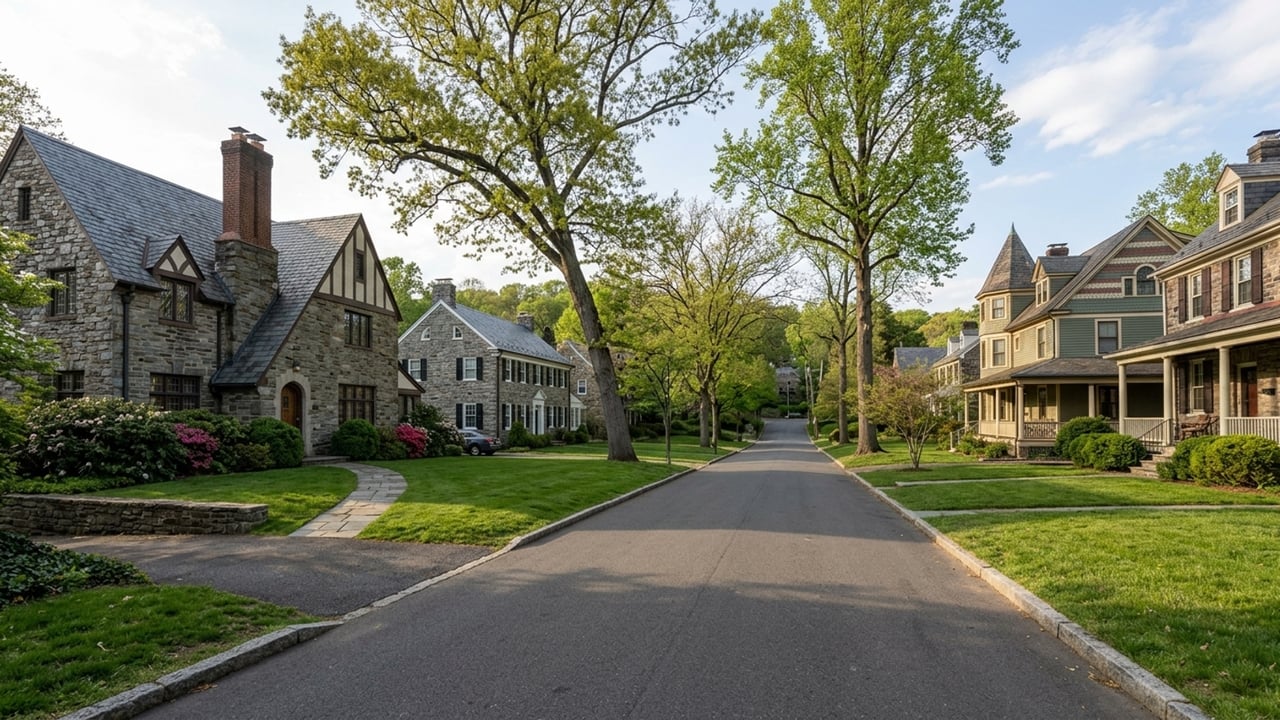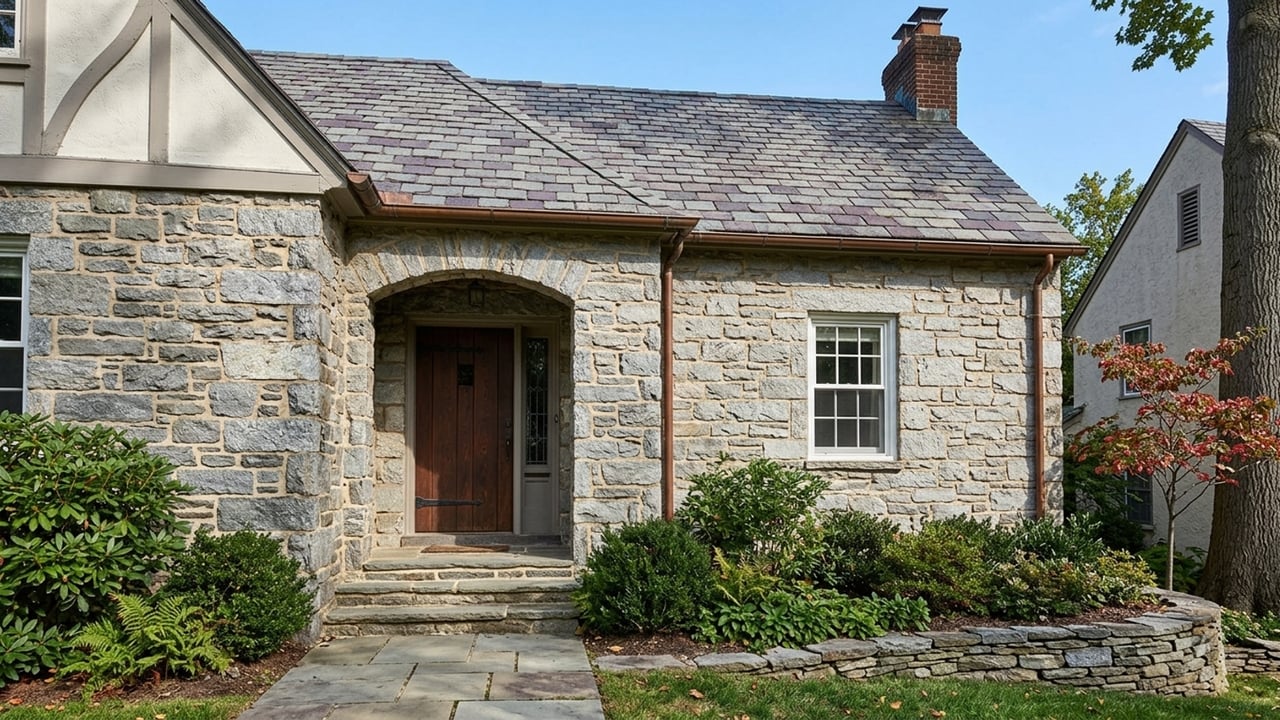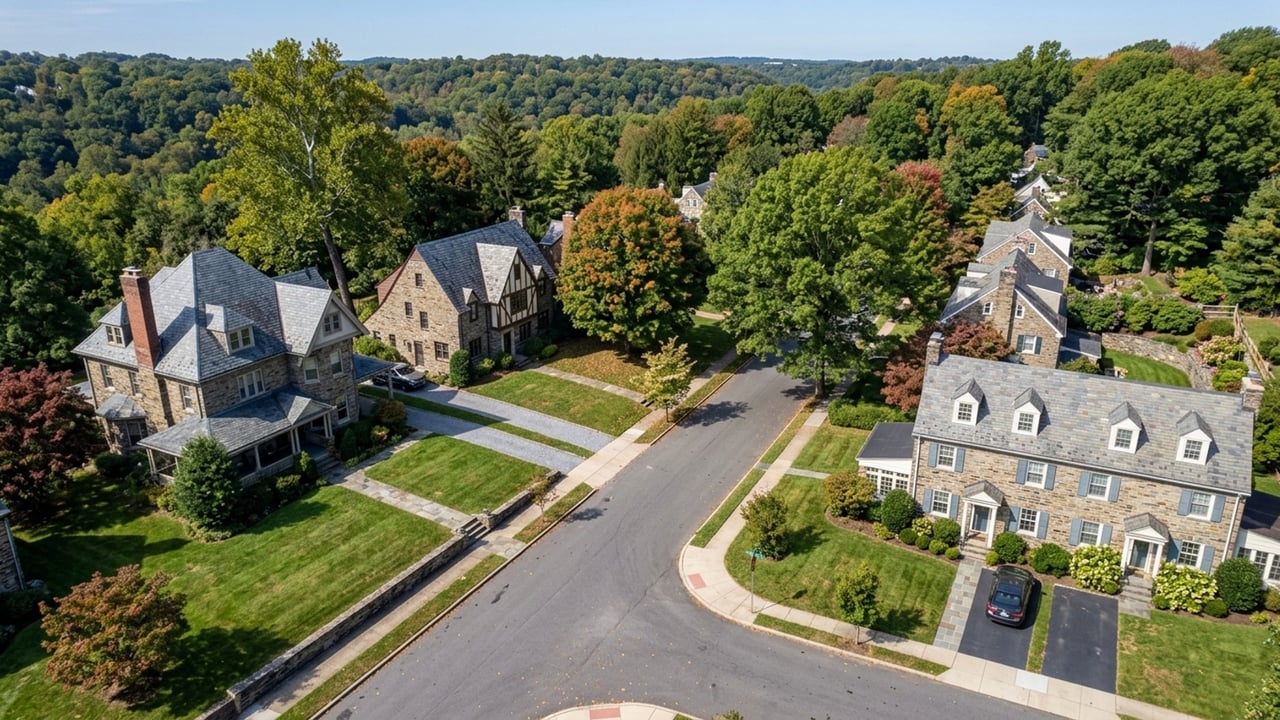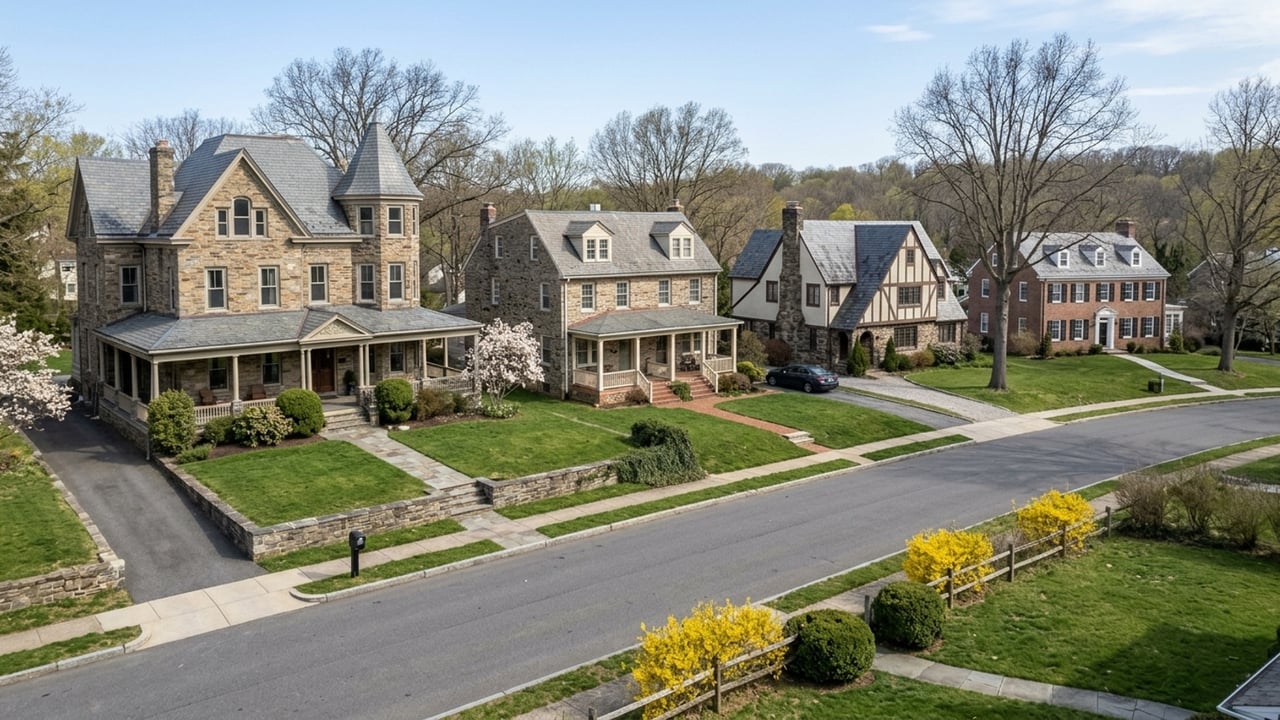
Ask three different sources what a home costs in Queen Village and you'll get three different answers, sometimes on the same day. Zillow's home value index for the neighborhood showed an average of $592,723 as of the end of May 2026. Movoto listed a median asking price of $599,000 for the same neighborhood in August 2026. Prop-Metrics, pulling from a different data slice, put the median home price at $493,000 as of May 2026. These aren't old numbers contradicting new ones. They're roughly the same season, describing the same six or seven blocks, landing $100,000 apart.
That gap isn't noise. It's the story. Queen Village and Bella Vista get treated online as a single walkable pocket of South Philadelphia, close enough in geography that portals often blend them into one search radius. But the housing stock inside that radius is not uniform, and depending on which slice a given data source happens to sample that month, the "median" can mean a fully renovated Federal-style rowhome near the waterfront or a trinity fixer-upper two blocks off the Italian Market. Buyers who anchor a budget to a single median number from a single site are often anchoring to the wrong slice.
Two Neighborhoods, Different Bones
Queen Village's housing stock runs older and, in its most prized sections, larger. Colonial, Federal and Victorian-era rowhomes dating to the 18th and 19th centuries make up much of the neighborhood's identity, many of them expanded or combined over the decades into homes with more square footage than their footprint suggests. Condos near the Delaware waterfront and around Dockside pull the upper end of that range even higher. That mix is why the neighborhood's numbers cluster in the high $500,000s to $600,000s across most sources, with plenty of individual sales well above $700,000 for larger, fully renovated properties.
Bella Vista's housing stock tells a different story. A meaningful share of the neighborhood is trinity houses, a distinctly Philadelphia rowhome form: three stories, one room per floor, built dense and narrow to house 19th-century Italian immigrant families on small lots. As of late August 2026, home prices in Bella Vista ranged from around $350,000 for a fixer-upper up to $800,000 and beyond for a fully renovated historic rowhome, a spread wide enough that a single median tells you almost nothing about what you'd actually be buying.
Here's roughly what that spread looks like by housing type:
Housing type | Bella Vista | Queen Village |
|---|---|---|
Trinity or fixer-upper rowhome | Around $350,000 | Increasingly rare; most inventory in this band is already renovated |
Fully renovated historic rowhome | $800,000 and up | $700,000 to $1 million-plus |
Condo or loft conversion | Mid-$400,000s to high $600,000s | Low $300,000s to low $800,000s, depending on age and construction |
These ranges don't show one neighborhood as simply cheaper than the other. Bella Vista still has a working supply of small, unrenovated trinity houses at the bottom of its range, and Queen Village largely doesn't.
The Historic Registry Doesn't Cover What You'd Assume
Both neighborhoods look historic from the sidewalk, brick facades, shutters, transoms, the kind of block that photographs well for a listing. That visual consistency leads a lot of buyers to assume the whole area is regulated the same way, and it isn't.
Philadelphia's actual historic protection is narrower and more specific than the streetscape suggests. If a property sits on the Philadelphia Register of Historic Places, any exterior work, additions, or demolition requires a project review from the Philadelphia Historical Commission before a permit is issued. That review covers facades, roofs, and other street-facing features, and it applies whether the building is a rowhome, a church, or a converted factory. But it only applies to properties actually on the register, not to every old-looking building in a historic-feeling neighborhood.
The Bella Vista Neighbors Association has been actively working to nominate additional buildings for consideration so they fall under the Historical Commission's review process. That's an active, ongoing effort, not a settled fact about the neighborhood. It means two rowhomes on the same block can sit under entirely different renovation rules today, and a buyer comparing them side by side has no way to see that difference in a listing photo or a walk-through.
For a buyer weighing a gut renovation, that distinction changes the math on timeline and design flexibility well before it changes the sale price. It's worth confirming a property's actual registry status with the city before assuming either freedom or restriction.
The Trinity House Financing Snag
Trinity houses are the detail that most often catches Bella Vista buyers off guard after they're already under contract. These are small, three-story homes with one room per floor, a layout built for density rather than modern open-plan living. They're charming, they're historically distinct, and they're genuinely hard for an appraiser to comp.
A conventional appraisal leans on recent, nearby, similar sales. A trinity's square footage, room count, and vertical layout don't map cleanly onto the split-level rowhomes and combined-lot properties that make up more of the surrounding inventory, especially once you widen the search past a block or two. When comps are thin, appraisals can come in below the contract price, which puts the financing gap on the buyer or reopens the negotiation. It's a pattern specific enough to this housing type that it's worth planning for before an offer goes in, not after an appraisal comes back.
A few things help before that stage:
- Ask a lender early whether they have experience financing trinity houses specifically, not just Philadelphia rowhomes generally.
- Request comps from the listing agent up front, and check whether they're pulling from trinities or from larger nearby rowhomes.
- Budget contingency room in the offer for an appraisal gap, particularly on anything under $450,000 where trinity stock is most common.
- Get a contractor's read on the layout before waiving inspection contingencies. One-room-per-floor construction means mechanical and structural systems are often original and harder to inspect quickly.
None of this makes a trinity a bad purchase. It makes it a purchase that benefits from a lender and agent who've done this specific transaction before.
What This Actually Means for a Buyer Choosing Between the Two
The honest comparison isn't Queen Village versus Bella Vista on price. It's what kind of home you're trying to buy, and which neighborhood currently has more of that kind of home available. A buyer looking for a move-in-ready, larger historic rowhome with room to grow will find more of that inventory, at a higher price, in Queen Village, closer to Fabric Row's mix of fabric shops and newer restaurants along South 4th Street. A buyer looking for a smaller footprint with renovation upside, closer to the Italian Market's produce stands and long-running Italian bakeries on 9th Street, will find more of that in Bella Vista, along with the financing considerations that come with it.
Both are strong bets on walkability, proximity to Center City, and long-term demand. The mistake is comparing them on a single median number pulled from one site on one day, when the more useful comparison is housing type against housing type, block by block.
Questions worth asking before you write an offer
Are Queen Village and Bella Vista actually the same real estate market? They're adjacent and share some boundaries, but the housing stock, price bands, and historic regulation differ enough that they should be evaluated separately rather than as one combined search.
Does every historic-looking home in Bella Vista require Historical Commission approval to renovate? No. Only properties on the Philadelphia Register of Historic Places, currently fall under that review. Coverage is expanding as the Bella Vista Neighbors Association nominates more buildings, so status is worth confirming property by property.
Why do Queen Village's median home prices vary so much between sites? Different sources sample different mixes of housing, and some report asking prices while others report modeled values or completed sales. The variation reflects methodology, not a market swinging wildly month to month.
If you're weighing a trinity house against a larger Queen Village rowhome, or trying to figure out what your specific budget actually buys on either side of that line, the Philly Home Collective team can walk the comps with you before you're locked into an offer, not after.
This article is general information, not legal, tax or financial advice. Consult a qualified professional about your situation.