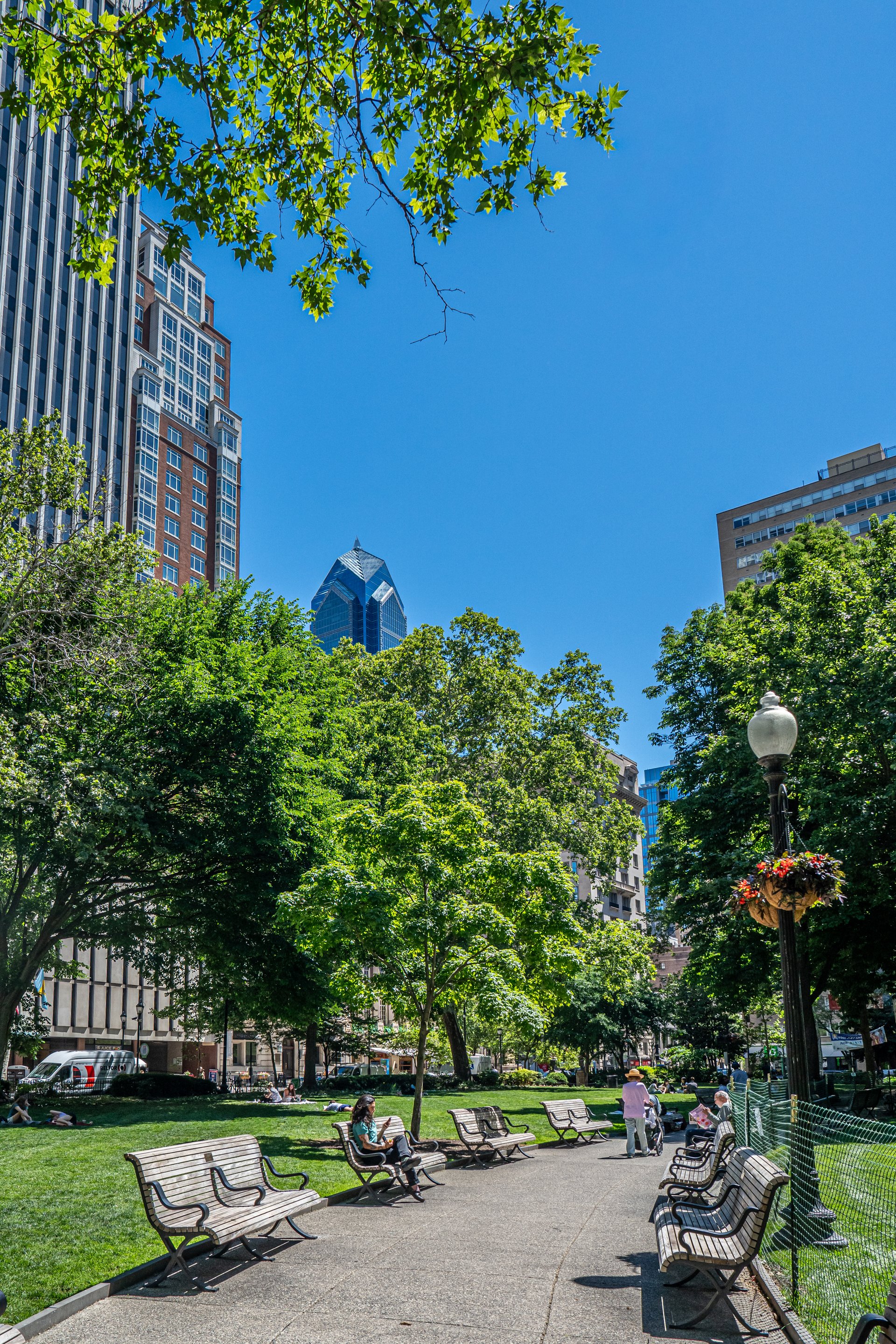
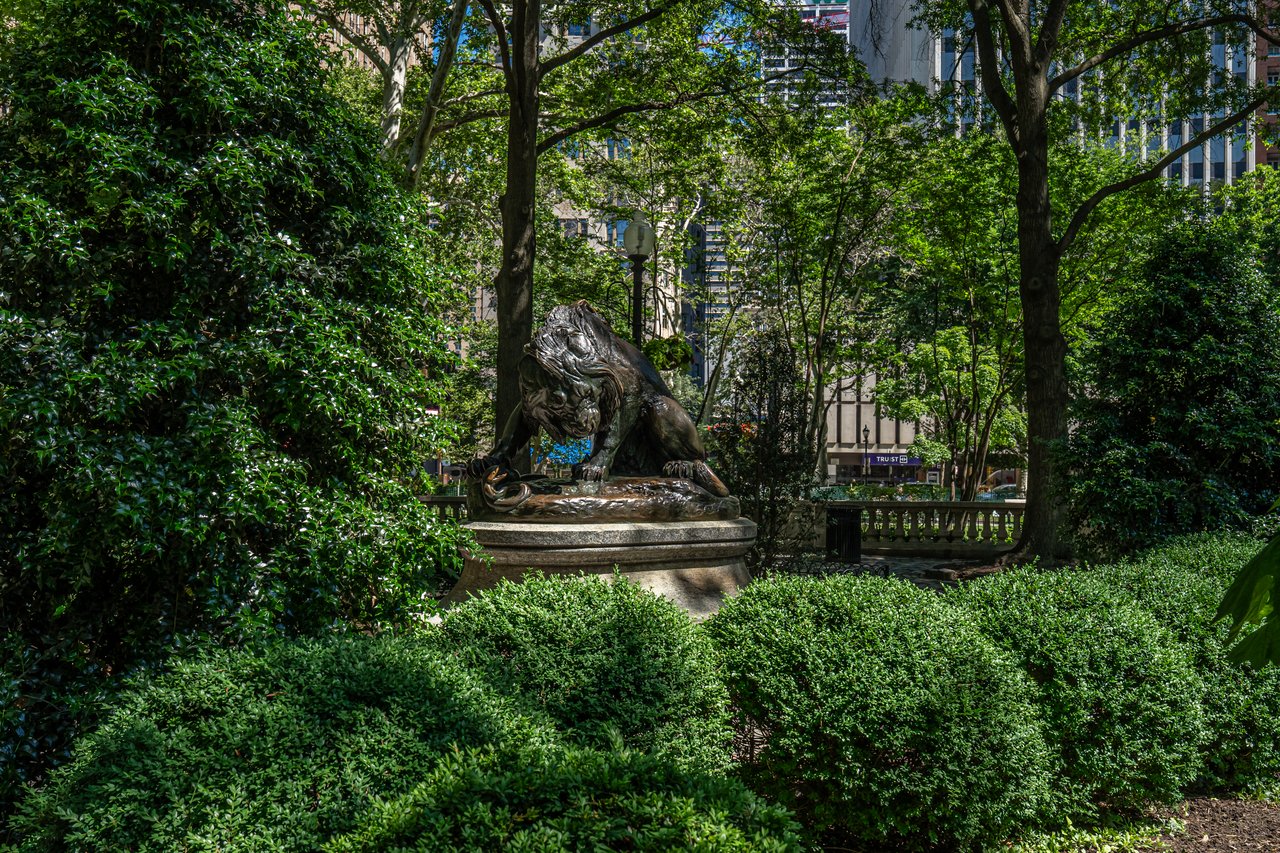
Most people visit Rittenhouse Square for the same reasons.
A morning coffee on a bench. Lunch in the grass. The farmers market. A stroll beneath the trees on the way to dinner.
But scattered throughout the square is something many visitors barely notice: one of Philadelphia's most fascinating collections of public sculpture.
For more than a century, artists, neighborhood organizations, and civic-minded Philadelphians have helped shape Rittenhouse Square into something more than a park. Together, they've created an outdoor gallery where art lives alongside everyday life.
Some pieces commemorate important figures in the city's history. Others celebrate animals, nature, and childhood. A few are easy to miss entirely unless you know where to look.
The next time you're in the square, take a slower lap and see how many of these works you can find.
The Lion That Started It All
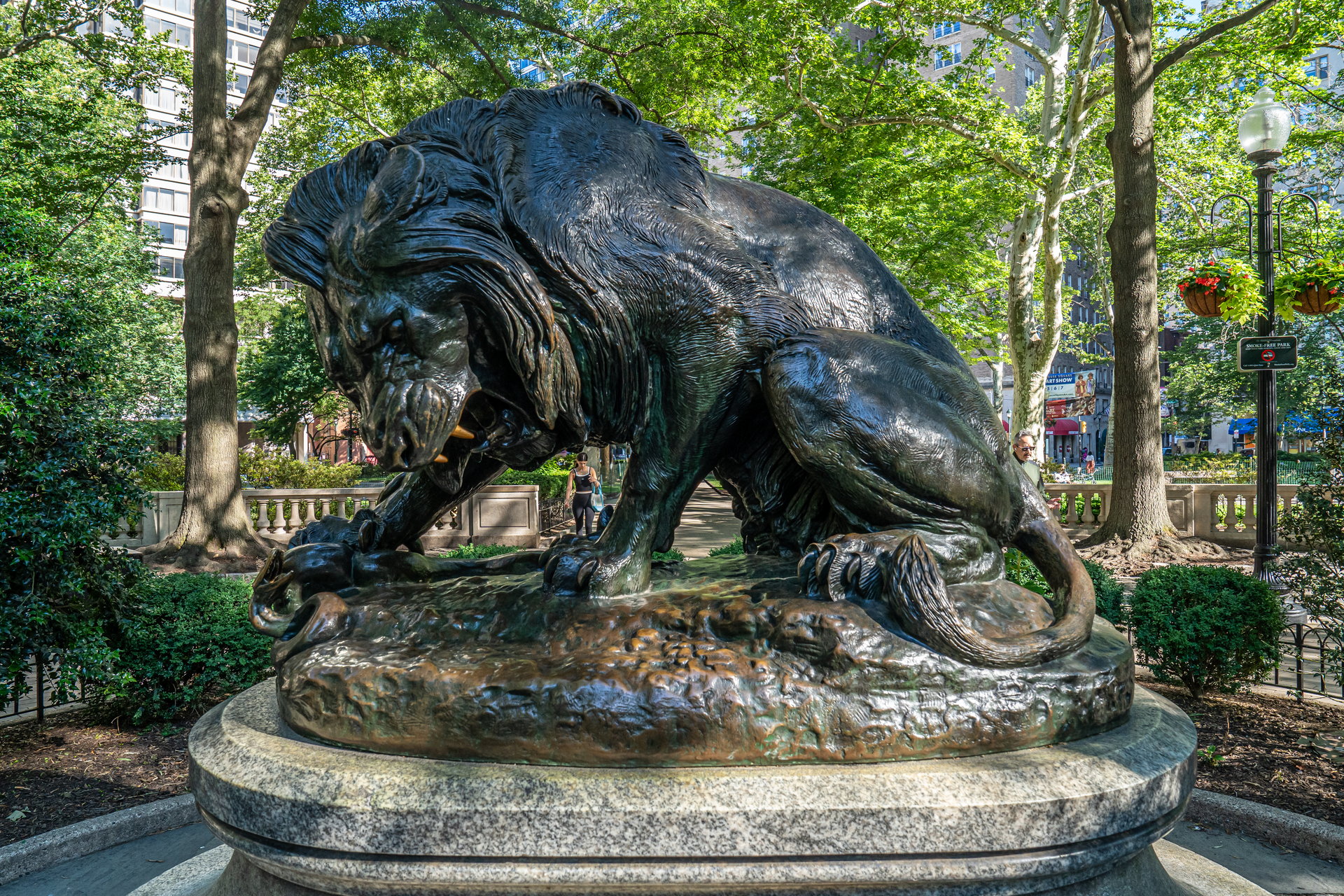
Lion Crushing a Serpent
Antoine-Louis Barye, 1832 (cast 1891)
Long before Rittenhouse Square became known for its cafés, flower shows, and neighborhood gatherings, a bronze lion arrived.
Depicting a lion overpowering a serpent, the sculpture became the first artwork installed in Rittenhouse Square. More than a century later, it remains one of the park's most recognizable landmarks and a reminder that public art has long been woven into the square's identity.
A Memorial to Civic Leadership
Evelyn Taylor Price Memorial Sundial
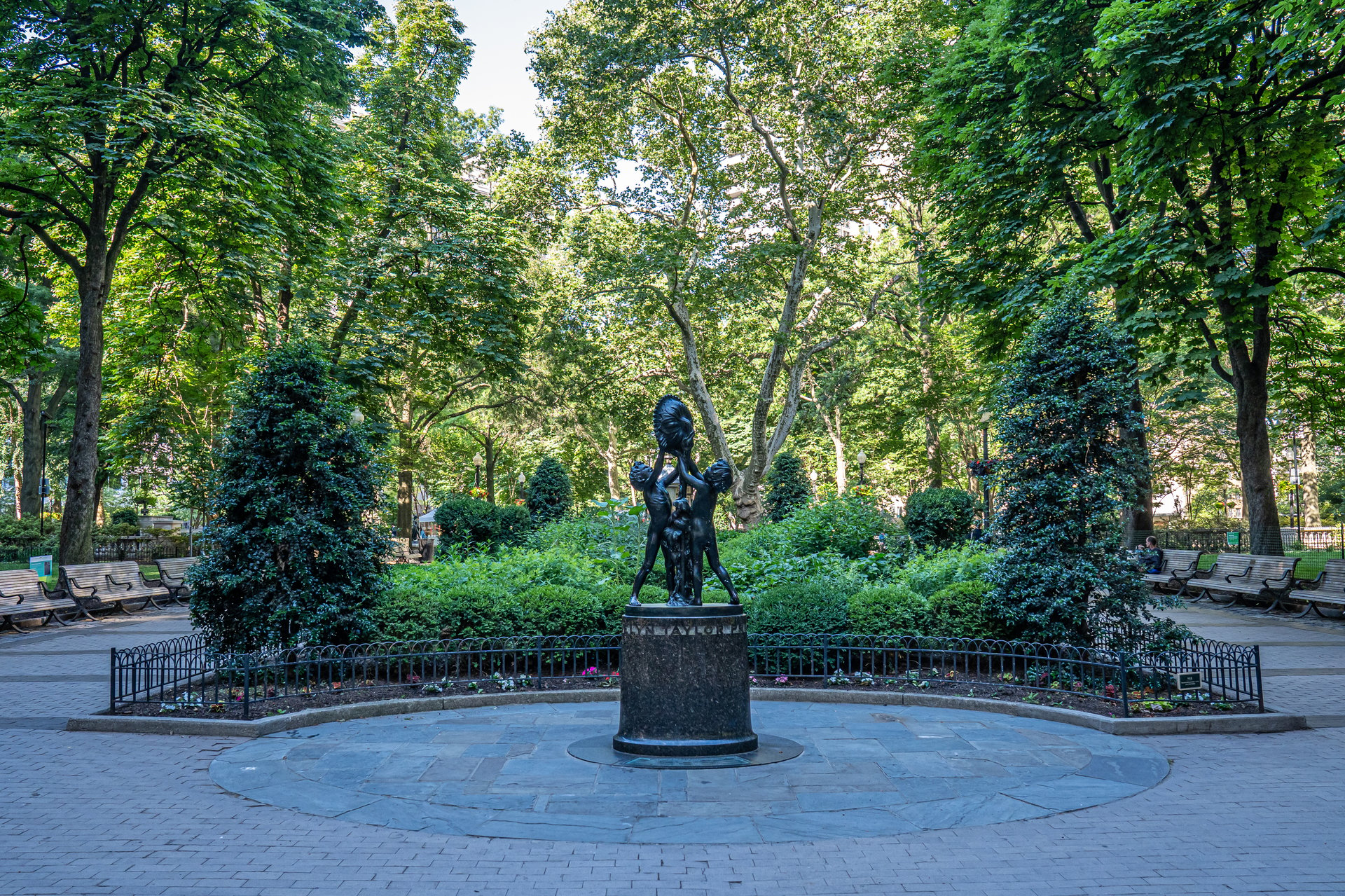
Beatrice Fenton, 1947
Part sculpture, part functional sundial, this elegant work was commissioned by the Rittenhouse Square Improvement Association in memory of Evelyn Taylor Price.
Price served as president of the organization and was also a longtime leader of the Philadelphia Flower Market. The memorial reflects a tradition that continues to shape the square today: residents investing their time, energy, and resources into the future of their neighborhood.
The Doctor in the Park
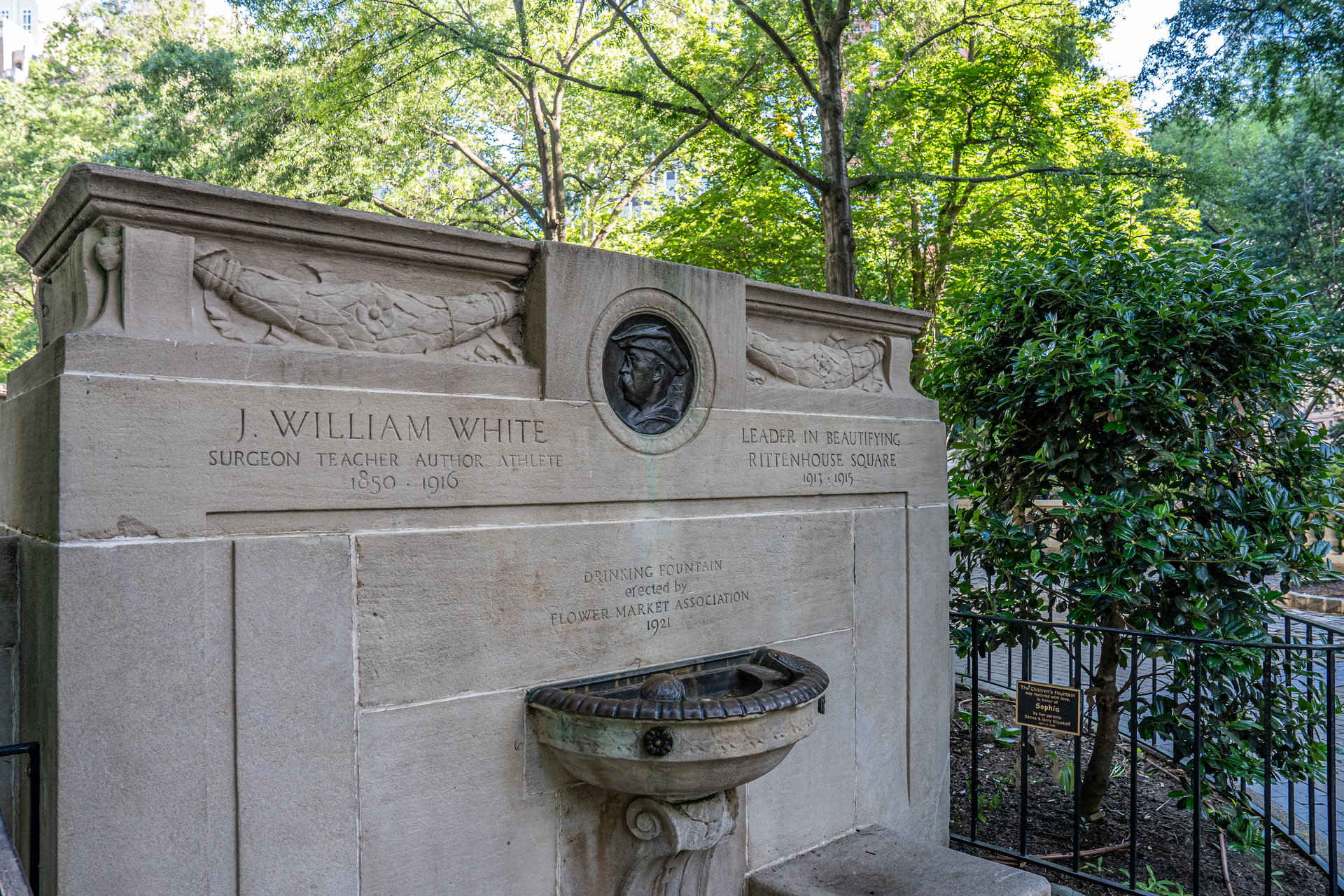
Dr. J. William White Memorial
R. Tait McKenzie and Paul Philippe Cret, 1922
One of the square's most formal monuments honors Dr. J. William White, a pioneering surgeon and founding member of the Rittenhouse Square Improvement Association.
Surrounded by trees and park benches, it feels like a quiet place for reflection amid one of Philadelphia's busiest neighborhoods.
The Sculptures Children Find First
Billy
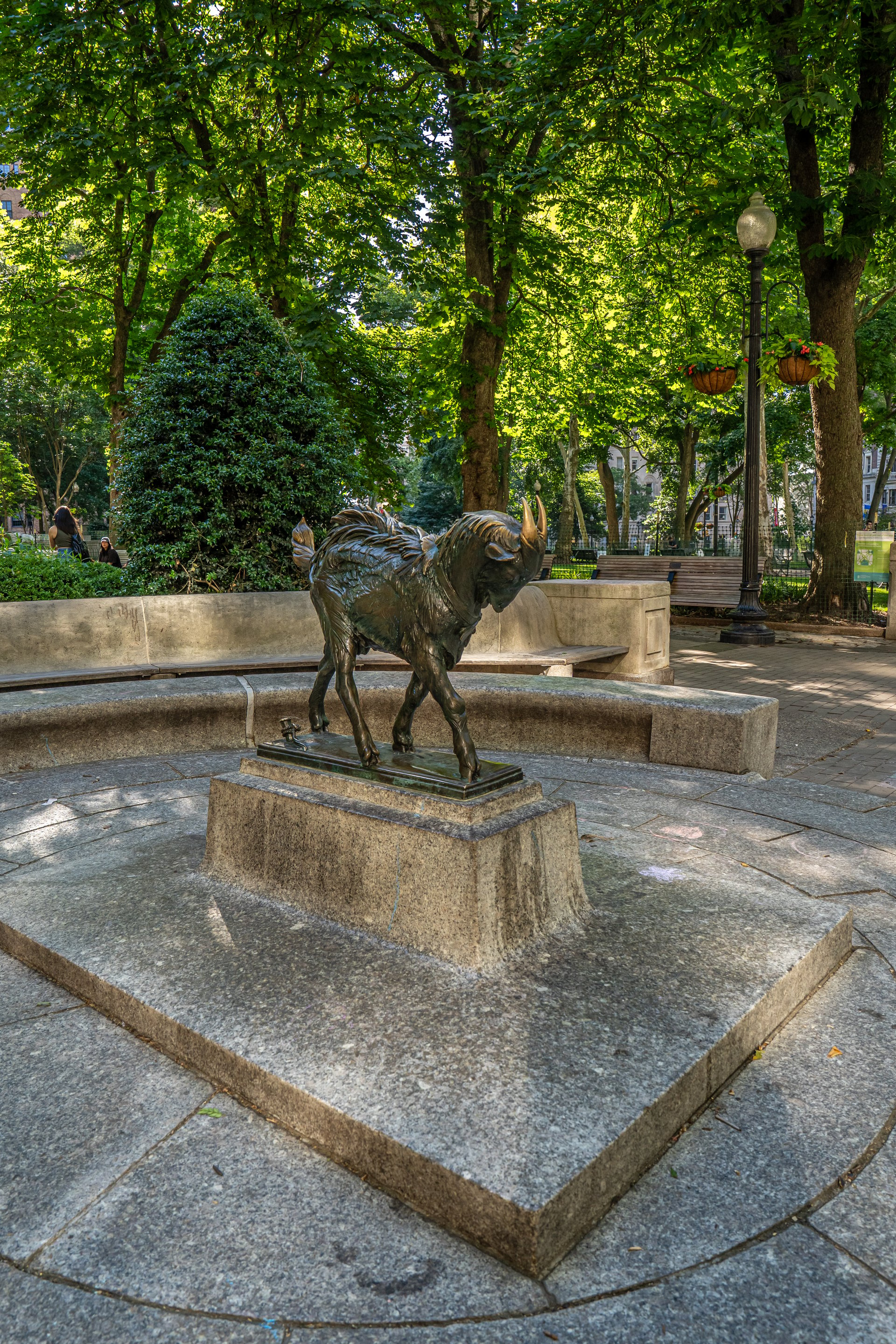
Albert Laessle, 1914
Many children discover Billy before they discover any other sculpture in the square.
Inspired by a family goat and sculpted by Philadelphia artist Albert Laessle, Billy has spent more than a century quietly becoming part of the neighborhood. It's the kind of sculpture people don't just admire from a distance. Generations of children have stopped to say hello on their way through the park.
Giant Frog
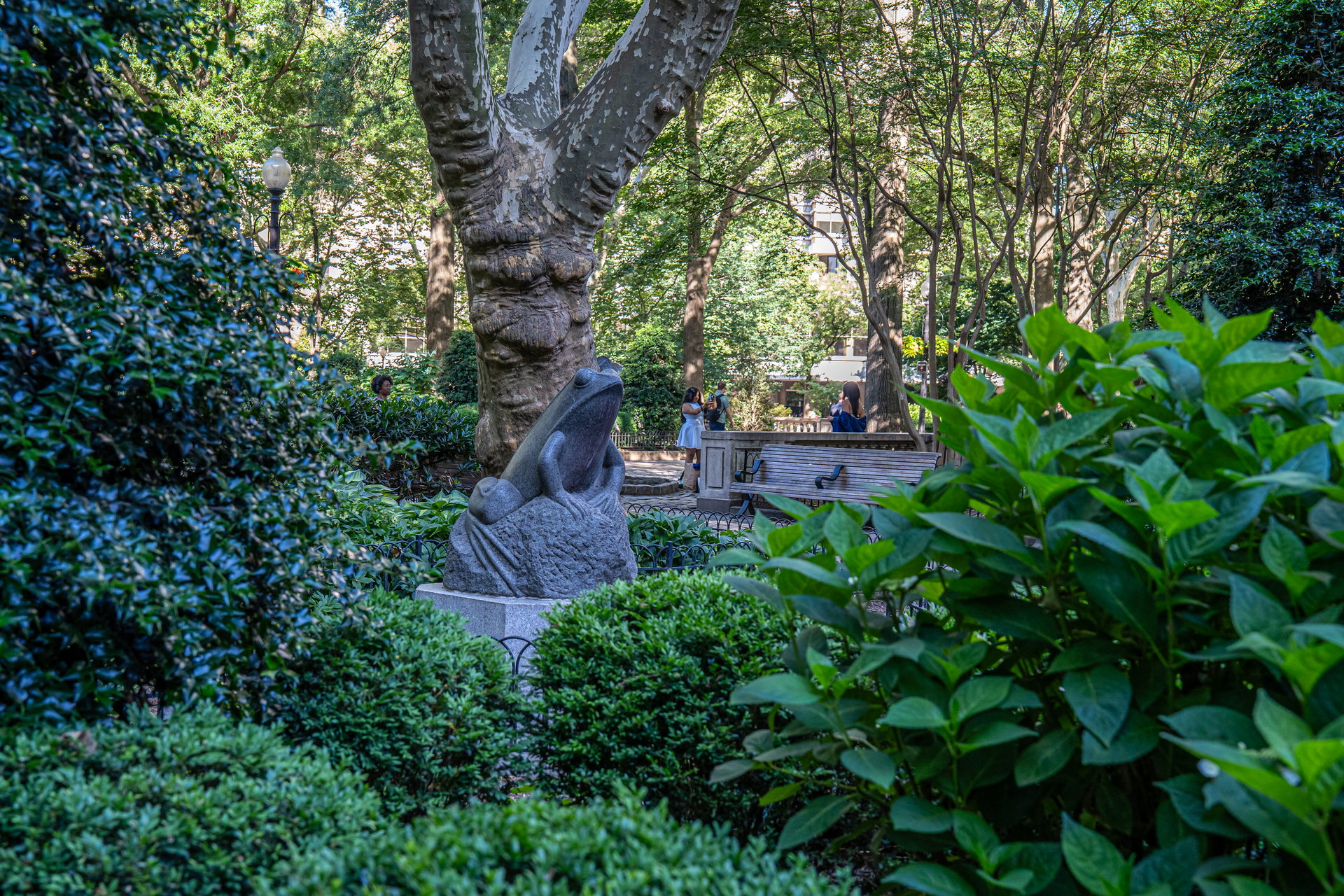
Cornelia Van Auken Chapin, 1941
A few steps away sits Giant Frog, one of the square's most unexpected residents.
Unlike Billy's playful personality, the frog appears almost meditative, frozen in a moment of concentration while the city moves around it. Everyone seems to smile when they find it.
A Classical Figure by the Pool
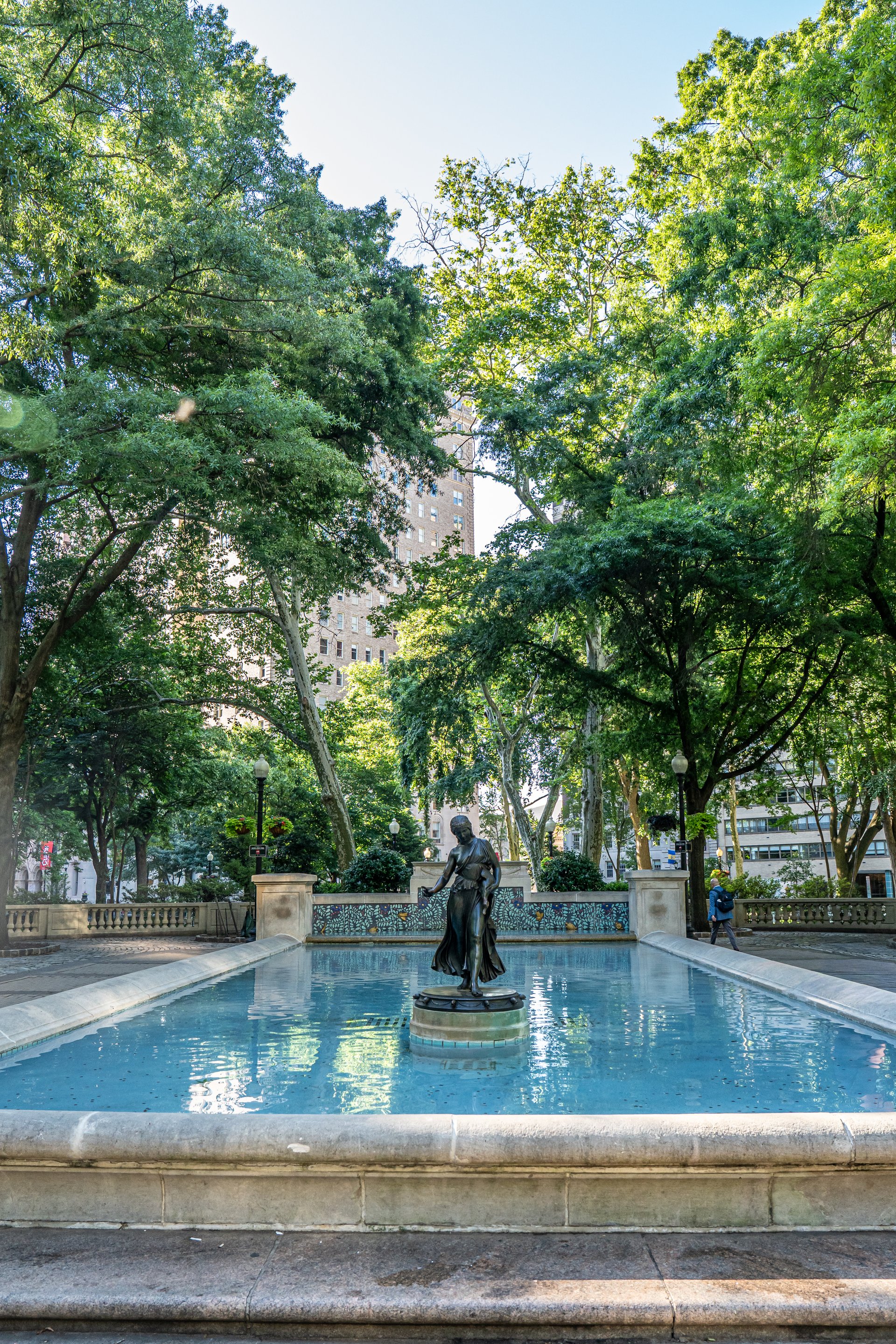
Duck Girl
Paul Manship, 1911
Located beside the Children's Pool, Duck Girl feels almost timeless.
Draped in a flowing Greek-style garment, the figure reflects the classical influences that shaped much of Paul Manship's early work. For generations, she has watched over one of the most beloved corners of the square.
A Newer Addition with a Personal Story
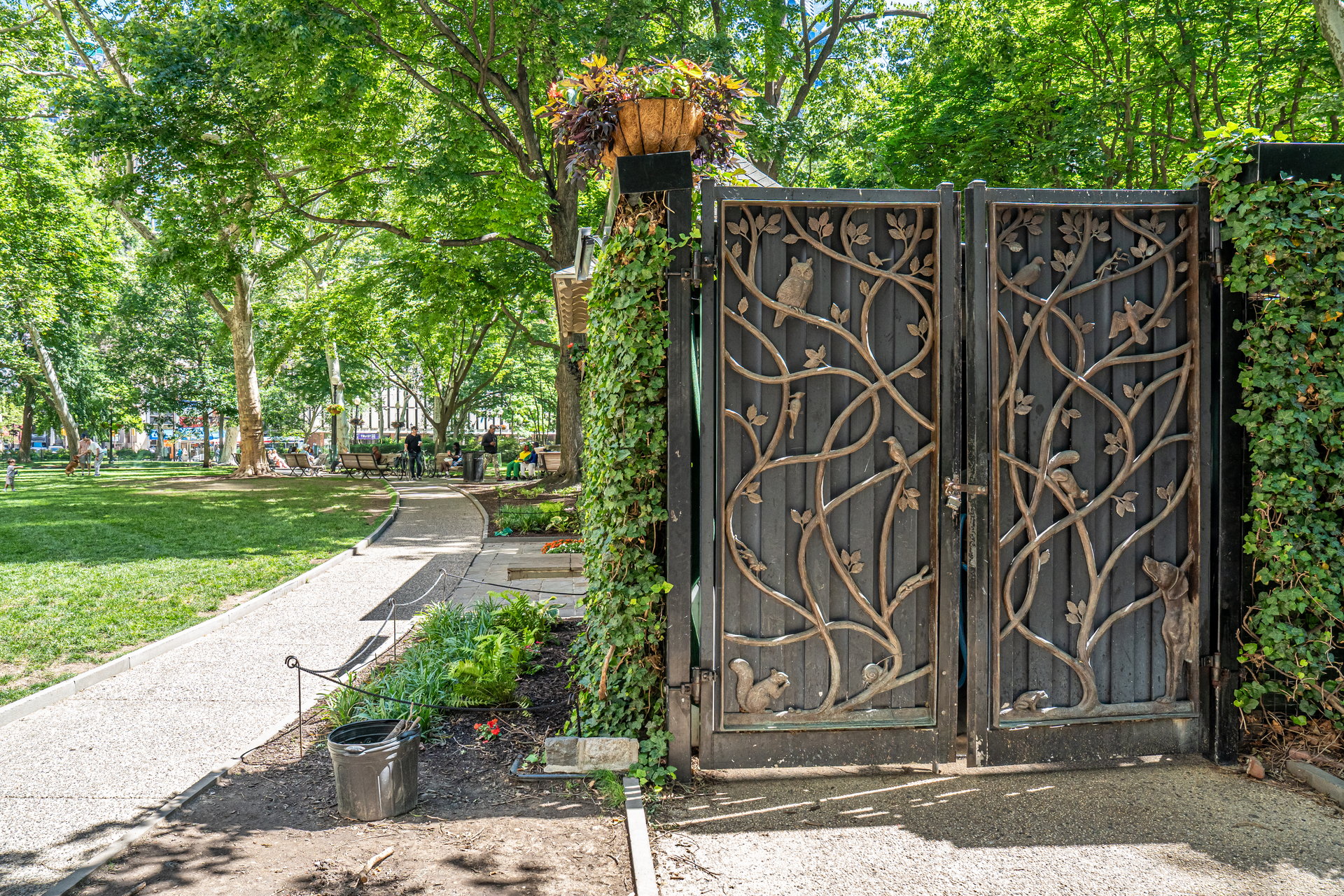
Gardener's Cottage Gates
Eric Berg, 2010
One of the newest additions to Rittenhouse Square is also one of its most personal.
Created by Philadelphia sculptor Eric Berg, the gates were commissioned by the Friends of Rittenhouse Square as a memorial to longtime resident and board member Patty Hogan.
Unlike a traditional monument, the piece blends seamlessly into the daily life of the park. Art, memory, and function all come together in a work that feels uniquely at home in the square.
The Greyhounds at the Gate
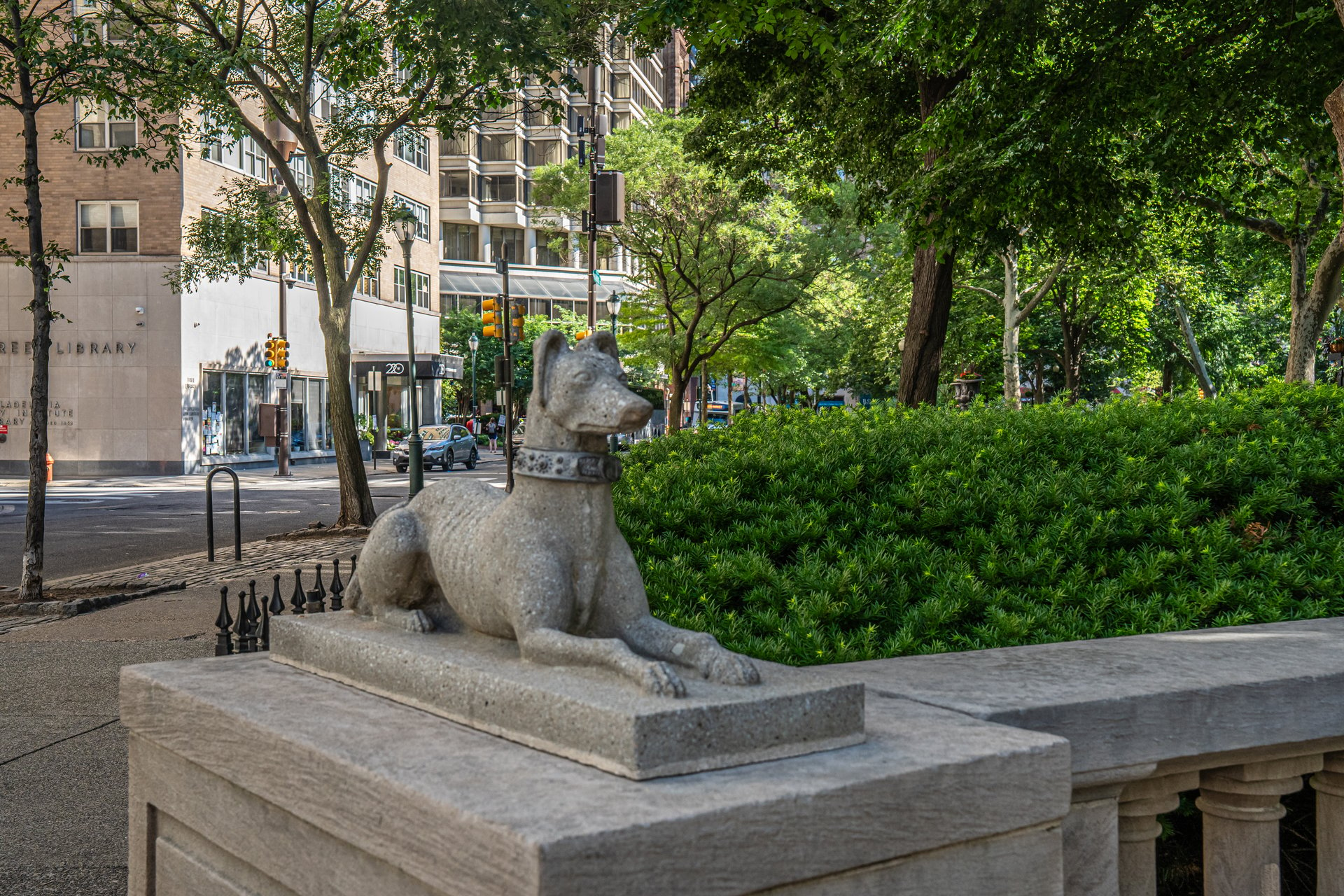
Greyhound Sculptures
Artist Unknown
Many visitors enter Rittenhouse Square without realizing they're passing between a pair of elegant stone greyhounds.
Located at the southwest entrance, the sculptures were installed in 1988 in memory of art collector and curator Henry P. McIlhenny. They're easy to overlook, but once you notice them, you'll never walk into the square the same way again.
More Than a Park
One of the things that makes Rittenhouse Square special isn't simply its location or landscaping.
It's the layers.
The square functions as a neighborhood park, a gathering place, a garden, a stage for community events, and an open-air museum that belongs to everyone.
And perhaps that's what makes these sculptures so remarkable. They aren't tucked away behind museum walls. They exist in the middle of daily life—along walking paths, beside benches, near playgrounds, and under the shade of trees.
The next time you're in Rittenhouse Square, slow down for a few extra minutes. Walk the perimeter. Look beyond the dog walkers, café tables, and familiar paths.
You might discover that some of Philadelphia's best art has been hiding in plain sight all along.
Ready to explore?
If you'd like to see the sculptures for yourself, the Association for Public Art has created a helpful self-guided walking tour map of Rittenhouse Square that highlights each piece and its location.
Visit the Association for Public Art's Rittenhouse Square tour before your next stroll through the square.